Small business owners obsess over acquiring new customers, but the real gold lies in keeping the ones you already have. Every dollar spent chasing new leads is five times more expensive than retaining existing customers.
Yet most small businesses watch their hard-won customers silently slip away. What if you could boost profits by 25-95% with just a 5% increase in retention? In this guide, I’ll reveal seven proven customer retention strategies for small business that don’t require a massive budget.
You’ll discover how to deliver exceptional service, personalize experiences, build loyalty programs, and create a community that keeps customers coming back for years. Transform your leaky bucket into a fortress.
Why Your Small Business Needs a Customer Retention Strategy
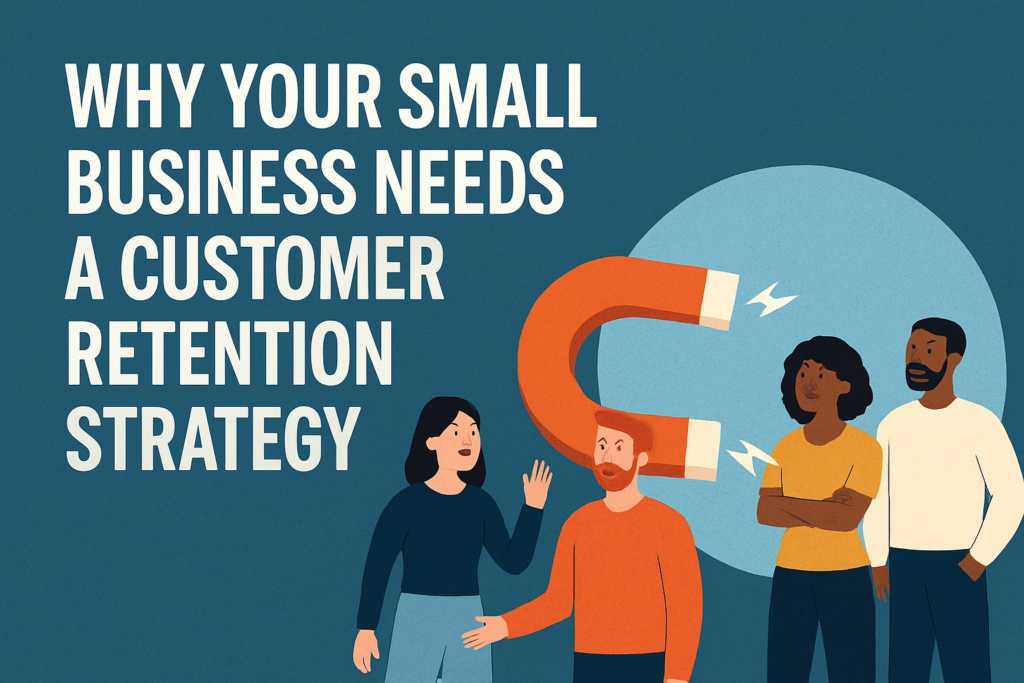
In the competitive landscape of 2026, acquiring a new customer is more expensive than ever. In fact, it can cost five times more to attract a new customer than to retain an existing one [2]. For a small business, where every dollar counts, that’s a statistic you simply can’t afford to ignore. Focusing on customer retention strategies for small business isn’t just a “nice-to-have”; it’s a fundamental shift from a short-term, transactional mindset to a long-term, relational one. It’s about building a sustainable business on a foundation of trust and loyalty, not just a series of one-off sales.
Think about your favorite local coffee shop. The barista knows your name, starts making your “usual” the moment you walk in, and asks about your weekend. That feeling of being known and valued is what keeps you coming back, even if another coffee shop opens up across the street. That, in its purest form, is customer retention. And the benefits go far beyond just feeling good.
The Compounding Value of a Loyal Customer
A loyal customer is worth far more than their last purchase. Their value compounds over time in several key ways:
- Increased Profitability: It’s not just about saving money on acquisition. Existing customers are simply more profitable. They are 50% more likely to try new products and spend 31% more, on average, compared to new customers [2]. Companies that prioritize retention can be up to 60% more profitable than those focused on acquisition [3].
- Predictable Revenue: A strong base of repeat customers creates a predictable, stable revenue stream. This makes it easier to forecast, budget, and plan for future growth. For many small businesses, this stability is the difference between surviving and thriving. In fact, 61% of small businesses report that more than half of their revenue comes from repeat customers [4].
- Powerful Word-of-Mouth Marketing: Happy, loyal customers become your most effective marketing channel. They become brand advocates who rave about your business to their friends, family, and social networks. This organic, trusted marketing is something money simply can’t buy.
- Valuable Feedback: Your most loyal customers are often your most honest. They are invested in your success and are more willing to provide constructive feedback that can help you improve your products, services, and overall experience.
Ultimately, a focus on retention transforms your business from a leaky bucket into a fortress. It builds a moat around your business that competitors will find incredibly difficult to cross. You’re no longer just competing on price or features; you’re competing on relationships, and for a small business, that is a battle you can win. “”
7 Actionable Customer Retention Strategies for Small Business
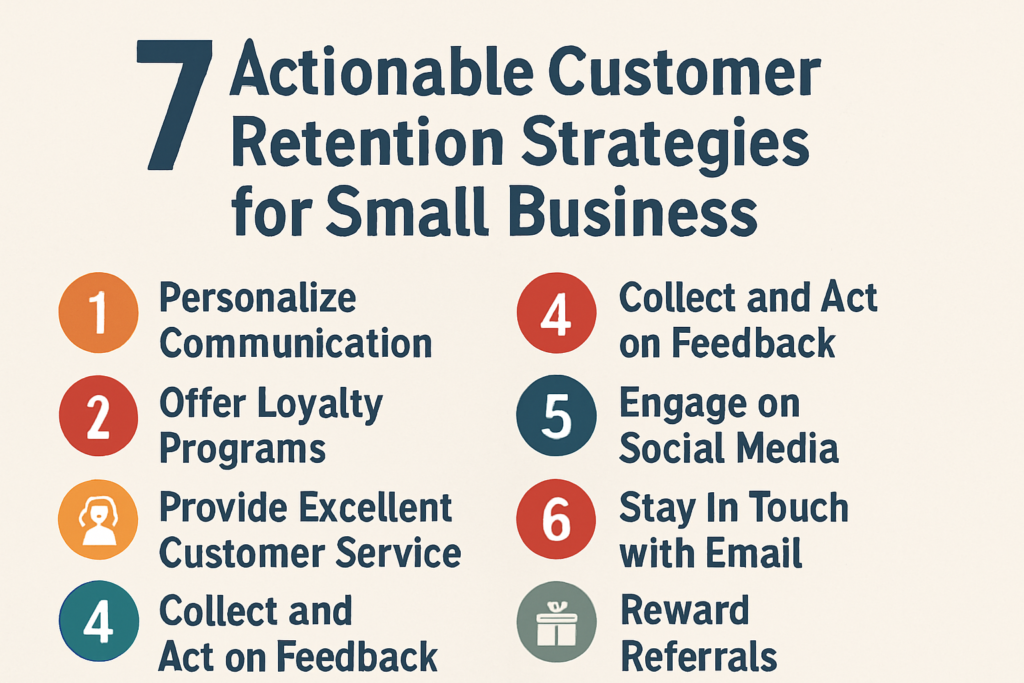
Now that we’ve established why retention is so critical, let’s get into the how. I’m going to share seven powerful, yet practical, customer retention strategies for small business that you can start implementing today. These aren’t complex, expensive initiatives. They are simple, human-centric approaches that focus on building genuine relationships with your customers.
1. Deliver Exceptional, Proactive Customer Service
This is the cornerstone of any successful retention strategy. In today’s market, good customer service is not a differentiator; it’s the price of entry. Exceptional customer service, however, is a powerful retention tool. A staggering 88% of customers say that good customer service makes them more likely to purchase from a business again [5].
But don’t just wait for problems to arise. Be proactive. If you run an e-commerce store and a popular item is on backorder, send a personal email to customers who have purchased it in the past, letting them know when it will be back in stock. If you’re a service provider and you notice a client is struggling with a particular feature, reach out with a helpful tip or a link to a tutorial. These small, proactive gestures show that you’re paying attention and that you genuinely care about their success.
2. Get Personal: The Power of Personalization
In a world of mass marketing and automated everything, a little personalization goes a long way. People want to feel seen and understood, not like just another number in your database. In fact, 73% of customers now feel treated as unique individuals by brands that personalize their experience [6].
Personalization doesn’t have to be complicated. It can be as simple as:
- Using their name: Address them by their first name in emails and other communications.
- Remembering their preferences: If a customer always orders the same thing, acknowledge it. “The usual, John?” can be a powerful phrase.
- Sending personalized recommendations: Based on their purchase history, recommend other products or services they might like.
- Celebrating milestones: Send a special offer on their birthday or the anniversary of their first purchase.
These small touches show that you’re paying attention to the individual, not just the transaction. It’s the digital equivalent of the coffee shop barista who knows your order by heart.
3. Create a Simple, Rewarding Loyalty Program
Loyalty programs are a proven way to encourage repeat business. But for a small business, they don’t have to be complex or expensive. The key is to make it simple to understand and easy to participate in.
- The Punch Card: The classic coffee shop punch card is a perfect example of a simple, effective loyalty program. It’s tangible, easy to understand, and provides a clear path to a reward.
- The Points System: For every dollar spent, customers earn points that can be redeemed for discounts or free products. This is easy to implement with many modern POS and e-commerce platforms.
- The Tiered System: Create different levels of loyalty (e.g., Bronze, Silver, Gold) with increasing rewards at each level. This gamifies the experience and encourages customers to spend more to reach the next tier.
Whatever system you choose, make sure the rewards are valuable and attainable. A loyalty program that feels impossible to win will do more harm than good.
4. Actively Solicit and Act on Customer Feedback
Your customers are a goldmine of information. They can tell you what you’re doing right, what you’re doing wrong, and what you could be doing better. But you have to ask. Actively soliciting feedback shows that you value their opinion and are committed to improving.
- Surveys: Send short, simple surveys after a purchase or interaction. Don’t ask too many questions; focus on the most important aspects of their experience.
- Email: A simple, personal email asking “How did we do?” can be incredibly effective.
- Social Media: Use polls and questions on social media to gather feedback and start conversations.
The most important part of this strategy is to act on the feedback you receive. If multiple customers are complaining about the same issue, fix it. If they are raving about a particular product, feature it more prominently. When customers see that their feedback leads to real change, it builds immense trust and loyalty.
5. Build a Community, Not Just a Customer List
People want to belong to something bigger than themselves. By building a community around your brand, you can create a powerful sense of belonging that will keep customers coming back. This is especially true for businesses that cater to a specific niche or lifestyle.
- Facebook Groups: Create a private Facebook group for your customers where they can connect with each other, share tips, and ask questions.
- Events: Host in-person or virtual events, like workshops, Q&A sessions, or customer appreciation parties.
- User-Generated Content: Encourage customers to share photos and stories of themselves using your products. Feature this content on your website and social media (with their permission, of course).
A thriving community transforms your business from a simple vendor into a central hub for a shared passion or interest. It’s a powerful moat that competitors will find almost impossible to replicate.
6. Stay Top-of-Mind with Strategic Communication
Out of sight, out of mind. If you’re not regularly communicating with your customers, you’re making it easy for them to forget about you. But this isn’t about bombarding them with sales pitches. It’s about providing value even when they’re not actively buying from you.
- Email Newsletters: Send a weekly or monthly newsletter with helpful tips, interesting articles, and behind-the-scenes content. 80% of businesses still rely on email marketing for retention [7].
- Social Media: Share valuable content on social media that is relevant to your target audience. Engage with your followers, answer their questions, and start conversations.
- Personalized Check-ins: If you haven’t heard from a customer in a while, send a personal email to check in and see how they’re doing. A simple “We miss you!” can be surprisingly effective.
The goal is to be a welcome presence in their inbox and social media feed, not a pest. Focus on providing value, and the sales will follow.
7. Surprise and Delight: The Power of the Unexpected
This is my favorite strategy because it’s so simple, yet so powerful. Everyone loves a pleasant surprise. By going above and beyond in unexpected ways, you can create a memorable experience that your customers will be talking about for years to come.
- A Handwritten Thank You Note: In a world of digital everything, a handwritten note stands out. It shows that you took the time to personally thank them for their business.
- A Small, Unexpected Gift: Include a small, free gift with their order. It doesn’t have to be expensive; it’s the thought that counts.
- An Upgrade: If you’re a service provider, occasionally upgrade a loyal customer to a higher tier of service for free.
These small acts of kindness create a powerful emotional connection with your brand. They show that you see your customers as people, not just transactions. And in the long run, that’s what builds true, lasting loyalty.
Putting It All Together: A Real-World Example
Let’s imagine a small, independent bookstore. How could they use these strategies to build a loyal customer base?
- Exceptional Service: The staff knows the regulars by name, remembers their favorite genres, and can always recommend the perfect next read.
- Personalization: They send personalized emails with book recommendations based on past purchases.
- Loyalty Program: They have a simple punch card: buy 10 books, get one free.
- Feedback: They have a suggestion box at the counter and actively solicit feedback on their book selection and store layout.
- Community: They host a monthly book club, author signings, and children’s story time. They have a cozy reading nook where customers can relax and connect with other book lovers.
- Communication: They send a weekly newsletter with staff picks, literary news, and information about upcoming events.
- Surprise and Delight: They occasionally slip a free bookmark or a handwritten note into a customer’s bag.
This bookstore isn’t just a place to buy books; it’s a community hub for book lovers. They have built a loyal following that will support them for years to come, even with the looming presence of Amazon. That is the power of effective customer retention strategies for small business.
Your Journey to a More Sustainable Business Starts Today
As a small business owner, your time and resources are precious. You can’t afford to be constantly chasing new customers while your existing ones slip through your fingers. The good news is, you don’t have to. By shifting your focus from acquisition to retention, you can build a more profitable, sustainable, and enjoyable business.
Start small. Pick one or two of the strategies I’ve shared and implement them this week. Maybe it’s sending a personal thank you email to every customer. Maybe it’s starting a simple loyalty program. The key is to start. The journey to a 95% increase in profits begins with a single, intentional step.
You have the power to turn your leaky bucket into a fortress. You have the power to build a tribe of loyal, raving fans who will support you for years to come. It all starts with a simple decision: to focus on the customers you already have. They are your greatest asset. Treat them like it.
How to Measure Your Customer Retention Success
As the old business adage goes, “You can’t manage what you can’t measure.” This is especially true for customer retention strategies for small business. While it’s great to implement all these feel-good strategies, you need to know if they are actually working. Tracking a few key metrics will give you a clear picture of your retention performance and help you identify areas for improvement.
1. Customer Retention Rate (CRR)
This is the most fundamental retention metric. It tells you the percentage of customers you have retained over a specific period. The formula is simple:
CRR = ( (Number of Customers at End of Period – Number of New Customers Acquired During Period) / Number of Customers at Start of Period ) ) x 100
For example, if you started the quarter with 200 customers, gained 40 new ones, and ended with 210, your CRR would be:
((210 – 40) / 200) x 100 = 85%
While a 100% retention rate is the dream, a good benchmark to aim for is 85-90%. However, this can vary significantly by industry. The key is to track your CRR over time and strive for continuous improvement.
2. Customer Lifetime Value (CLV)
CLV is the total amount of money a customer is expected to spend on your products or services during their entire relationship with your business. This is a crucial metric because it shifts your focus from short-term transactions to long-term relationships. When you know how much a customer is worth over their lifetime, you’re willing to invest more in keeping them happy.
A simple way to calculate CLV is:
CLV = Average Purchase Value x Average Purchase Frequency x Average Customer Lifespan
For example, if your average customer spends $50 per purchase, buys from you 4 times a year, and stays with you for 3 years, their CLV would be:
$50 x 4 x 3 = $600
By increasing your retention, you increase the average customer lifespan, which directly increases your CLV.
3. Churn Rate
Churn rate is the opposite of retention rate. It’s the percentage of customers who stop doing business with you over a specific period. The formula is:
Churn Rate = (Number of Customers Lost During Period / Number of Customers at Start of Period) x 100
Using our previous example, if you started with 200 customers and lost 30 (200 at start – 210 at end + 40 new), your churn rate would be:
(30 / 200) x 100 = 15%
Your churn rate and retention rate should always add up to 100%. While it’s impossible to have a 0% churn rate, you should always be working to keep it as low as possible. High churn is a clear sign that your leaky bucket needs some serious attention.
4. Net Promoter Score (NPS)
NPS is a measure of customer loyalty and satisfaction. It’s based on a single, powerful question: “On a scale of 0-10, how likely are you to recommend our business to a friend or colleague?”
Based on their response, customers are categorized into three groups:
- Promoters (9-10): Your most loyal, enthusiastic fans.
- Passives (7-8): Satisfied but not loyal. They are vulnerable to competitors.
- Detractors (0-6): Unhappy customers who can damage your brand through negative word-of-mouth.
Your NPS is calculated by subtracting the percentage of Detractors from the percentage of Promoters.
NPS = % Promoters – % Detractors
A positive NPS (anything above 0) is considered good, an NPS of +50 is excellent, and anything over +70 is world-class. Tracking your NPS over time will give you a clear indication of how your customers feel about your brand and the effectiveness of your retention efforts.
By regularly tracking these four key metrics, you can move from guessing to knowing. You’ll have a clear, data-driven picture of your customer retention performance, which will empower you to make smarter, more strategic decisions to grow your business for the long term.
We’ve barely scratched the surface of customer retention strategies for small business, with it having much more going on. There’s a reason it made it onto our digital product guide , and we highly recommend you check it out.
References
[1] Bain & Company, as cited in Mailmodo. (2026, January 13). 20 Customer Retention Statistics You Should Know in 2026. https://www.mailmodo.com/guides/customer-retention-statistics/
[2] Rivo. (2026, November 21). Customer retention statistics in 2026. https://www.rivo.io/blog/customer-retention-statistics
[3] Deloitte, as cited in Mailmodo. (2026, January 13). 20 Customer Retention Statistics You Should Know in 2026. https://www.mailmodo.com/guides/customer-retention-statistics/
[4] BIA Advisory Services, as cited in Mailmodo. (2026, January 13). 20 Customer Retention Statistics You Should Know in 2026. https://www.mailmodo.com/guides/customer-retention-statistics/
[5] Salesforce. (2025, July 31). Top Customer Retention Tactics For Small Businesses and Startups. https://www.salesforce.com/blog/customer-retention-tips-for-small-business/
[6] Salesforce. (2025, July 31). Top Customer Retention Tactics For Small Businesses and Startups. https://www.salesforce.com/blog/customer-retention-tips-for-small-business/
[7] Emarsys, as cited in Mailmodo. (2026, January 13). 20 Customer Retention Statistics You Should Know in 2026. https://www.mailmodo.com/guides/customer-retention-statistics/
![Read more about the article The Ultimate Guide to Content Repurposing Strategies That Save Time[2026]](https://basondha.com/wp-content/uploads/2026/01/Purple-Cyan-Modern-Neon-Gaming-Versus-YouTube-Thumbnail-31-768x432.png)