I’ve learned a crucial lesson in my journey as an entrepreneur: having a brilliant idea is just the beginning.
The real magic, and often the biggest challenge, lies in validate a product idea.
The difference between those who succeed & those who crash and burn isn’t just luck or timing. It’s VALIDATION.
Smart entrepreneurs don’t just fall in love with their ideas – they put them through rigorous testing before investing their life savings, quitting their jobs, or spending months building something nobody wants. Think of validation like a reality check for your brilliant brainchild.
In this article, we’re going to explore five PROVEN strategies that successful entrepreneurs use to separate winning ideas from expensive mistakes. These aren’t theoretical concepts dreamed up in some ivory tower – they’re real-world methods used by companies like Dropbox, Airbnb, & countless others who turned simple ideas into billion-dollar businesses.
You’ll learn how to test your assumptions, understand your market, & avoid the heartbreak of building something amazing that nobody actually needs.
Ready to turn your midnight inspiration into a validated, market-ready concept? Let’s dive in!
Start With Your FUTURE Customers: The Art of Customer Discovery

Before you write a single line of code or spend a penny on development, you need to become a detective. Your mission? Hunt down the people who would actually USE your product & get inside their heads. This process, called customer discovery, is like having a crystal ball that shows you what people really want versus what you THINK they want.
Customer discovery starts with identifying your target audience with laser precision. Don’t make the rookie mistake of saying “everyone” is your customer – that’s like trying to catch fish with a net full of holes.
Instead, create detailed profiles of your ideal customers. What keeps them awake at night? What problems do they complain about to their friends? Where do they hang out online? The more specific you get, the better your chances of success.
Once you know WHO you’re targeting, it’s time to start conversations. Reach out through social media, attend industry meetups, join online communities where your potential customers spend time.
Ask open-ended questions about their challenges & frustrations. Listen more than you talk. You might discover that the problem you’re trying to solve isn’t actually their biggest pain point, or that they’ve already found workarounds that make your solution unnecessary.
Here’s a PRO tip: Don’t lead the witness! Avoid questions like “Would you use an app that does X?” Instead, ask “Tell me about the last time you struggled with X” or “How do you currently handle Y?” These questions reveal actual behavior rather than polite hypotheticals.
People often say they’ll do something they’ll never actually do, but past behavior is a reliable predictor of future actions.
Test the Waters With MVP: Your Product’s First Audition

The Minimum Viable Product (MVP) is your idea’s first audition – not the full Broadway show. Think of it as the simplest version of your product that can still solve the core problem you’ve identified.
The goal isn’t to impress people with bells & whistles; it’s to test whether your basic concept has legs to stand on.
Creating an MVP doesn’t have to break the bank or take months of development. Some of the most successful products started with incredibly simple MVPs.
Dropbox began with just a video demonstrating the concept – no actual product! The founders wanted to see if people would sign up for a file-syncing service before they built the complex technology behind it. That simple video generated thousands of email signups & validated the demand.
Your MVP could be a landing page that describes your product & collects email addresses from interested users. It could be a basic prototype made with simple tools, or even a manual service that mimics what your automated product would do.
The key is to test your core assumption: Do people actually want what you’re offering?
When you launch your MVP, pay close attention to user behavior, not just their words. Do people actually USE your product repeatedly, or do they try it once & disappear? Are they willing to pay for it, even in its basic form? Do they tell their friends about it without you asking?
These behaviors are GOLDEN indicators that you’re onto something special. If your MVP falls flat, don’t despair – you’ve just saved yourself months of work & thousands of dollars by learning early that you need to pivot.
Follow the Money Trail: Pre-Sales & Payment Validation
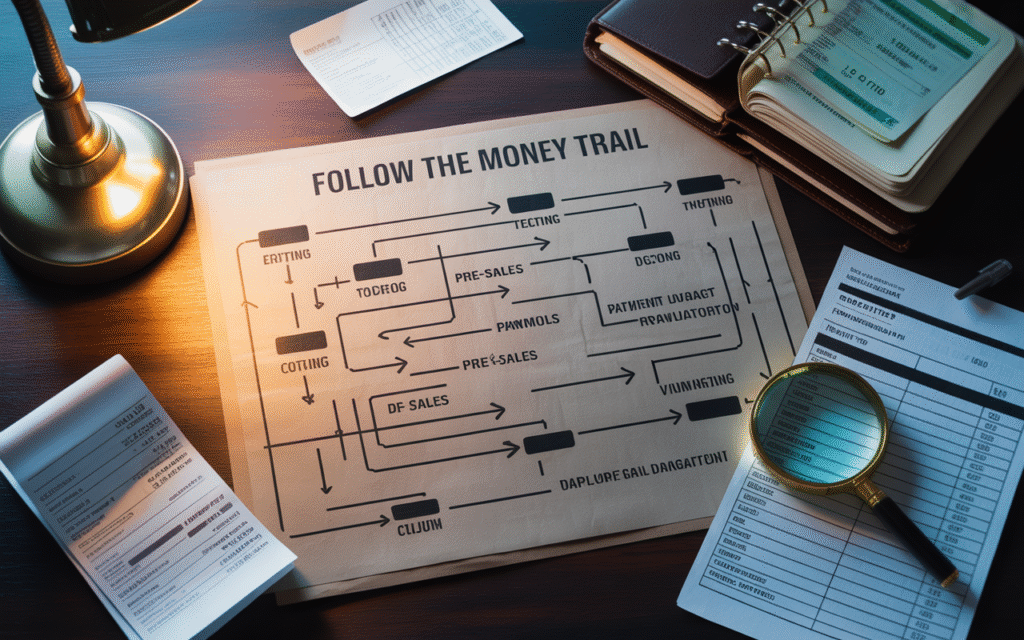
Here’s a harsh reality check: People lie. Not intentionally, but they do. They’ll tell you they love your idea, that they’d totally buy it, that it’s exactly what they’ve been looking for. But when it comes time to actually open their wallets? Crickets. That’s why payment validation is the ULTIMATE truth serum for product ideas.
Pre-selling your product before it’s fully built is one of the most powerful validation techniques available. When someone is willing to pay real money for something that doesn’t exist yet, you know you’ve struck gold. This approach works across industries – from software subscriptions to physical products to service-based businesses.
Start by creating a compelling offer for your not-yet-existing product. Be transparent about the timeline & development process. Many customers are happy to pay upfront for early access, discounted pricing, or the chance to influence the final product.
Crowdfunding platforms like Kickstarter & Indiegogo have made this approach mainstream, but you can do it on a smaller scale through your own website or social media channels.
Even if people aren’t ready to pre-purchase, you can test their willingness to pay through other methods. Create different pricing tiers & see which ones generate the most interest. Run surveys asking what people would pay for your solution.
Set up A/B tests with different price points. The goal is to understand not just IF people will pay, but HOW MUCH they’re willing to pay. This information is crucial for building a sustainable business model around your validated idea.
Spy on Your Competition: Learning From Others’ Success & Mistakes

Your competitors aren’t your enemies – they’re your FREE market research team! Every successful competitor proves that there’s demand in your market. Every failed competitor teaches you what NOT to do. Smart entrepreneurs become students of their competitive landscape, learning valuable lessons without having to make expensive mistakes themselves.
Start by identifying both direct & indirect competitors. Direct competitors offer almost exactly what you’re planning to offer. Indirect competitors solve the same problem but in different ways.
For example, if you’re building a meditation app, your direct competitors are other meditation apps. Your indirect competitors might be yoga studios, therapy services, or even Netflix (since people use entertainment to relax & de-stress).
Analyze what’s working for successful competitors. Look at their marketing messages, pricing strategies, customer reviews, & social media presence. What are customers praising? What are they complaining about? These insights can help you position your product to fill gaps in the market or improve upon existing solutions.
Don’t forget to study the failures too. Research companies that tried to solve similar problems but didn’t succeed. What went wrong? Did they target the wrong customers? Price their product incorrectly? Fail to communicate their value clearly? Learning from others’ mistakes is much cheaper than making them yourself.
Use tools like Google Trends, social media monitoring, & review sites to gather this competitive intelligence. The more you understand the landscape, the better equipped you’ll be to find your unique position in the market.
Put Your Idea in the Ring: Market Testing & Feedback Loops

The final validation strategy is to get your product in front of real users in real-world conditions. This is where theory meets reality, & where you’ll discover whether your carefully crafted assumptions hold up under pressure. Market testing doesn’t have to mean a full product launch – it can be done through pilot programs, beta testing, or limited releases.
Choose a small, manageable group of users for your initial test. These should be people who represent your target market but are also willing to provide honest, detailed feedback.
Don’t just ask if they like your product – dig deeper. How often do they use it? What features do they ignore? What problems does it solve for them, & what new problems does it create?
Create feedback loops that capture both quantitative & qualitative data. Track usage metrics, conversion rates, & retention numbers.
But also schedule regular check-ins with users to understand the story behind the numbers. Sometimes the most valuable insights come from casual conversations about how your product fits (or doesn’t fit) into people’s daily lives.
Be prepared to iterate based on what you learn. Market testing often reveals that your original vision was close but not quite right.
Maybe your target audience is slightly different than you thought. Maybe the main benefit you’re promoting isn’t what users value most.
Maybe your pricing model needs adjustment.
The companies that succeed are those that listen to their market & adapt accordingly.
Remember, the goal isn’t to prove that your original idea was perfect – it’s to discover what version of your idea will actually succeed in the marketplace.
Your ROADMAP to Validation Success: Time to Take Action

Validation isn’t a one-time checkbox you tick off before launching your product – it’s an ongoing conversation with your market that should continue throughout your entire entrepreneurial journey.
The five strategies we’ve covered – customer discovery, MVP testing, payment validation, competitive analysis, & market testing – work best when used together as a comprehensive validation framework.
Remember, the goal of validation isn’t to guarantee success (nothing can do that), but to dramatically increase your odds while minimizing your risks.
Every piece of validation data you collect is like adding another layer of foundation to your business. The stronger your foundation, the more likely your business is to weather the storms that inevitably come.
Don’t let perfectionism paralyze you. You don’t need to spend months on validation before taking any action.
Start with customer discovery this week – reach out to ten potential customers & ask about their problems. Launch a simple MVP next month.
Run a pre-sale campaign to test demand. Each step will teach you something valuable & move you closer to a validated, market-ready product.
The entrepreneurs who succeed aren’t necessarily the ones with the best ideas – they’re the ones who do the WORK to understand their market & validate their assumptions.
Your brilliant 2 AM idea might indeed change the world, but only if you’re willing to put it through the rigorous testing it deserves.
So stop dreaming & start validating. Your future customers are waiting to tell you exactly what they need – you just have to be smart enough to listen.
We’ve barely scratched the surface of validate a product idea, with it having much more going on. There’s a reason it made it onto our digital product guide and we highly recommend you check it out.