White Label Services are changing how businesses grow. Many companies struggle to offer new services or expand quickly because it costs too much money and takes too much time.
Imagine wanting to help your customers with more things, but you don’t have the extra staff or skills. This is a common problem.
Did you know that white label digital marketing is showing steady global growth through 2026, with agencies increasingly relying on external teams?
This blog post will show you how white label solutions can help you offer many new services, save time, and even make more money without big risks.
You’ll learn how to grow your business faster, build a stronger brand, and keep your customers happier, all while keeping costs low. It’s a smart way to work!
1. Offer More Services Without Hiring a Large Team
White label services offer a smart way for businesses to grow without the usual headaches of hiring.
Imagine you run a marketing agency. Your clients might ask for services you don’t currently provide, like SEO or web development.
Normally, you’d have to hire new staff, which means more salaries, benefits, and training costs. This can be a big drain on your time and money. White label services change this.
You partner with another company that already specializes in these areas. They do the work, but it’s branded as your own. Your clients see a seamless service from your agency.
This approach lets you expand your service offerings quickly. You don’t need to spend months recruiting, interviewing, and onboarding new employees.
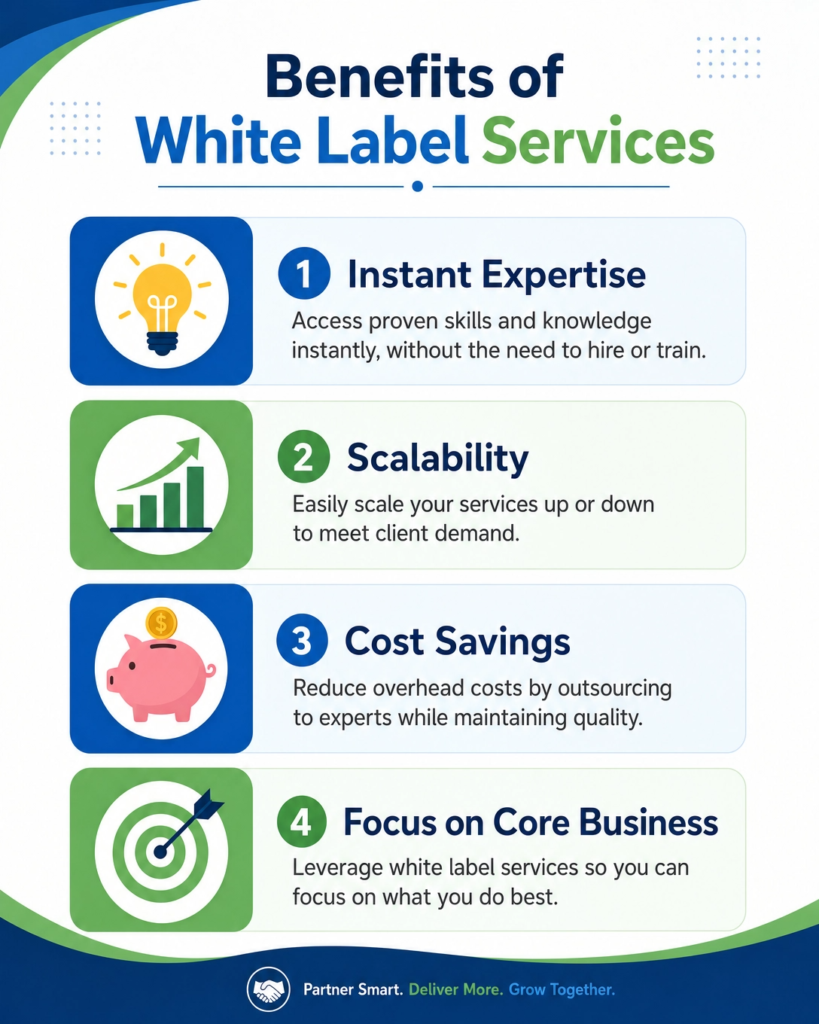
The white label partner already has the experts and the infrastructure in place. This means you can say “yes” to more client requests right away.
For example, if a client needs a new website, you can offer it through your white label partner.
The client gets their website, and you get the credit and the revenue. It’s a win-win situation that boosts your agency’s capabilities.
Think about the financial benefits. Hiring a full-time employee can cost a business significantly.
Beyond their salary, there are expenses like office space, equipment, and employee benefits.
These costs add up fast. With white label services, you pay for the service as needed. This often works on a project-by-project basis or a retainer model.
It’s a much more flexible and cost-effective way to manage your expenses. You avoid the long-term financial commitments that come with expanding your in-house team.
This financial flexibility is crucial for small and growing businesses.
Furthermore, white label partnerships reduce your operational risks. If you hire new staff, there’s always a risk they might not perform as expected, or the workload might not be consistent enough to justify their salary.
With a white label partner, you’re leveraging their expertise and established processes. They handle the quality control and delivery.
This allows you to focus on your core business activities, like client relationships and strategy.
You can offer a wider range of high-quality services without taking on the burden of managing a larger team.
This strategic advantage helps your business stay competitive and agile in a fast-changing market.
2. Save Time on Product Development
Developing new products or services from scratch takes a lot of time and effort. You need to research the market, design the product, build it, test it, and then launch it.
Each of these steps can be very complex and time-consuming. For many businesses, especially smaller ones, this process can be overwhelming.
It often requires a large investment of resources, both in terms of money and skilled personnel. This is where white label services offer a huge advantage.
With white label solutions, you don’t have to go through the entire product development cycle yourself.
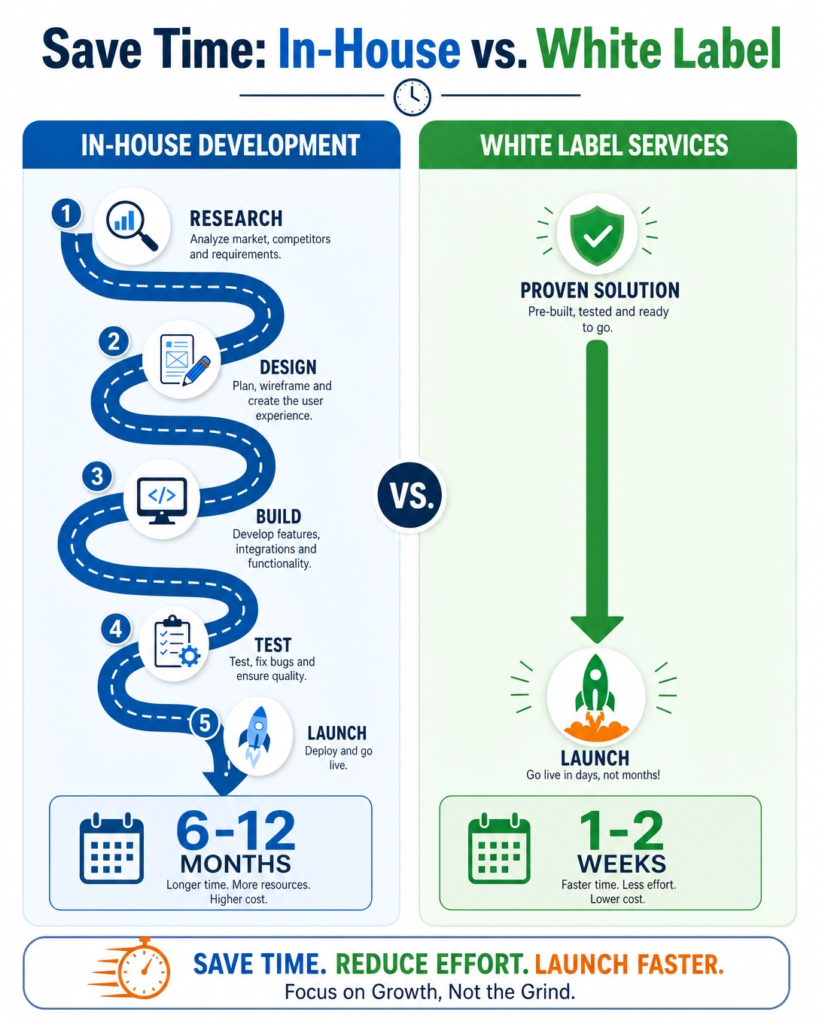
The white label provider has already done all the hard work. They have already created, tested, and refined the product or service. This means you can offer a new solution to your clients almost instantly.
Instead of spending months or even years on development, you can start selling and delivering the service in a matter of weeks or even days.
This speed to market is a critical factor in today’s fast-paced business world.
Think about the resources you save. You don’t need to hire a team of developers, designers, or quality assurance specialists.
You also avoid the costs associated with research and development, such as prototyping and testing.
The white label partner bears these costs. This allows your business to allocate its resources to other important areas, like sales, marketing, and client relationship management.
You get a fully functional, high-quality product or service without the heavy upfront investment and ongoing maintenance.
This saved time and resources translate directly into faster growth and increased profitability for your business. You can quickly respond to market demands and client needs.
If a new trend emerges, you can often find a white label solution to meet it without delay.
This agility helps you stay ahead of competitors. By leveraging existing, proven solutions, you minimize risks and maximize your potential for success.
It’s a strategic move that allows you to focus on what you do best: serving your clients and growing your brand.
3. Focus on Sales and Marketing
Running a business involves many tasks. You have to manage operations, deliver services, handle customer support, and much more.
If you also try to develop every new service in-house, your time and energy get spread very thin.
This often means less time for the activities that directly bring in money: sales and marketing. White label services help you free up this valuable time.
By outsourcing the delivery of certain services, you can shift your focus back to growing your business.
Imagine you’re a busy agency owner. Instead of spending hours training staff for a new service or overseeing its development, you can use that time to find new clients.
You can create compelling marketing campaigns, attend networking events, or refine your sales pitches.
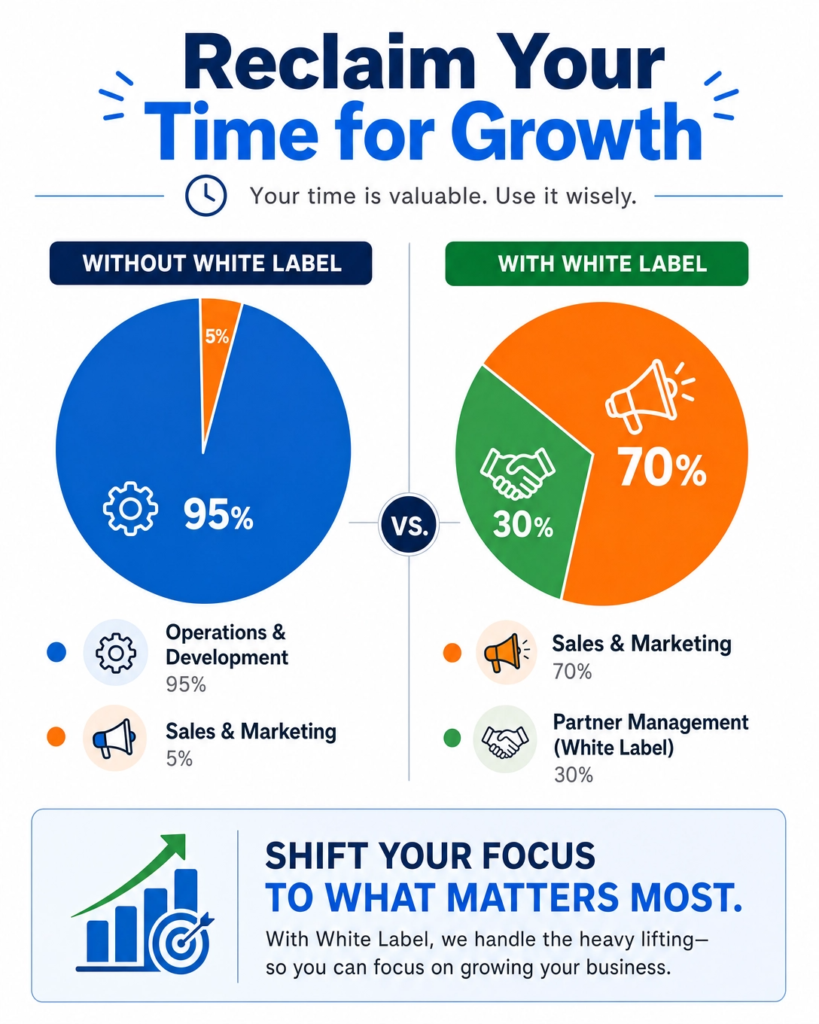
These are the activities that fill your pipeline and increase your revenue. White label partners handle the technical details and service delivery.
This allows you to concentrate on building relationships and closing deals, which are crucial for business expansion.
Effective sales and marketing are the lifeblood of any successful business. When you’re constantly bogged down by operational tasks, your marketing efforts can suffer.
You might miss opportunities to reach new audiences or fail to communicate your value effectively.
With white label services, you gain the capacity to invest more strategically in these areas.
You can develop stronger brand messaging, launch targeted advertising campaigns, and build a more robust sales funnel.
This increased focus leads to better results and a stronger market presence.
Ultimately, white label solutions empower you to be more proactive in your business growth.
You’re not just reacting to client demands; you’re actively seeking out new opportunities.
You can confidently offer a broader range of services, knowing that the delivery is handled by experts.
This confidence translates into more persuasive sales conversations and more effective marketing.
By offloading the burden of product development and service delivery, you create a powerful cycle of growth where your sales and marketing efforts are amplified, leading to sustained success and a thriving business.
4. Scale Your Business Faster
Scaling a business means growing it to handle more clients and projects without breaking down. This can be a big challenge.
Traditional growth often means hiring more people, buying more equipment, and expanding office space.
These steps are slow, expensive, and come with many risks. White label services offer a different, much faster path to scaling.
They allow you to increase your capacity almost instantly, without the typical growing pains.
Imagine a sudden surge in demand for your services. If you rely only on your in-house team, you might struggle to keep up.
This can lead to missed opportunities, unhappy clients, and a damaged reputation.
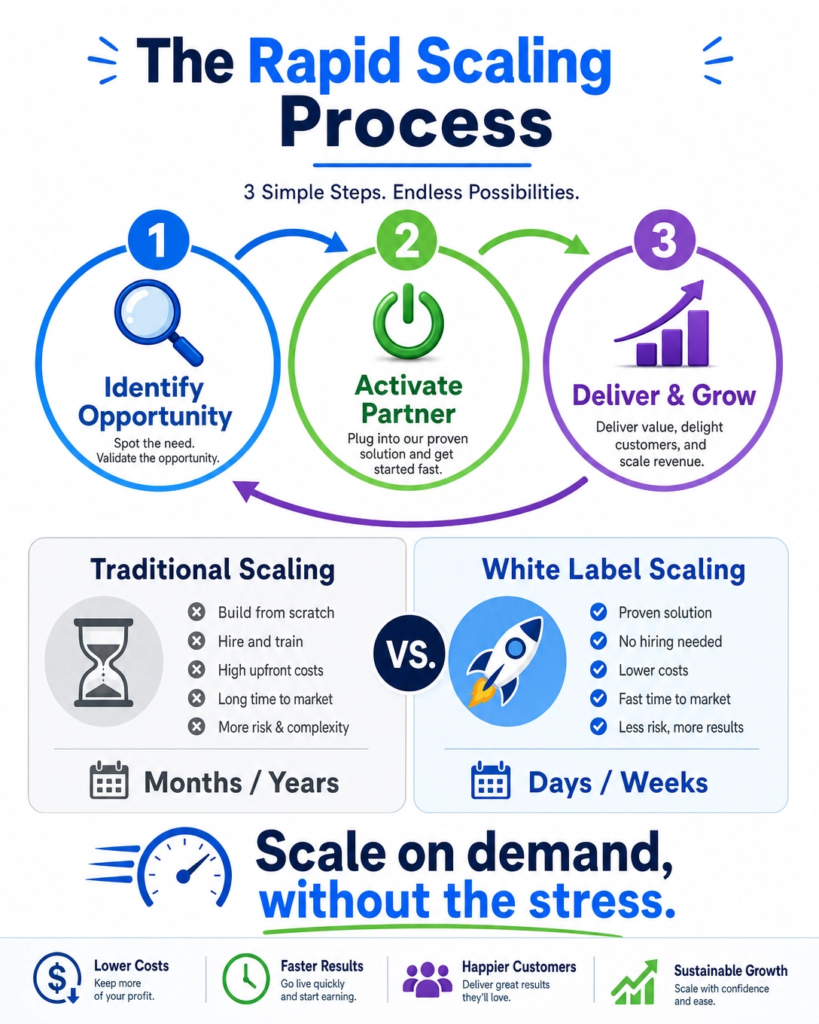
With white label partners, you can quickly tap into their resources and expertise.
They act as an extension of your team, ready to take on extra work as needed.
This flexibility means you can accept more projects and serve more clients without having to worry about overstretching your own staff or making long-term commitments to new hires.
This ability to scale on demand is a game-changer for businesses looking for rapid growth.
You can take on larger projects or expand into new markets with confidence.
The white label provider already has the infrastructure, the skilled workforce, and the proven processes to deliver high-quality results.
This means you don’t have to build everything from scratch every time you want to grow.
You simply leverage your partner’s existing capabilities, allowing you to grow your revenue and client base much faster than you could on your own.
Furthermore, white label services help you maintain quality as you scale. When you grow too quickly with an in-house team, quality can sometimes suffer due to rushed work or inexperienced staff.
White label partners are specialists in their field. They deliver consistent, high-quality work under your brand.
This ensures that your clients always receive excellent service, even as your business expands rapidly.
By removing the operational bottlenecks of traditional growth, white label solutions enable you to achieve sustainable, accelerated growth and reach your business goals much sooner.
5. Build a Stronger Brand
Your brand is more than just a logo; it’s what your customers think and feel about your business. It’s built on trust, quality, and the range of solutions you offer.
White label services play a key role in strengthening your brand. They allow you to deliver a wider array of high-quality services under your own name.
This makes your business appear more comprehensive and capable to your clients.
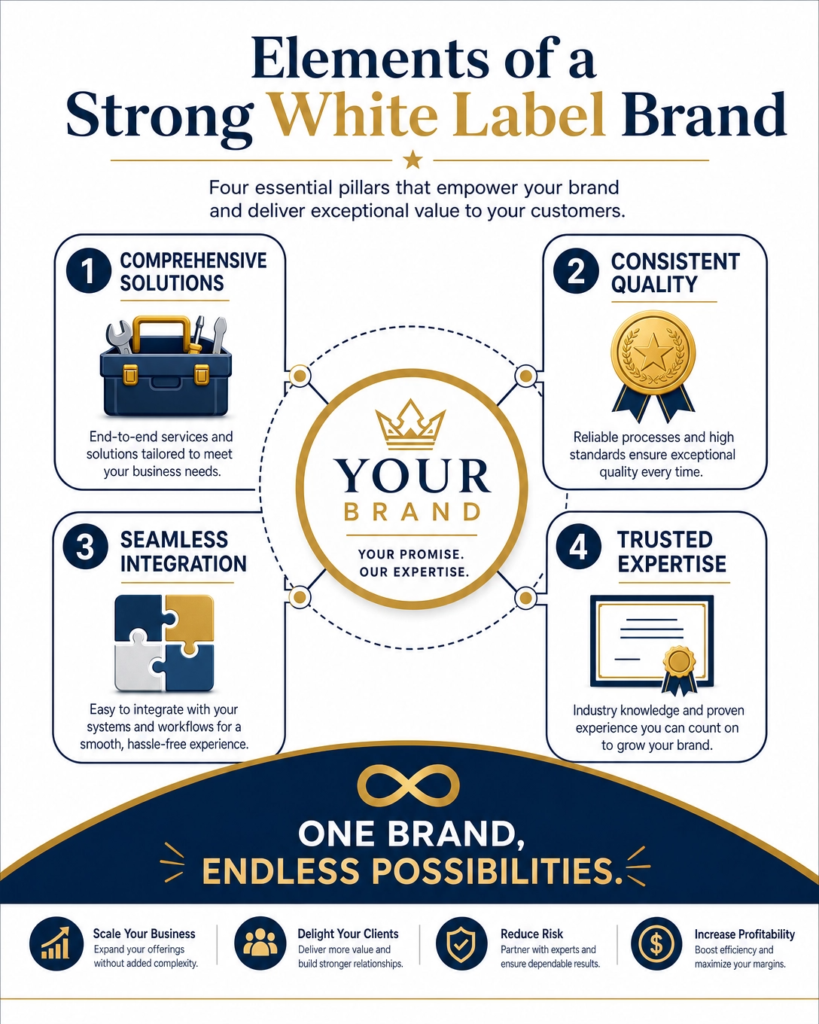
When you offer a new service through a white label partner, your clients see it as coming directly from you. This seamless integration builds confidence in your brand.
For example, if you’re a web design agency and you start offering SEO services through a white label partner, your clients will see you as a full-service digital agency.
This expands your perceived expertise and value. It helps you become a one-stop shop for your clients, making them less likely to look elsewhere for their needs.
Consistency in quality is vital for a strong brand. White label providers are experts in their specific fields. They have refined their processes and deliver consistent, professional results.
By partnering with them, you ensure that every service you offer, even those you don’t perform in-house, meets a high standard.
This consistent quality reinforces your brand’s reputation. Clients will associate your brand with reliability and excellence across all offerings, which is crucial for long-term success and customer loyalty.
Furthermore, offering diverse services under one brand helps you stand out from competitors.
In a crowded market, businesses that can provide more solutions often attract more clients.
White label services enable you to quickly add these new offerings without the massive investment of time and money required for in-house development.
This strategic advantage allows you to differentiate your brand, attract a broader client base, and increase your market share.
Ultimately, white label services empower you to build a more robust, versatile, and respected brand that clients trust and rely on for all their needs.
6. Reduce Business Costs
One of the biggest benefits of using white label services is the significant reduction in business costs.
When you decide to offer a new service, the traditional path involves many expenses.
You might need to hire new employees, which means paying salaries, benefits, and taxes.
You also need to invest in training, office space, and specialized equipment or software.
These costs can quickly add up and become a heavy burden, especially for small to medium-sized businesses. White-label services help you avoid these large upfront investments.
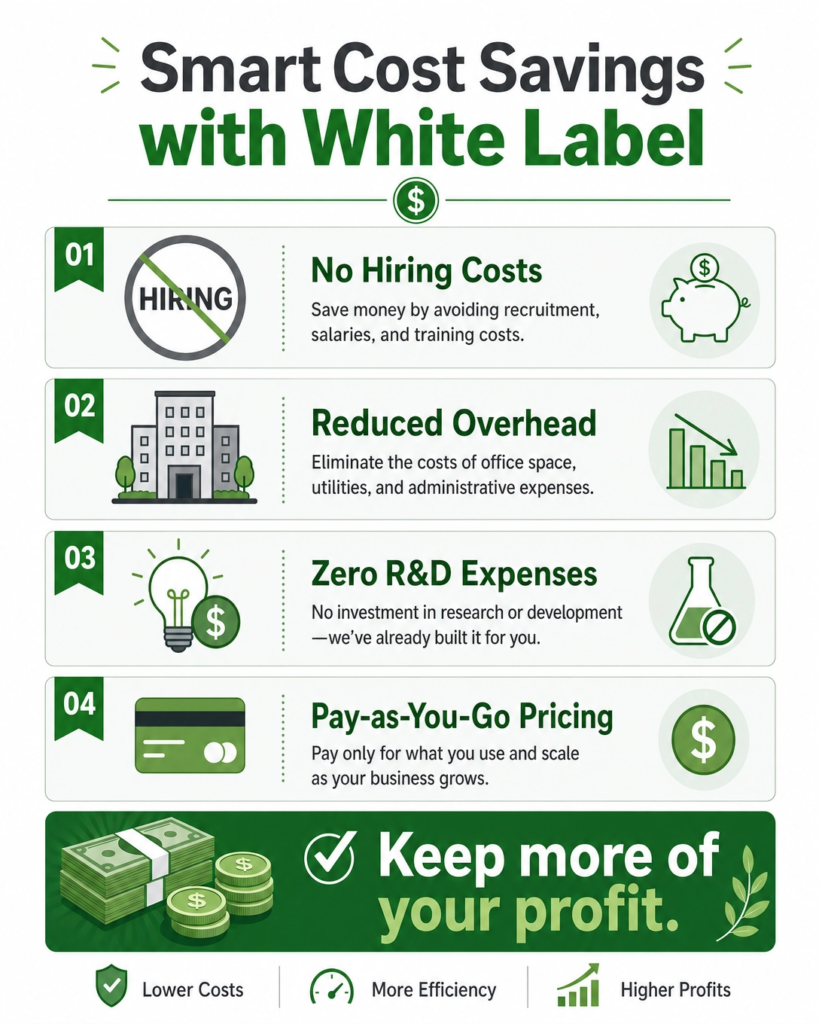
Instead of building a new department or hiring a full team, you partner with an existing provider.
This provider already has the infrastructure, the skilled staff, and the necessary tools in place.
You pay for their services as needed, often on a project basis or a monthly retainer. This model is much more flexible and cost-effective.
It turns what would be fixed costs (like salaries) into variable costs, meaning you only pay when you use the service.
This flexibility is crucial for managing your budget and adapting to changing market demands.
Consider the costs of research and development (R&D). Creating a new product or service from scratch requires extensive R&D, which can be very expensive and risky.
There’s no guarantee that your new offering will succeed. White label providers have already invested in R&D and perfected their services.
By using their ready-made solutions, you bypass these R&D costs entirely.
You get a proven product or service without having to take on the financial risk of developing it yourself.
This allows you to introduce new offerings to your clients with much lower financial exposure.
In essence, white label services allow you to access expert-level capabilities at a fraction of the cost of developing them in-house. You save money on hiring, training, equipment, software, and R&D.
These savings can then be reinvested into other areas of your business, such as sales and marketing, to drive further growth.
By reducing your operational overhead, white label solutions improve your profit margins and make your business more financially stable and competitive.
This smart financial strategy helps you stay competitive and achieve your business goals more efficiently.
7. Test New Markets Easily
Expanding into new markets can be a risky and expensive venture for any business.
Before you commit significant resources, you need to know if there’s real demand for your products or services in that new area.
This usually involves extensive market research, pilot programs, and potentially setting up new infrastructure.
These steps can be very time-consuming and costly, and there’s always a chance that the new market won’t be as profitable as you hoped.
White label services offer a smart and low-risk way to test new markets.
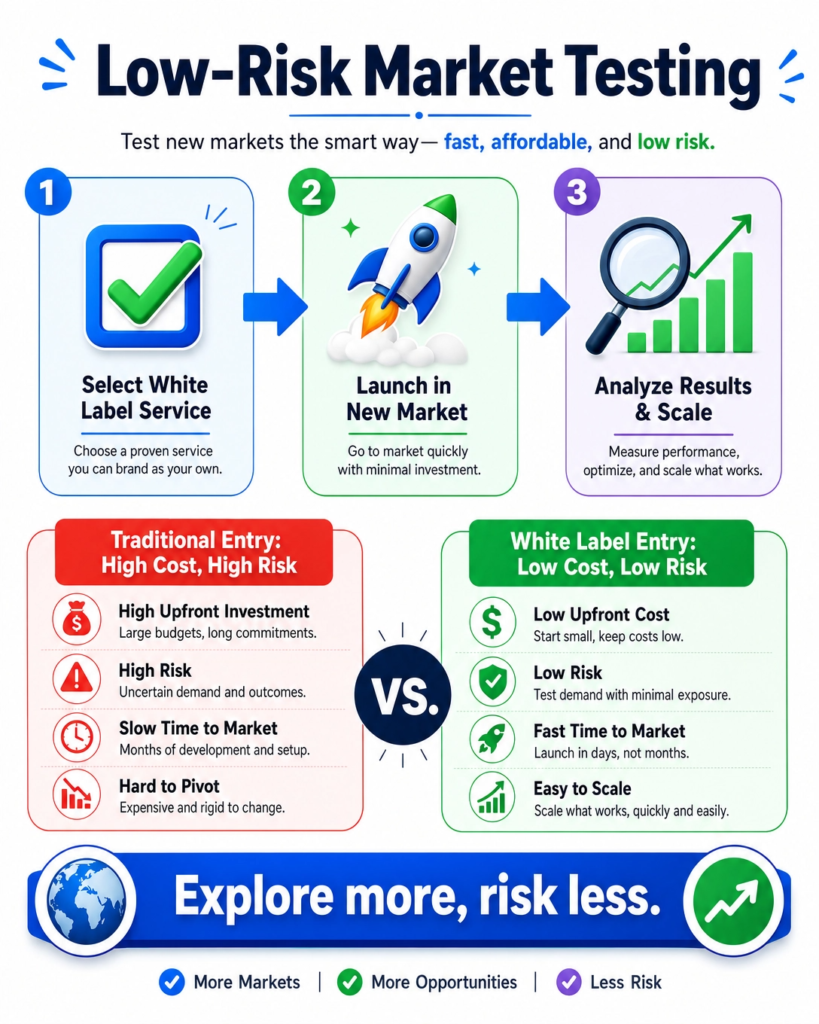
Instead of building new services from scratch for each potential market, you can leverage existing white label solutions.
This means you can quickly introduce a new service or product to a different geographic area or a new customer segment without the heavy investment.
For example, if you’re a marketing agency primarily serving local businesses, you could use a white label SEO service to test the waters with e-commerce clients in another state.
You don’t need to hire new SEO specialists or open a new office.
This approach allows you to gather valuable data and feedback with minimal financial risk.
You can see how well your white label offering performs in the new market, understand customer preferences, and identify potential challenges.
If the market proves to be successful, you can then decide to invest more heavily or even bring the service in-house.
If it doesn’t perform as expected, you can easily withdraw or pivot without having lost a large amount of capital or time. This flexibility is a huge advantage for strategic business growth.
Think of white label services as a bridge to new opportunities.
They provide a ready-made solution that you can brand as your own, allowing you to quickly enter and assess new territories.
This agility helps you stay competitive and responsive to market changes.
By reducing the barriers to entry, white label solutions empower businesses to explore more growth avenues, identify profitable niches, and expand their reach much more efficiently than traditional methods.
It’s a strategic tool for smart, informed expansion.
8. Improve Customer Satisfaction
Customer satisfaction is the cornerstone of any successful business. Happy customers are loyal customers, and they are more likely to recommend your services to others.
White label services can significantly boost your customer satisfaction by allowing you to deliver higher quality, more diverse, and more consistent services.
When you can meet more of your clients’ needs with expert solutions, they will naturally be more satisfied with your business.
One key way white label services improve satisfaction is through enhanced service quality.
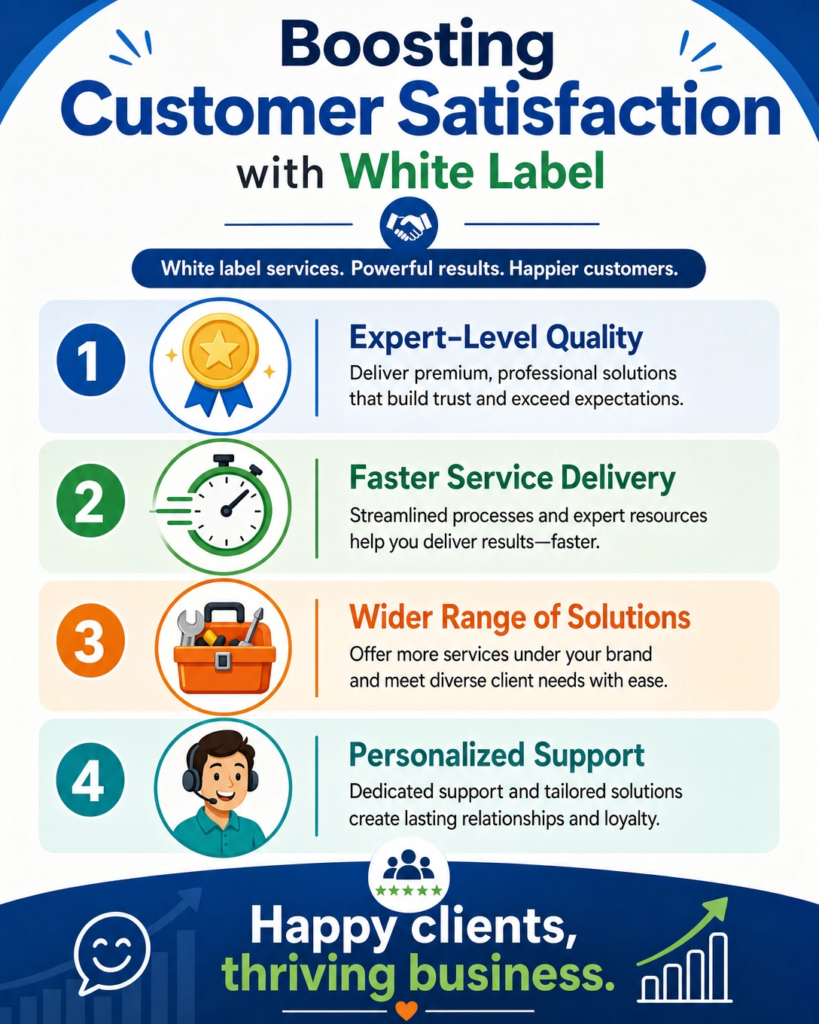
White label providers are specialists. They focus solely on their area of expertise, meaning their services are often more refined, efficient, and effective than what a generalist in-house team might produce.
By offering these expert-level services under your brand, you elevate the overall quality of your client deliverables.
Clients receive top-notch results, which directly translates into higher satisfaction and stronger trust in your brand.
This consistency in quality across all offerings is a powerful driver of customer loyalty.
Furthermore, white label solutions enable you to respond to client needs more quickly and comprehensively.
If a client expresses a need for a service you don’t currently offer, instead of turning them away or scrambling to build a new solution, you can seamlessly integrate a white label option.
This ability to say “yes” to more requests, and to deliver those solutions efficiently, makes your clients feel valued and well-served.
They appreciate having a single point of contact for a wide range of high-quality services, simplifying their own operations and strengthening their relationship with your business.
Finally, by reducing your operational burden, white label services allow your team to focus more on client relationships and personalized support.
When your internal resources aren’t stretched thin by developing and managing every service, your staff can dedicate more time to understanding client needs, providing proactive communication, and offering exceptional customer service.
This human touch, combined with high-quality service delivery, creates a superior customer experience.
Ultimately, white label services empower you to build a reputation for excellence, reliability, and responsiveness, leading to deeply satisfied customers who become long-term advocates for your brand.
9. Automate and Simplify Operations
Running a business often involves many repetitive tasks that can consume a lot of time and resources.
These tasks, while necessary, can slow down your operations and prevent your team from focusing on more strategic work.
White label services offer a powerful solution to automate and simplify many of these operational complexities.
By outsourcing certain functions to specialized providers, you can streamline your workflows and make your business run more smoothly.
Consider the operational burden of managing a diverse range of services in-house.
Each service might require its own set of tools, processes, and specialized staff. This creates a complex operational environment that can be difficult to manage efficiently.
With white label services, the provider handles all these operational details.
They have already established efficient systems, automated processes, and expert teams to deliver the service.
This means you don’t have to worry about the day-to-day management of these services; your white label partner takes care of it.
This simplification of operations leads to several benefits.
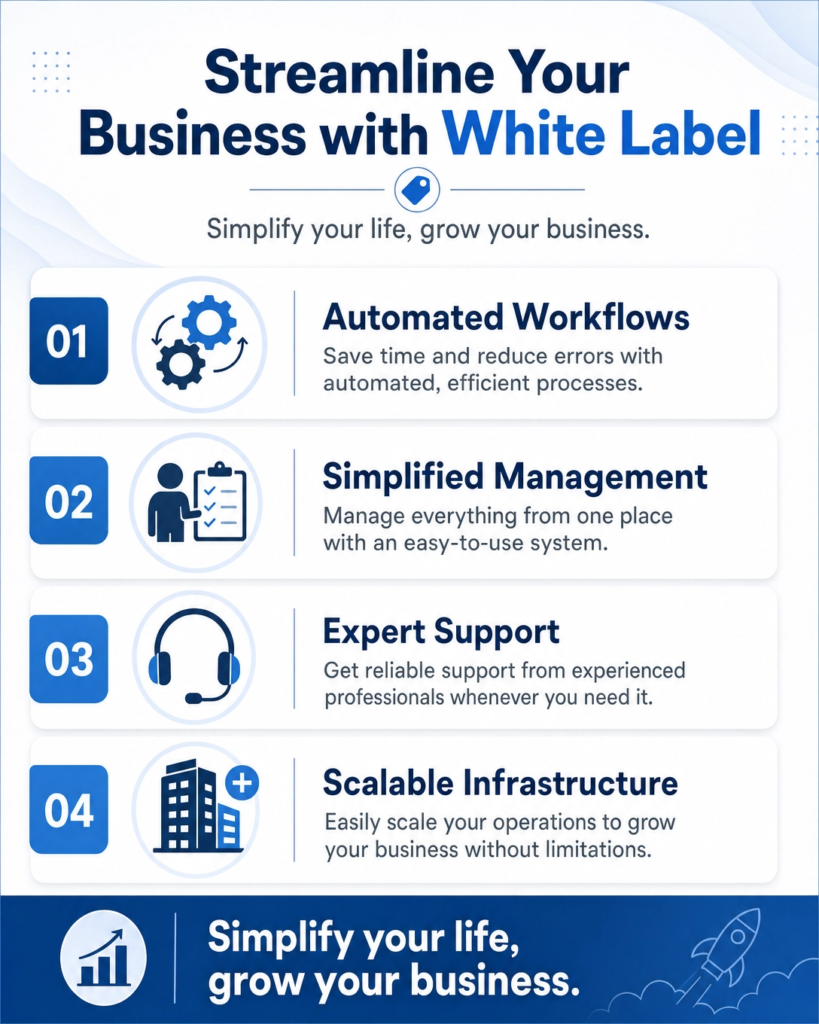
First, it reduces the chances of human error, as many processes are automated and standardized by the white label provider.
Second, it frees up your internal team from routine tasks, allowing them to focus on core business activities, client relationships, and strategic planning.
Third, it often results in faster service delivery, as white label partners are optimized for efficiency in their specific niche.
For example, if you offer white label SEO, the provider’s automated reporting and project management systems ensure timely and accurate delivery of results to your clients.
Ultimately, by leveraging white label solutions, you transform complex operational challenges into simple, managed services.
This not only saves you time and reduces stress but also improves the overall efficiency and reliability of your business.
You gain access to advanced operational capabilities without having to build or maintain them yourself.
This strategic move allows your business to operate with greater agility, respond more quickly to market demands, and achieve higher levels of productivity, all while maintaining a lean and focused internal team.
It’s about working smarter, not harder, to achieve your business goals.
10. Create Recurring Income
One of the most desirable outcomes for any business is to create recurring income.
This means having a steady stream of revenue that comes in regularly, often monthly or annually, without having to constantly acquire new customers for every sale.
Recurring income provides stability, predictability, and a solid foundation for long-term growth.
White label services are an excellent way to establish and grow these valuable recurring revenue streams.
Many white label services are designed to be ongoing. Think about services like SEO, social media management, website maintenance, or cybersecurity monitoring.
These are not one-time projects; they require continuous effort and management.
When you offer these services through a white label partner, you can package them as monthly or annual subscriptions to your clients.
Your clients pay you a regular fee, and your white label partner handles the consistent delivery of the service behind the scenes.
This creates a predictable income stream for your business.
This model benefits both you and your clients.
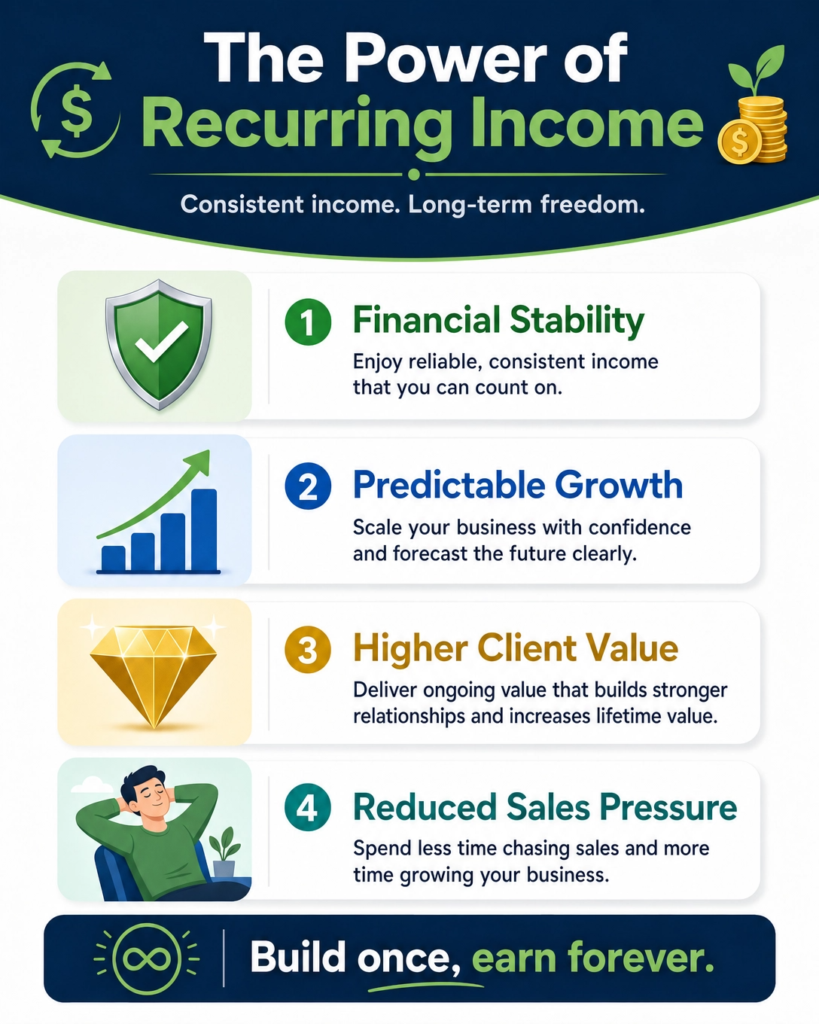
For your clients, they get continuous, expert-level service without needing to hire their own specialists.
For your business, you gain financial stability. Knowing that a certain amount of revenue will come in each month makes financial planning much easier.
It also reduces the pressure to constantly chase new sales, allowing you to focus on nurturing existing client relationships and exploring new growth opportunities.
This shift from transactional sales to recurring revenue can transform your business model.
Furthermore, recurring income services often lead to higher customer lifetime value.
When clients are satisfied with an ongoing service, they are more likely to stay with you for longer periods and even purchase additional services.
White label solutions make it easy to offer these sticky services, as the heavy lifting of delivery is managed by your partner.
This allows you to build stronger, more lasting client relationships and maximize the value of each customer.
By strategically incorporating white label services, you can build a robust portfolio of recurring income, ensuring your business has a stable and growing financial future.
Conclusion
We’ve explored ten powerful ways white label services can transform your business.
From offering more services without expanding your team to building a stronger brand and
creating recurring income, the benefits are clear.
White label solutions empower you to save time on product development, focus on sales and marketing, scale faster, reduce costs, test new markets easily, improve customer satisfaction, and automate operations.
This strategic approach allows you to leverage expert resources, expand your offerings, and enhance your competitive edge without the heavy investment and risk of in-house development.
By partnering with white label providers, you gain access to specialized expertise and ready-to-use solutions that you can brand as your own.
This not only streamlines your operations but also frees up your valuable time and resources, enabling you to concentrate on what you do best: growing your business and serving your clients.
It’s about working smarter, not harder, to achieve sustainable success and build a resilient, profitable enterprise.