A Lead Magnet Creator solves one of the biggest problems online businesses face today: getting visitors to take action. Most websites attract traffic, but very few successfully turn those visitors into subscribers or leads.
Creating high-converting lead magnets like checklists, ebooks, templates, or free guides often takes time, design skills, and strategy. That’s where a Lead Magnet Creator comes in. In this blog post, you’ll learn what a Lead Magnet Creator is, how it works, and why it’s essential for growing your email list.
In this guide, I’m going to pull back the curtain and show you exactly how to create effective lead magnets that people are genuinely excited to sign up for. We’ll dive into the psychology behind what makes them work, explore real-world examples that are crushing it right now, and I’ll give you my personal, step-by-step process to build your own. Let’s get started.
What Exactly Is a Lead Magnet?
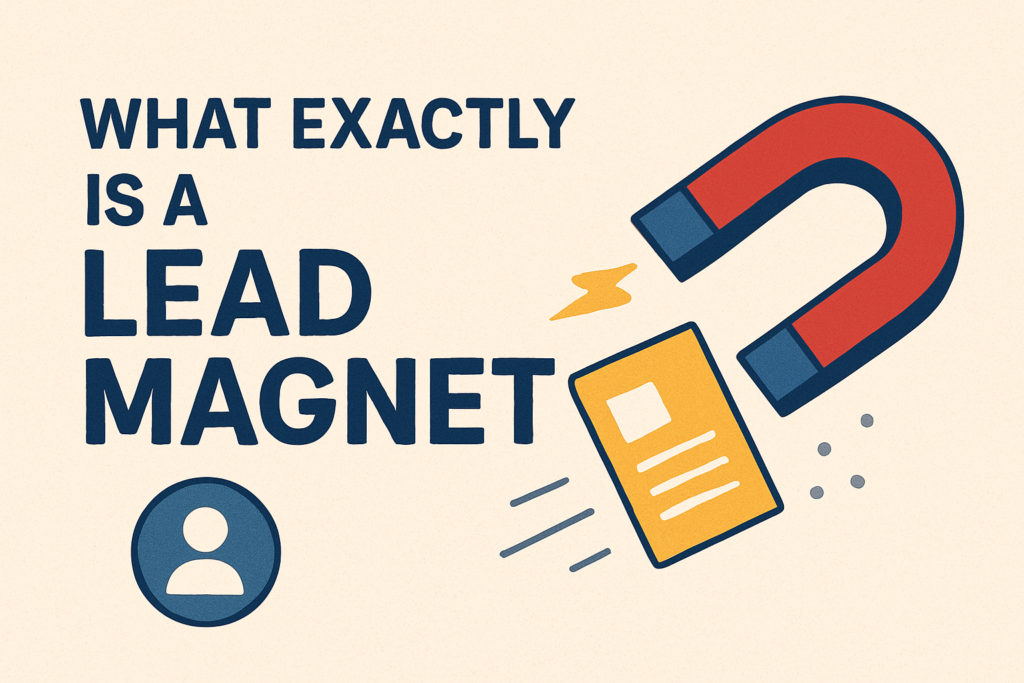
Think of a lead magnet like a free sample at a high-end chocolate shop. You get a delicious, no-strings-attached taste of what they offer. It’s a small, valuable treat that gives you a reason to stop, engage, and consider buying the whole box. In the digital world, a lead magnet is a free resource you offer to potential customers in exchange for their email address or other contact information.
It’s a simple, powerful value exchange. You provide something genuinely useful, and in return, you earn the privilege of communicating with them directly. This isn’t about tricking people into signing up for a newsletter. It’s about starting a relationship built on trust and value from the very first interaction.
And this relationship is crucial. A staggering 90.7% of marketers use their websites to generate leads, with blogs and email marketing being top channels. Your lead magnet is the bridge that connects your website content to your email list, creating a pipeline of potential customers who are actually interested in what you have to say.
The Psychology of a High-Converting Lead-Magnet-Creator
Creating a lead magnet that actually converts is more of an art than a science, but it’s rooted in some fundamental principles of human psychology. Over the years, I’ve learned that the most successful lead magnets aren’t just about giving away free stuff. They’re about understanding your audience’s deepest needs and desires. Here’s what I’ve found works best.
1. It Has to Be Hyper-Relevant
Early in my career, I made the classic mistake of creating a generic “Ultimate Marketing Checklist.” I thought, “Everyone in marketing needs a checklist, right?” I got a decent number of sign-ups, but my open rates were abysmal, and almost none of those leads ever converted into customers. They were the wrong audience.
I learned a hard lesson: relevance beats reach every single time. Your lead magnet needs to solve a specific problem for a specific person. A McKinsey report found that companies using relevance-driven personalization generate 40% more revenue than those that don’t. When your offer speaks directly to a prospect’s pain point, they feel seen and understood, and they’re far more likely to engage.
Actionable Tip: Instead of a broad topic, niche down. If you’re a social media marketer, don’t create a “Social Media Guide.” Create a “7-Day Instagram Reel Challenge for E-commerce Brands.” The specificity is what makes it irresistible to the right people.
2. It Must Provide Immediate, Tangible Value
I have a simple rule: if I wouldn’t trade my own email for it, it’s not good enough. Your audience is smart. They can spot a fluffy, low-effort PDF from a mile away. In fact, one study found that 54% of buyers don’t trust low-quality content.
Your lead magnet should offer a quick win. It needs to be something they can consume and apply in a short amount of time to see an immediate benefit. It’s not about writing a 100-page ebook; it’s about providing a powerful shortcut or a unique insight they can’t just Google in five minutes.
For example, interactive content like quizzes and calculators have a 70% higher conversion rate than passive content. Why? Because they provide instant, personalized value. A user can immediately learn something about themselves or their business, and that’s a powerful motivator.
3. It Needs to Build Trust
Your lead magnet is often the very first transaction a person has with your brand. It’s your chance to make a great first impression. A sloppy, typo-filled document sends a clear message: “We don’t care about the details.” And if you don’t care about the details in your free content, why would they trust you with their money?
Professional design, clear writing, and citing your sources are all crucial for building credibility. When you present a polished, well-researched resource, you’re not just giving away information; you’re demonstrating your expertise and your commitment to quality. This is how you start building a foundation of trust that can lead to a long-term customer relationship.
10 High-Converting Lead Magnet Ideas (and Why They Work)
Alright, now for the fun part. Let’s talk about the types of lead magnets that are absolutely crushing it right now. I’ve experimented with dozens of formats over the years, and these are the ones that consistently deliver the highest conversion rates. I’ll also share some real-world examples to get your creative juices flowing.
1. Interactive Quizzes and Assessments
If there’s one lead magnet type that has been a total game-changer for me, it’s interactive content. Quizzes, assessments, and calculators have an average conversion rate of 20-40%, with some reaching as high as 60%. They work because they tap into our natural curiosity to learn more about ourselves.
- Why it works: They’re engaging, personalized, and provide instant gratification. Users get a customized result that feels unique to them, which is far more valuable than a generic PDF.
- Real-World Example: HubSpot’s Website Grader is a classic. You enter your website URL, and it gives you a score and a personalized report on how to improve. It’s a brilliant lead magnet because it provides immense value while also qualifying leads for their services.
2. ROI Calculators
For B2B marketers, ROI calculators are pure gold. They answer the most critical question on a potential customer’s mind: “Is this worth the investment?” Some case studies show that personalized calculators can be tied to as much as 45% of total revenue.
- Why it works: They translate the benefits of your product or service into cold, hard numbers. It’s a powerful way to demonstrate value and justify a purchase decision.
- Real-World Example: Outgrow, a platform for creating interactive content, has a gallery of ROI calculators that their customers have built. These tools help potential buyers see the financial impact of using their software.
3. Checklists and Cheat Sheets
Don’t underestimate the power of simplicity. Checklists and cheat sheets are some of the highest-converting lead magnets because they are incredibly easy to consume. They take a complex process and break it down into simple, actionable steps. Content-specific cheat sheets can convert at around 34%.
- Why it works: They promise a quick and easy solution to a specific problem. They’re the perfect “quick win” that your audience is looking for.
- Real-World Example: Brian Dean from Backlinko is a master of this. He offers a “Link Building Checklist” that boils down the complex process of SEO into a simple, step-by-step guide.
4. Templates and Swipe Files
Why start from scratch when you can use a proven template? Templates and swipe files are incredibly valuable because they save your audience a ton of time and effort. They provide a fill-in-the-blank solution that they can immediately put to use.
- Why it works: They offer a shortcut to a desired outcome. Instead of just telling them how to do something, you’re giving them the tool to actually do it.
- Real-World Example: HubSpot offers a massive library of free business templates, from blog post templates to social media calendars. It’s a treasure trove of value for their target audience.
5. Mini-Courses (Delivered via Email)
An email mini-course is a fantastic way to build a relationship with your new subscribers over time. You break down a larger topic into a series of 5-7 emails, delivered daily or every few days. This format is great for teaching a skill or walking someone through a process.
- Why it works: It trains your new subscribers to open your emails, which is great for your deliverability. It also allows you to build trust and demonstrate your expertise over a longer period.
- Real-World Example: Amy Porterfield, an online marketing expert, offers a free masterclass on how to get started with digital courses. It’s a high-value mini-course that naturally leads into her paid programs.
6. Data-Driven Reports and Whitepapers
If you’re in a B2B industry, original research can be an incredibly powerful lead magnet. Compiling industry data into a comprehensive report positions you as a thought leader and provides unique insights that your audience can’t get anywhere else.
- Why it works: It provides exclusive, high-value information that can help your audience make better decisions. It’s also highly shareable and can generate a lot of backlinks.
- Real-World Example: The Content Marketing Institute releases an annual report on “B2B Content Marketing Benchmarks, Budgets, and Trends.” It’s a must-read for anyone in the industry and a brilliant lead magnet.
7. Webinars
Webinars are a classic for a reason. They have an incredibly high perceived value and can convert at rates as high as 70% for long-form video formats. They allow you to connect with your audience in a more personal, interactive way.
- Why it works: They offer a deep dive into a specific topic and allow for real-time Q&A. It’s a great way to build a personal connection and handle objections.
- Real-World Example: Neil Patel frequently hosts webinars on SEO and digital marketing topics. He provides a ton of value and then typically makes an offer for one of his paid products at the end.
8. Free Trials and Demos
For SaaS companies, a free trial or a product demo is the ultimate lead magnet. It allows potential customers to experience the value of your product firsthand. Product-influenced revenue is highest among SaaS companies with a self-serve freemium model, making up about 90% of total revenue for top-quartile companies.
- Why it works: It removes the risk for the customer. They can try before they buy, which is a powerful motivator.
- Real-World Example: Almost every major SaaS company, from Slack to Dropbox, offers a free trial or a freemium version of their product.
9. Toolkits and Resource Libraries
A toolkit is a collection of resources that helps your audience achieve a specific goal. It could include checklists, templates, swipe files, and links to useful tools. It’s like a one-stop shop for solving a particular problem.
- Why it works: It’s a high-value offer that provides a comprehensive solution. It saves your audience the time and effort of having to find all of those resources themselves.
- Real-World Example: Smart Passive Income offers a “Toolkit” with all of Pat Flynn’s favorite tools for building an online business.
10. Ebooks and Guides
While some might say the ebook is dead, I disagree. A well-written, beautifully designed ebook on a topic your audience is desperate to learn about can still be an incredibly effective lead magnet. The key is to focus on quality over quantity. 75% of marketers using opt-in forms use ebooks specifically.
- Why it works: It allows for a deep dive into a complex topic. It positions you as an expert and provides a comprehensive resource that your audience can refer back to again and again.
- Real-World Example: My friend Joanna Wiebe at Copyhackers offers a fantastic ebook called “The Ultimate Guide to No-Fluff, High-Converting Web Copy.” It’s a masterclass in copywriting and a perfect example of a high-value ebook.
My 5-Step Process for Creating a Killer Lead Magnet
Okay, so we’ve covered the why and the what. Now, let’s get into the how. This is my personal, battle-tested, 5-step process for creating a lead magnet that gets results. I’ve used this exact framework to create dozens of lead magnets for myself and my clients, and it works like a charm.
Step 1: Identify Your Ideal Customer’s #1 Problem
This is the most important step, and it’s the one most people skip. You can have the most beautifully designed ebook in the world, but if it doesn’t solve a real, burning problem for your ideal customer, no one will download it. You need to get inside their head and figure out what’s keeping them up at night.
- How to do it:
- Survey your existing audience: If you have an email list or a social media following, just ask them! “What’s the #1 thing you’re struggling with right now when it comes to [your topic]?”
- Read online forums and communities: Go to Reddit, Quora, Facebook groups, and other online communities where your ideal customers hang out. What questions are they asking over and over again?
- Analyze your blog comments and customer support emails: What are the common themes and questions that keep popping up?
- Do some keyword research: What are people searching for on Google? Tools like Ahrefs and SEMrush can be a goldmine of ideas.
Once you’ve identified a handful of potential problems, pick the one that is most urgent and that you are uniquely qualified to solve.
Step 2: Choose the Perfect Format
Now that you know the problem you’re going to solve, it’s time to choose the best format for your lead magnet. The format should match the problem and the way your audience likes to consume content.
- How to do it:
- If the problem is a lack of knowledge: An ebook, a guide, a webinar, or a mini-course would be a great fit.
- If the problem is a lack of time or resources: A checklist, a template, a swipe file, or a toolkit would be perfect.
- If the problem is a lack of clarity or direction: A quiz, an assessment, or a calculator would be ideal.
Don’t be afraid to get creative here. The goal is to choose a format that delivers the solution in the most effective and efficient way possible.
Step 3: Create the Content (and Make It Awesome)
This is where the rubber meets the road. It’s time to actually create the content for your lead magnet. My advice? Go above and beyond. Your lead magnet is a representation of your brand, so make it the best it can possibly be.
- How to do it:
- Start with a detailed outline: This will keep you focused and ensure your content flows logically.
- Write in a conversational, easy-to-understand tone: No one wants to read a dry, academic paper. Write like you’re talking to a friend.
- Use lots of examples, stories, and visuals: This will make your content more engaging and memorable.
- Get a second pair of eyes on it: Have a friend or colleague proofread it for typos and grammatical errors.
Remember, the goal is to provide a quick win. Keep it focused, actionable, and easy to digest.
Step 4: Design It to Look Professional
Design matters. A lot. A well-designed lead magnet looks more professional, more valuable, and more trustworthy. You don’t need to be a professional designer to create something that looks great. Tools like Canva have made it incredibly easy to create beautiful, professional-looking documents.
- How to do it:
- Use a clean, simple layout: Don’t overcrowd your pages with text and images.
- Use your brand colors and fonts: This will help to reinforce your brand identity.
- Use high-quality images and graphics: Stock photo sites like Unsplash and Pexels are great resources for free, high-quality images.
- Create a compelling cover: The cover is the first thing people will see, so make it eye-catching and descriptive.
Step 5: Set Up the Delivery and Follow-Up
Once your lead magnet is created and designed, you need to set up a system for delivering it to your new subscribers and following up with them. This is where your email marketing software (like ConvertKit, Mailchimp, or ActiveCampaign) comes in.
- How to do it:
- Create a dedicated landing page: This is a standalone page on your website with the sole purpose of getting people to sign up for your lead magnet. It should have a compelling headline, a clear description of the benefits, and a simple sign-up form.
- Set up an automated email sequence: This is a series of emails that will be sent to your new subscribers automatically. The first email should deliver the lead magnet, and the subsequent emails should continue to provide value and build a relationship.
Your follow-up sequence is just as important as the lead magnet itself. It’s your opportunity to turn a new subscriber into a raving fan and, eventually, a customer.
Final Thoughts: Your Journey as a Lead-Magnet-Creator
Becoming a masterful lead-magnet-creator is a journey, not a destination. It’s about developing a deep sense of empathy for your audience and a relentless commitment to providing value. The digital marketing landscape is always changing, but the core principles of building trust and solving problems will never go out of style.
Don’t be afraid to experiment. What works for one audience might not work for another. Test different formats, different headlines, and different offers. Pay close attention to your conversion rates and, more importantly, to the quality of the leads you’re generating. Are they opening your emails? Are they engaging with your content? Are they eventually becoming customers?
I still remember the feeling of seeing my email list grow, not just with random names, but with people who were genuinely excited to hear from me. It transformed my business, and it can transform yours too. It all starts with that first, simple, powerful value exchange. That first lead magnet.
So, what are you waiting for? Go out there and create something amazing. Your audience is waiting for it.
We’ve barely scratched the surface of lead-magnet-creator, with it having much more going on. There’s a reason it made it onto our digital product guide and we highly recommend you check it out.