Email automation works by setting up a system where emails are triggered by actions, which means when someone does something like signing up or clicking a link, your system sends the right email instantly without you doing anything manually.
Studies show that automated emails can generate up to 320% more revenue than non-automated emails, proving how powerful this strategy is (Campaign Monitor).
In this blog post, you will learn simple steps to set up email automation, send smarter emails, save time, and build stronger relationships with your audience while increasing your digital product sales easily.
Hack 1: Start With a Welcome Email Series
Imagine someone new walks into your store. You wouldn’t ignore them, right? You’d greet them and make them feel welcome. Email automation works the same way.
When someone signs up for your email list, they are like that new customer. A welcome email series is your chance to say hello and make a great first impression.
It’s not just one email. It’s a set of 2-4 emails that new subscribers get automatically. These emails are sent over a few days or a week.
They are designed to introduce your brand, share valuable information, and guide new subscribers. Think of it as a friendly conversation that happens on its own.
Welcome emails are super effective. People are most engaged right after they sign up.
They are curious about you. This is when they are most likely to open your emails and click on your links.
A good welcome series can build trust and turn new subscribers into loyal customers. It sets the tone for your relationship.
What to Include in Your Welcome Series:
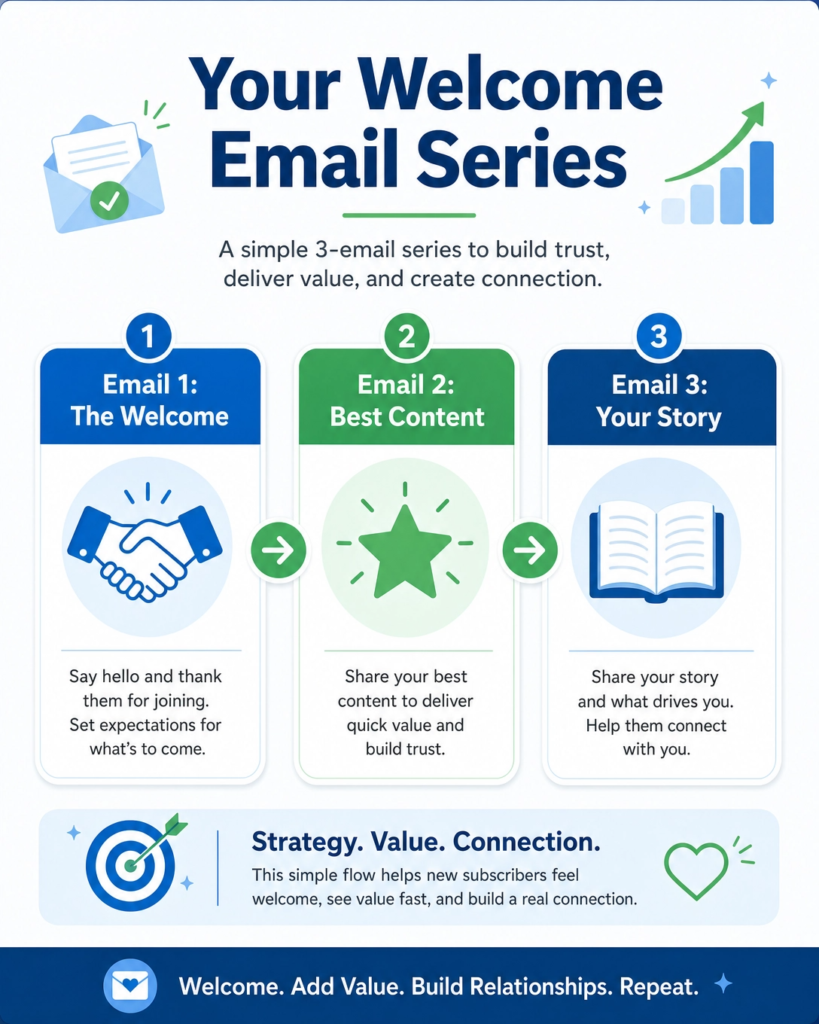
Email 1: The Immediate Welcome
Say Thank You: Thank them for joining your list. Make them feel appreciated.
Introduce Yourself/Your Brand: Briefly explain who you are and what you do. Keep it simple.
Set Expectations: Tell them what kind of emails they will get and how often. This helps them know what to expect.
Offer a Small Gift (Optional): A discount code, a free guide, or a helpful tip can be a nice surprise.
Email 2: Share Your Best Content
Provide Value: Don’t just sell. Share your most popular blog posts, videos, or resources. Show them you are an expert.
Solve a Problem: Offer a quick solution to a common problem your audience faces. This builds credibility.
Email 3: Tell Your Story or Introduce Your Products
Connect Emotionally: Share a bit about your journey or why you started your business. People love stories.
Gentle Product Introduction: Briefly mention how your products or services can help them. Don’t be pushy.
Use clear, easy-to-understand language. Avoid jargon. Write like you’re talking to a friend.
Make your emails easy to read on any device. Use short paragraphs and bullet points.
A good welcome series makes new subscribers feel valued and excited to be part of your community. It’s the first step in building a strong connection with your audience. Start building yours today!
Hack 2: Offer a Valuable Lead Magnet
Imagine you want to build a house. You wouldn’t just start digging without a plan, right? You’d want blueprints, tools, and maybe some expert advice.
In the world of email automation, a lead magnet is like that valuable tool or advice. It’s something you give away for free to get people to sign up for your email list. It’s a win-win: they get something useful, and you get their email address.
A lead magnet is a free piece of content that solves a specific problem for your ideal customer. It’s usually something quick and easy to consume.
It could be an e-book, a checklist, a template, a video, or even a free mini-course. The key is that it must be valuable and relevant to your audience.
People are careful with their email addresses. They don’t want their inbox filled with junk. A lead magnet gives them a good reason to share their email with you.
It shows them that you can provide value. It helps you attract the right kind of people to your list – people who are actually interested in what you offer. This means your emails will be more effective later on.
Ideas for Valuable Lead Magnets:
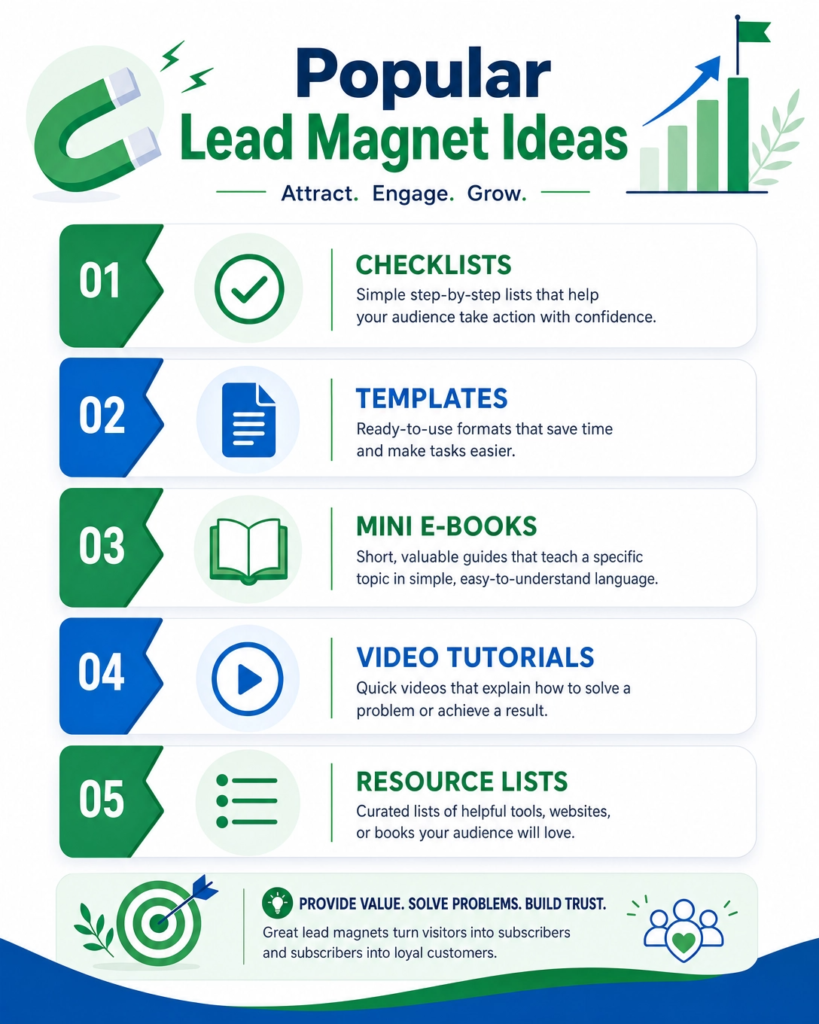
Checklists: Simple, easy-to-use lists that help people complete a task. For example, a “Website Launch Checklist” or a “Daily Productivity Checklist.”
Templates: Pre-designed documents or tools that save time. Think of a “Social Media Post Template” or a “Budget Planner Template.”
Mini E-books/Guides: Short, focused books that teach a specific skill or solve a particular problem. For instance, “5 Steps to Better Sleep” or “Beginner’s Guide to Healthy Eating.”
Video Tutorials: Quick videos that show how to do something. Like “How to Edit Photos on Your Phone” or “Quick Yoga Stretches for Beginners.”
Resource Lists: A curated list of helpful tools, websites, or books related to your niche. For example, “Top 10 Tools for Online Business Owners.”
Your lead magnet should be easy to download or access. Once someone signs up, they should get it right away. This creates a positive experience.
Promote your lead magnet on your website, social media, and in your blog posts. Make it clear what people will get and how it will help them.
A great lead magnet is the first step to building a strong email list. It helps you connect with people who are genuinely interested in your content and products.
It’s a powerful tool in your email automation strategy. Start thinking about what valuable freebie you can offer today!
Hack 3: Segment Your Audience
Imagine you are talking to a group of people. If everyone in the group has different interests, it’s hard to say something that everyone will find useful.
Email marketing is similar. If you send the same email to everyone on your list, some people might find it boring or irrelevant. This is where segmenting your audience comes in.
It means dividing your email list into smaller groups based on what they like or how they act. This way, you can send them emails that are just right for them.
Audience segmentation is like sorting your friends into different groups based on their hobbies.
You wouldn’t invite your friend who loves hiking to a movie night if they prefer being outdoors, right?
In email, you group your subscribers by things like:
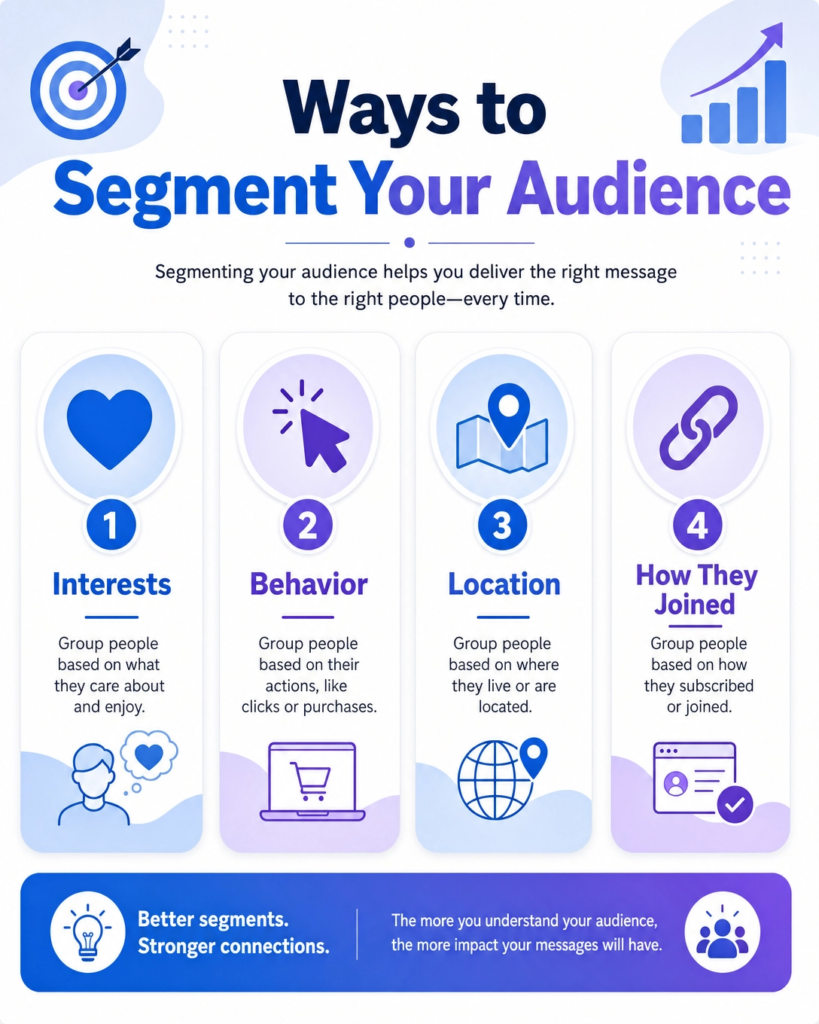
Their Interests: What topics do they care about? (e.g., fitness, cooking, technology)
Their Behavior: What have they done on your website? (e.g., bought a product, visited a certain page, downloaded a freebie)
Their Location: Where do they live? (This can be useful for local businesses or events)
How They Joined Your List: Did they sign up for a specific freebie? (e.g., a checklist for beginners, an advanced guide)
Sending the right message to the right person at the right time is key to good email marketing. When you segment your audience, your emails become much more powerful.
Here’s why:
More Engagement: People are more likely to open and click on emails that are about things they care about. This means more people will read your messages.
Better Results: When emails are relevant, people are more likely to buy your products, sign up for your services, or take the action you want them to take.
Less Unsubscribes: If people always get emails they don’t care about, they will eventually unsubscribe. Segmentation helps keep your list healthy and happy.
Builds Trust: When you send helpful, personalized emails, your audience feels like you understand them. This builds a stronger relationship and trust.
Most email marketing tools let you segment your audience easily. You can set up rules to automatically put people into different groups.
For example, if someone downloads your “Beginner’s Guide to Yoga,” you can put them in a “Beginner Yoga” segment. Then, you can send them emails about beginner yoga poses or products.
Start simple. Don’t try to create too many segments at once. Think about the most important differences in your audience. What information would be most useful to them?
Even just two or three segments can make a big difference. Personalized emails feel more like a conversation and less like a broadcast.
This makes your email automation much more effective and helps your business grow by connecting with your audience on a deeper level. It’s about being smart with your emails, not just sending more of them.
Hack 4: Use Behavior-Based Automation
It’s a smart way to send emails. Instead of sending emails on a fixed schedule, you send them when someone does something specific.
Behavior-based emails are highly effective because they are super relevant.
You’re not guessing what someone might want; you know what they’re interested in because they just showed you!
This leads to:
Higher Open Rates: People open emails that are about things they care about.
More Clicks: If the email is relevant, they are more likely to click on links inside.
Increased Sales: When you offer the right thing at the right time, people are more likely to buy.
Better Customer Experience: Your customers feel understood and valued when they receive helpful, timely messages.
Examples of Behavior-Based Automation
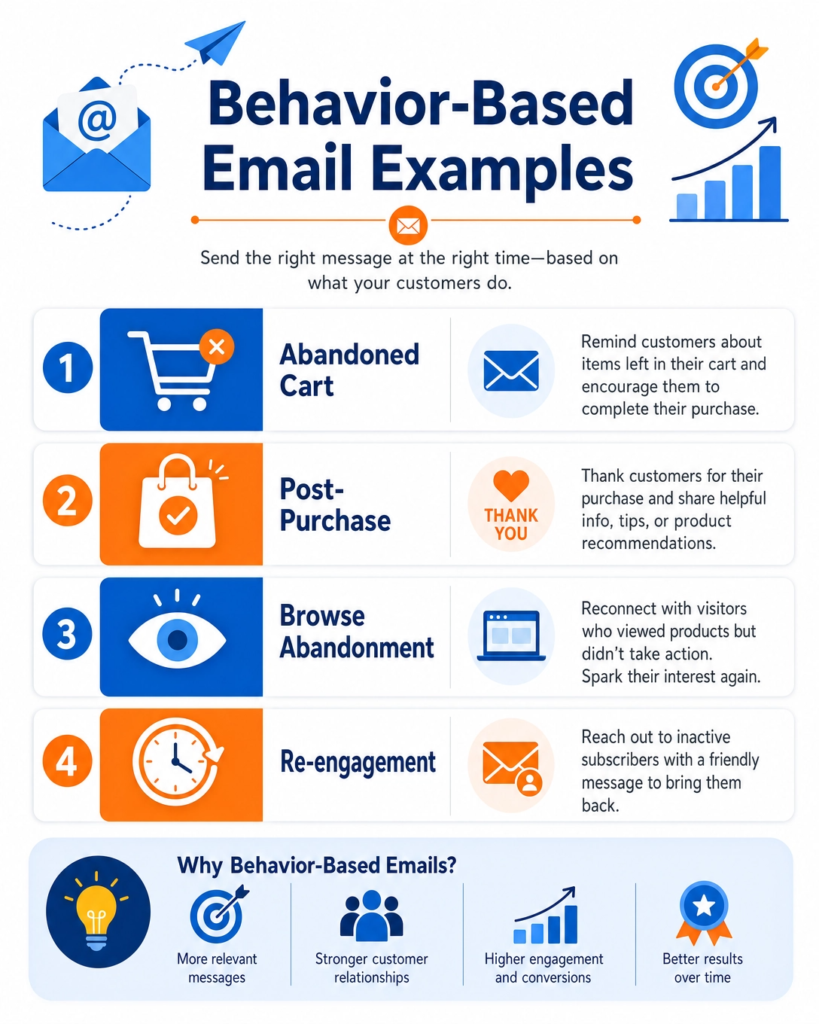
Abandoned Cart Reminders: This is one of the most common and effective. A simple email reminding someone they left items in their cart can bring them back to complete the purchase.
Post-Purchase Follow-ups: After a sale, send emails with product instructions, warranty info, or suggestions for complementary products. This builds loyalty.
Browse Abandonment: If someone looks at a few products but doesn’t add them to a cart, you can send an email with those products or similar ones.
Re-engagement Campaigns: For subscribers who haven’t engaged in a while, send a series of emails to try and win them back. Maybe a special offer or a survey to understand why they’ve been quiet.
Setting up these automations might sound tricky, but most email marketing platforms make it quite easy.
You set up the rules once, and the system does the rest. It’s like having a smart assistant who knows exactly when to talk to each customer.
By using behavior-based automation, you make your email marketing smarter, more personal, and much more effective.
It helps you connect with your audience exactly when they need you most, turning actions into opportunities.
Hack 5: Create a Simple Sales Funnel
A sales funnel is a step-by-step process that leads potential customers through your business.
It starts wide at the top, where many people are just learning about you.
Then, it narrows down as people become more interested and ready to buy.
Each step in the funnel has a specific goal, and email automation helps you move people smoothly from one step to the next.
Without a funnel, your marketing efforts can feel random. A sales funnel gives you a clear plan.
It helps you:
Attract the Right People: By offering valuable content at each stage, you draw in people who are genuinely interested.
Build Trust: As people move through your funnel, they learn more about you and your products, building confidence.
Increase Sales: A well-designed funnel gently guides people towards a purchase, making them more likely to buy.
Save Time: Once set up, your email automation does the work of nurturing leads, so you don’t have to manually follow up with everyone.
Steps in a Simple Sales Funnel:
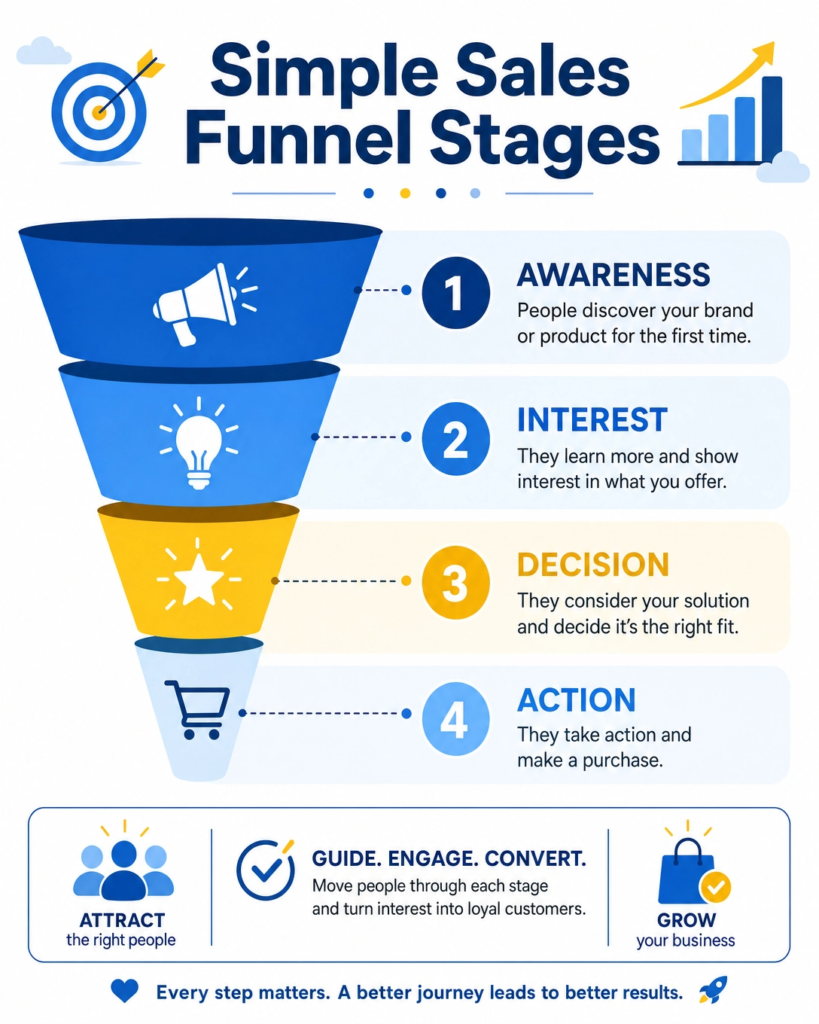
Step 1: Awareness (Top of the Funnel)
Goal: Get people to know about you. This is where you offer your lead magnet (like we talked about in Hack 2). People sign up for your freebie and join your email list.
Email Automation: Send your welcome email series.
Step 2: Interest (Middle of the Funnel)
Goal: Get people more interested in what you do. Share more valuable content that helps them. Show them how you can solve their problems.
Email Automation: Send emails with blog posts, case studies, or testimonials. Show them how your product or service has helped others.
Step 3: Decision (Bottom of the Funnel)
Goal: Help people decide to buy. This is where you talk more directly about your product or service.
Email Automation: Send emails that highlight your product’s benefits, offer a special discount, or invite them to a webinar or demo.
Step 4: Action (Purchase)
Goal: They buy! After they purchase, your automation doesn’t stop. Send thank-you emails and follow-up sequences.
Building a simple sales funnel with email automation means you’re always working to turn new visitors into happy customers, even when you’re not actively at your computer.
It’s a smart way to grow your business steadily and predictably.
Hack 6: Add Clear Call-to-Actions
A CTA is usually a button or a link in your email. It uses action-oriented words to encourage your reader to take the next step.
Examples include “Shop Now,” “Learn More,” “Download Your Free Guide,” “Sign Up Today,” or “Watch the Video.”
It’s the bridge between your email content and the action you want your audience to take.
Even if your email content is amazing, people might not know what to do next without a clear CTA. A good CTA removes confusion and guides your reader.
This leads to:
More Clicks: When people know exactly what to do, they are more likely to click.
Higher Conversions: More clicks often mean more sales, sign-ups, or downloads.
Better User Experience: Readers appreciate clear guidance. It makes their journey with your brand smoother.
Achieving Your Goals: Every email you send should have a purpose. A CTA helps you achieve that purpose.
Tips for Creating Effective CTAs:
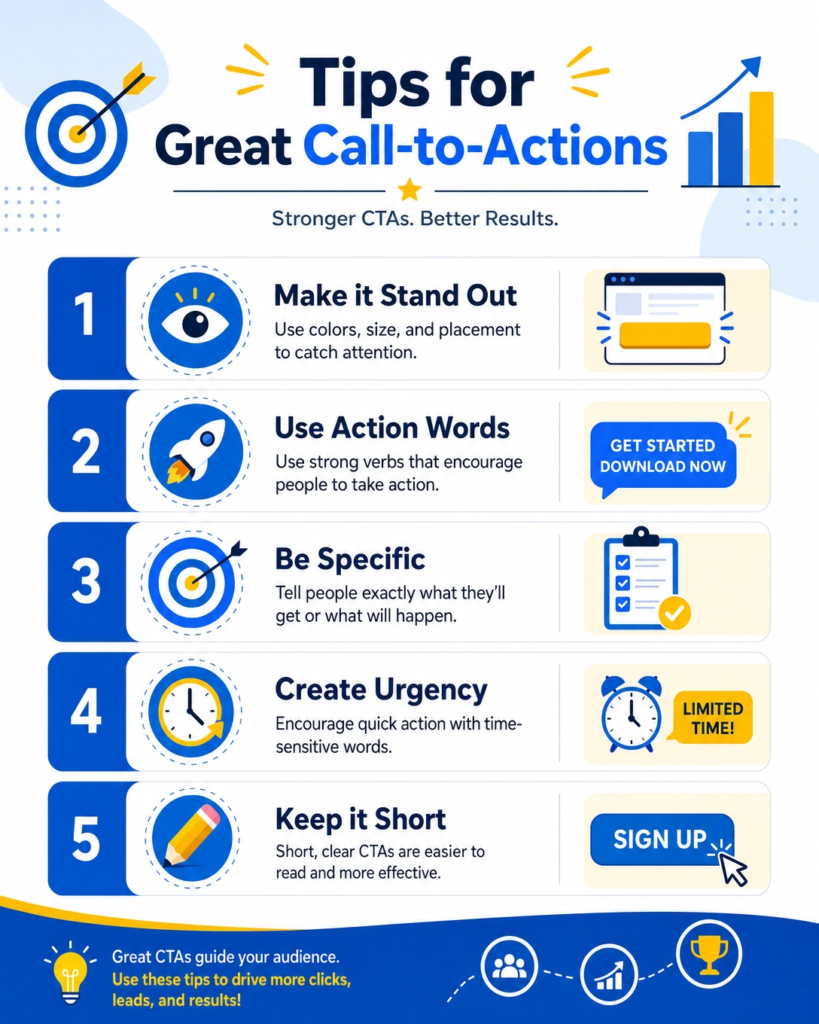
Make it Stand Out: Your CTA should be easy to see. Use a contrasting color for buttons, or make links bold. Don’t hide it in a paragraph.
Use Action-Oriented Language: Start with a verb. Instead of “Information about our product,” say “Discover Our Products.”
Be Specific: Tell them exactly what will happen when they click. “Download Your E-book” is better than just “Click Here.”
Create Urgency (Sometimes): Words like “Limited Time Offer” or “Shop Now Before It’s Gone” can encourage quick action, but use them wisely.
Keep it Short and Sweet: CTAs are not long sentences. They are usually just a few words.
Place it Strategically: Put your CTA where it makes sense. Often, this is near the end of the email, but you can also include it earlier if it fits naturally with your content.
One Main CTA per Email: While you can have smaller links, focus on one main action you want your reader to take. Too many choices can be confusing.
Adding clear, compelling CTAs to your emails is a simple yet powerful hack for email automation.
It ensures that your valuable content leads to valuable actions, helping you achieve your marketing goals and grow your business.
Don’t leave your readers wondering what to do next – tell them clearly!
Hack 7: Personalize Your Emails
Email personalization goes beyond just using someone’s first name. It’s about sending the right message to the right person at the right time.
This can include:
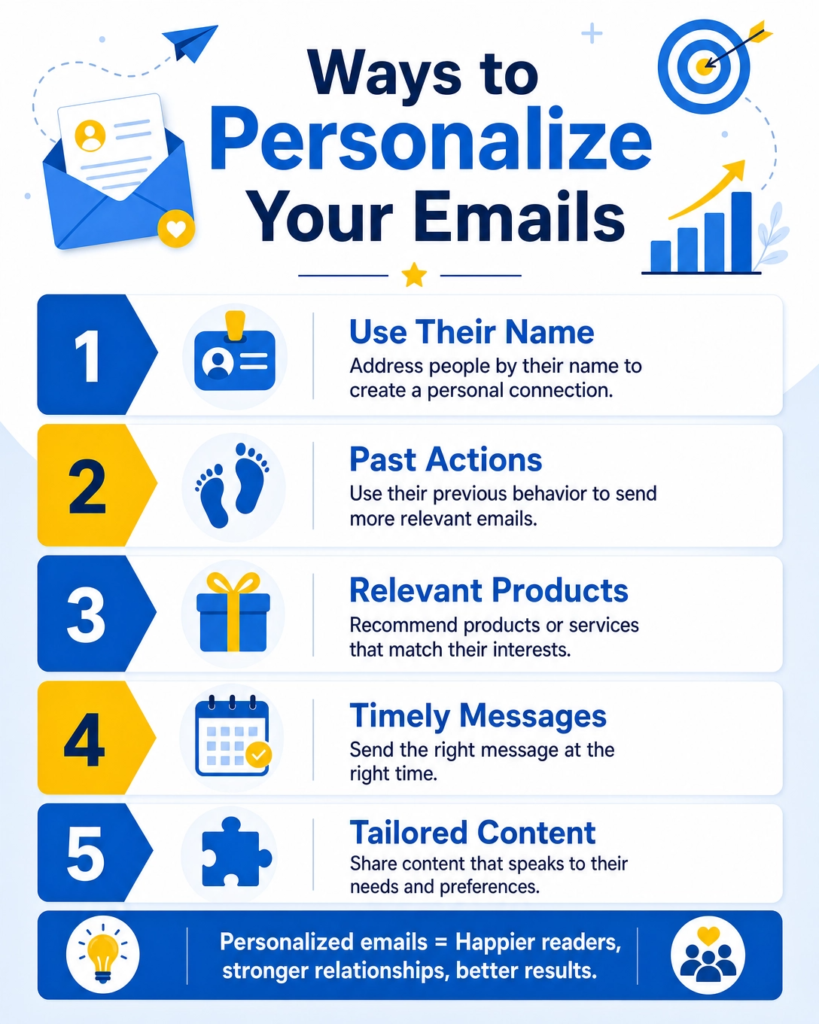
Using their Name: The simplest form, but still effective.
Referring to Past Actions: “We noticed you looked at [Product Name]…”
Suggesting Relevant Products: Based on what they’ve bought or viewed before.
Sending Timely Messages: Like birthday discounts or anniversary greetings.
Tailoring Content: Showing them content related to their interests (which you know from segmentation).
In today’s busy world, people get a lot of emails. Personalized emails stand out because they feel more human and less like generic spam.
This leads to several big benefits:
Higher Open Rates: People are more likely to open an email that feels relevant to them.
More Clicks: When the content inside is personalized, they’re more likely to click on links.
Stronger Relationships: It shows you care and understand their needs, building trust.
Increased Sales: Relevant offers are more likely to convert into purchases.
Unsubscribes: People are less likely to leave your list if they feel valued.
How to Start Personalizing:
1.Collect Data: When people sign up, ask for their first name. You can also ask about their interests or preferences. Your email platform can often track their website behavior too.
2.Use Merge Tags: Your email software has special codes (often called merge tags or personalization tags) that automatically insert a subscriber’s data into your email. For example, {{first_name}} might become “John” for one subscriber and “Sarah” for another.
3.Segment Your List: As we discussed in Hack 3, segmenting your audience is the first step to advanced personalization. Once you know their interests, you can send them emails tailored to those interests.
4.Automate Personalization: Set up rules in your email automation platform. For example, if someone views a certain product category, automatically send them an email with similar products.
Personalizing your emails makes your subscribers feel seen and understood.
It turns a mass message into a personal conversation, making your email automation much more powerful and effective.
Start small, and watch your engagement grow!
Hack 8: Use Follow-Up Emails
Follow-up emails are a series of automated messages sent to your subscribers based on their actions or a set schedule.
They are not random emails; they are part of a planned sequence.
They can be triggered by many things, such as:
Signing up for your newsletter: This is your welcome series (Hack 1).
Downloading a lead magnet: You follow up to provide more value or introduce related products.
Attending a webinar: You send a recap and offer next steps.
Making a purchase: You send thank-you notes, product usage tips, or ask for reviews.
Abandoning a shopping cart: You remind them about items they left behind.
Follow-up emails are incredibly powerful because they allow you to nurture your relationship with subscribers over time.
They help you to:
Stay Top of Mind: Regular, valuable communication keeps your brand remembered.
Build Trust and Authority: By consistently providing helpful content, you become a trusted resource.
Increase Engagement: Each email can encourage further interaction, like clicking links or replying.
Drive Sales: By guiding subscribers through a journey, you increase the chances of them making a purchase.
Provide Value: You can offer more tips, resources, or support, making your subscribers feel valued.
Types of Follow-Up Sequences:
1.Welcome Sequence: (Already covered in Hack 1) This is the first follow-up, introducing your brand.
2.Nurture Sequence: After someone downloads a lead magnet, send a series of emails that expand on the topic, share related blog posts, or introduce your paid solutions.
3.Sales Sequence: For those who show interest in a product but haven’t bought yet. This might include testimonials, FAQs, or a limited-time offer.
4.Onboarding Sequence: After a purchase, help new customers get the most out of their product with tutorials, tips, and support information.
5.Re-engagement Sequence: For subscribers who haven’t opened your emails in a while.
Offer them something special to bring them back, or ask if they still want to hear from you.
Using follow-up emails effectively means you’re always engaging with your audience, providing value, and gently guiding them towards your business goals.
It’s like having a helpful assistant who always remembers to check in with your most important contacts.
Hack 9: Test and Improve
Testing helps you understand what your audience likes and what makes them take action. Without testing, you’re just guessing.
Here’s why it’s crucial:
Find What Works Best: A small change can make a big difference in how many people open your emails or click your links.
Increase Engagement: When you send emails that people enjoy, they’re more likely to stay subscribed and interact with your content.
Boost Conversions: Better engagement often leads to more sales, sign-ups, or whatever your goal is.
Save Time and Money: By optimizing your emails, you make every email you send work harder for your business.
There are many parts of your emails you can test.
Here are some common ones:
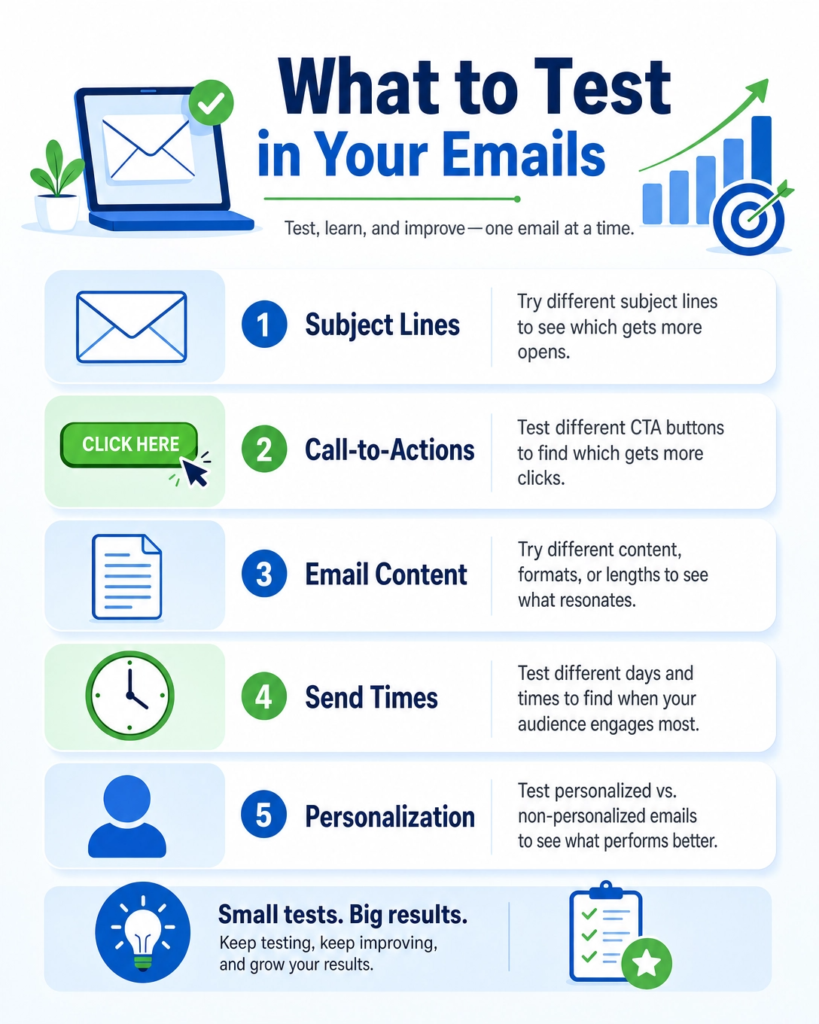
1.Subject Lines: This is what makes people open your email. Try different lengths, emojis, questions, or urgent language.
2.Call-to-Actions (CTAs): Test the wording, color, size, and placement of your buttons or links. Does “Learn More” work better than “Get Started”?
3.Email Content: Experiment with different headlines, paragraph lengths, images, or even the overall tone of your message.
4.Send Times: When are your subscribers most likely to open your emails? Morning, afternoon, or evening? Weekday or weekend?
5.Personalization: Does using a first name in the subject line increase opens? Does recommending specific products lead to more clicks?
The most common way to test is called A/B testing (or split testing).
Here’s how it works:
1.Choose One Thing to Test: Only change one element at a time (e.g., just the subject line, not the subject line and the CTA).
2.Create Two Versions: Make an “A” version (your original) and a “B” version (with the change you want to test).
3.Send to a Small Group: Your email software will send version A to a small part of your audience and version B to another small part.
4.Measure Results: After a set time, see which version performed better (e.g., had a higher open rate or click-through rate).
5.Send the Winner: The winning version is then sent to the rest of your audience.
Always remember that email automation is a journey, not a destination.
By consistently testing and improving, you’ll make your emails more effective, your audience happier, and your business more successful.
Hack 10: Stay Consistent
In the world of email, consistency is key to building a strong relationship with your subscribers.
Here’s why it’s so important:
Builds Trust: When people know what to expect from you, they trust you more. Regular, valuable emails show you’re reliable.
Increases Engagement: Consistent emails keep your audience thinking about you. This leads to more opens, clicks, and interactions.
Reinforces Your Brand: Every email is a chance to show off your unique style and message. Consistency makes your brand memorable.
Improves Deliverability: Email providers (like Gmail or Outlook) like consistent senders. This means your emails are more likely to land in the inbox, not the spam folder.
Drives Results Over Time: Email marketing is a long game. Consistent effort leads to steady growth in sales and customer loyalty.
How to Stay Consistent?
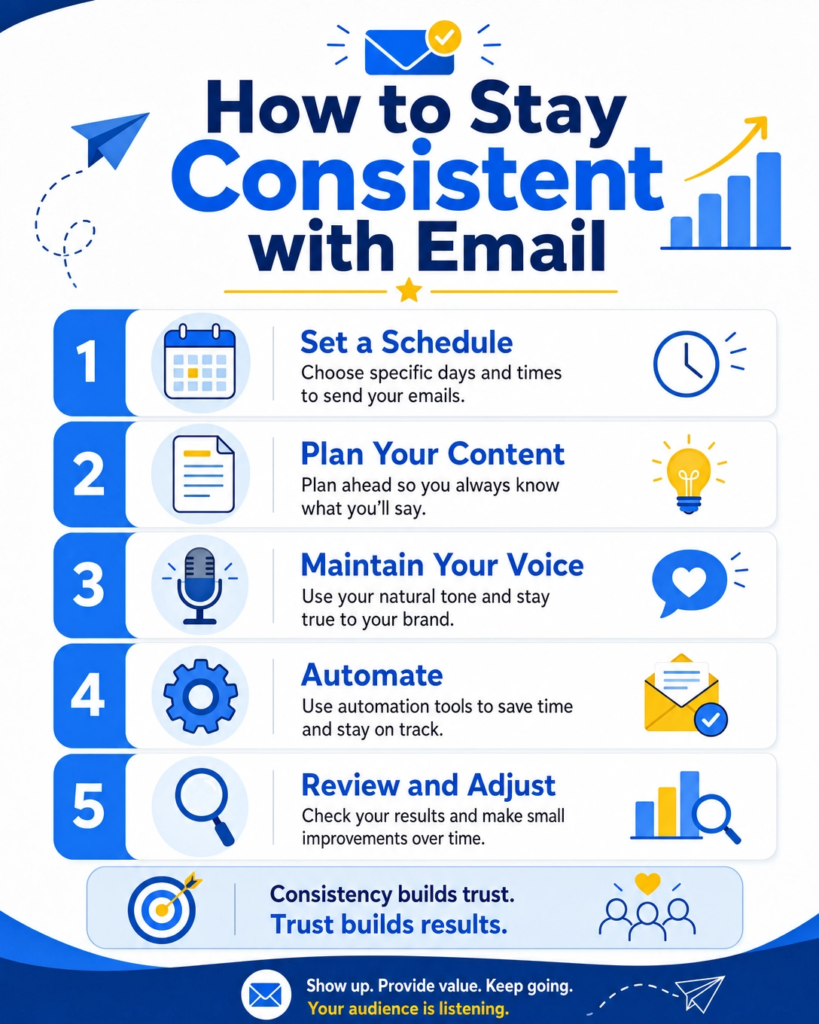
1.Set a Schedule: Decide how often you’ll send emails (e.g., once a week, twice a month). Stick to it! Even if it’s just a short update, send something.
2.Plan Your Content: Don’t wait until the last minute. Plan your email topics and content ahead of time. This makes it easier to create and send regularly.
3.Maintain Your Brand Voice: Whether you’re funny, serious, or super helpful, make sure your emails always sound like you. This creates a familiar and comforting experience for your readers.
4.Automate as Much as Possible: Use the automation hacks we’ve talked about! Welcome series, follow-ups, and behavior-based emails all run automatically, helping you stay consistent without constant manual work.
5.Review and Adjust: Look at your email calendar regularly. Are you sticking to your schedule? Are your emails still relevant? Make small adjustments as needed.
Staying consistent doesn’t mean being boring. It means being reliably valuable.
When your subscribers know they can count on you for great content, they’ll look forward to your emails, and your email automation efforts will truly shine.
Make consistency your superpower!
Conclusion
You’ve now explored 10 powerful hacks to supercharge your email automation!
From the moment a new subscriber joins your list to keeping them engaged and converting them into loyal customers, email automation is your secret weapon for building strong relationships and growing your business.
Let’s quickly recap the journey we’ve taken:
Hack 1: Start With a Welcome Email Series: Make a great first impression and introduce your brand.
Hack 2: Offer a Valuable Lead Magnet: Grow your email list by providing something irresistible.
Hack 3: Segment Your Audience: Send the right message to the right people at the right time.
Hack 4: Use Behavior-Based Automation: Trigger emails based on what your subscribers do.
Hack 5: Create a Simple Sales Funnel: Guide your audience from interest to purchase.
Hack 6: Add Clear Call-to-Actions: Tell your subscribers exactly what to do next.
Hack 7: Personalize Your Emails: Make every email feel like it was written just for them.
Hack 8: Use Follow-Up Emails: Nurture relationships and keep the conversation going.
Hack 9: Test and Improve: Always be optimizing for better results.
Hack 10: Stay Consistent: Build trust and deliver reliable value.
Email automation might seem complex at first, but by breaking it down into these manageable hacks, you can start seeing real results quickly.
Don’t wait for the perfect moment; the best time to start is now. Pick one hack, implement it, and watch your email marketing transform.
Start applying these hacks today and unlock the full potential of email automation for your business. Your audience is waiting to hear from you!
What Next?
Ready to Build a Brand That Gets Results?
Don’t let opportunities pass you by because people don’t know who you are or what you offer.
Learn how to define your unique value, grow your online presence, and build credibility that attracts customers and clients.
Start building your personal brand today—download your copy now!