Customer Retention Strategies are super important for any business. Think about it: getting new customers can cost a lot more than keeping the ones you already have.
In fact, it can be 5 to 25 times more expensive to find a new customer than to hold onto an old one.
This means that focusing on making your current customers happy is a smart move!
When you keep customers around, they often spend more and become loyal fans.
Studies show that even a small 5% increase in keeping customers can boost your profits by a huge 25% to 95% .
This blog post will share 15 easy-to-understand strategies to help you build strong, lasting relationships with your customers, making them want to stay with you for a long time.
1. Deliver Excellent Customer Service
Excellent customer service is not just a nice-to-have; it’s a must-have for keeping your customers happy and loyal.
Think about it: when you have a great experience with a company, you’re more likely to come back. The same goes for your customers.
Every interaction they have with your business is a chance to build trust and strengthen their connection to your brand.
What does “excellent” customer service really mean? It starts with being responsive.
When a customer has a question or a problem, they want a quick answer. This doesn’t always mean instant replies, but it does mean setting clear expectations and following through.
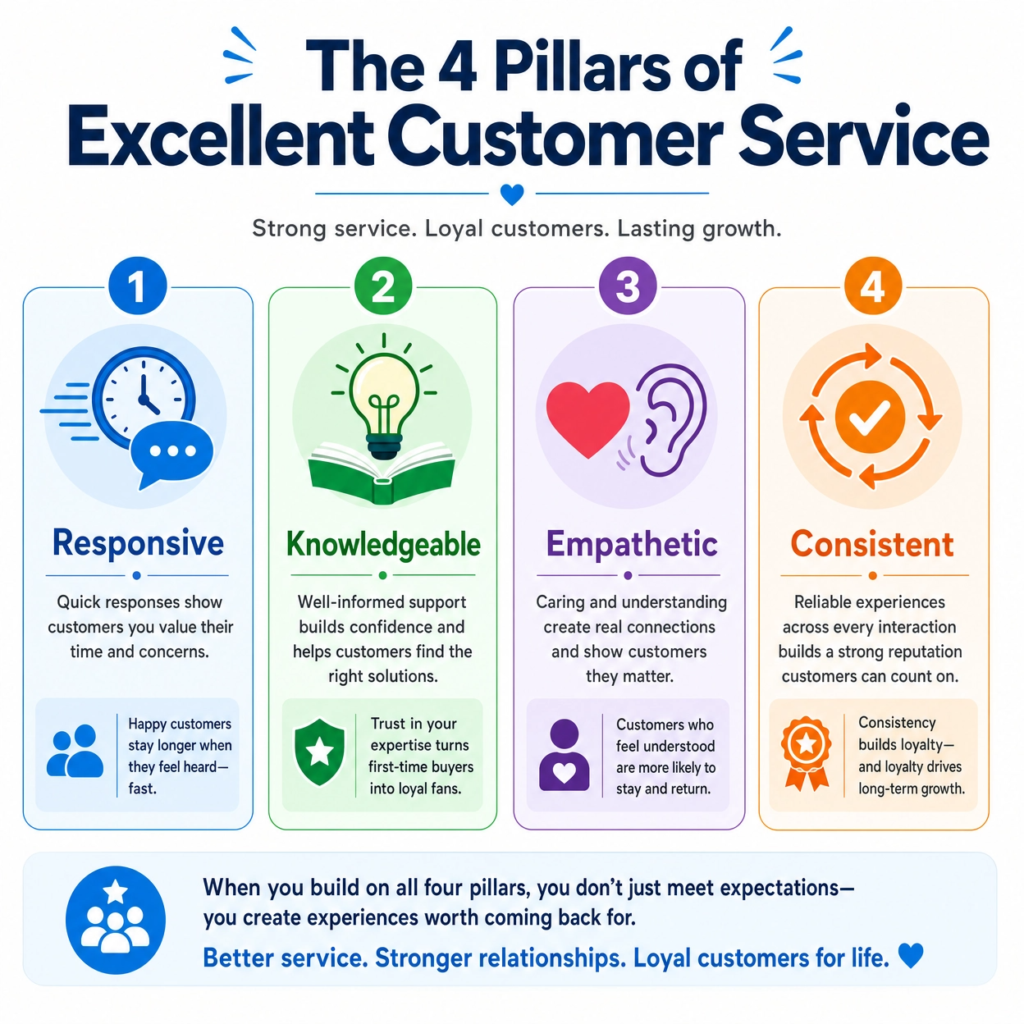
If you say you’ll respond within 24 hours, make sure you do. Being slow to respond can make customers feel ignored and frustrated.
Next, be helpful and knowledgeable. Your customer service team (even if it’s just you!) should know your product inside and out.
They should be able to answer questions accurately and provide solutions efficiently. If they don’t know the answer, they should know where to find it or who to ask.
Customers appreciate clear, concise, and correct information.
Be polite and empathetic. Customers are people, and sometimes they’re frustrated or confused. A friendly tone, active listening, and showing that you understand their situation can go a long way.
Even if you can’t solve their problem immediately, making them feel heard and respected is crucial. A simple “I understand how frustrating that must be” can defuse tension.
Go the extra mile. Sometimes, excellent service means doing a little more than expected.
This could be offering a personalized recommendation, following up to ensure a problem was truly resolved, or even a small gesture of goodwill.
These small acts can turn a good experience into a memorable one, making customers feel valued and special.
Finally, be consistent. Excellent service shouldn’t be a one-time event. It needs to be the standard for every interaction, every time.
This builds a reputation for reliability and quality, which is a powerful tool for customer retention.
When customers know they can always count on you for great service, they have little reason to look elsewhere.
2. Personalize the Customer Experience
In today’s crowded market, customers want to feel special, not just like another number.
Personalizing the customer experience means tailoring your interactions, products, and services to meet the individual needs and preferences of each customer.
It’s about showing them you understand who they are and what they care about. This makes customers feel valued, understood, and much more likely to stick around.
How can you personalize the experience? Start by collecting and using data. This doesn’t mean being creepy; it means understanding their past purchases, browsing history, and preferences.
For example, if a customer frequently buys eco-friendly products, you can recommend similar items.
If they’ve shown interest in a specific category, highlight new arrivals in that area. This makes your recommendations relevant and helpful.
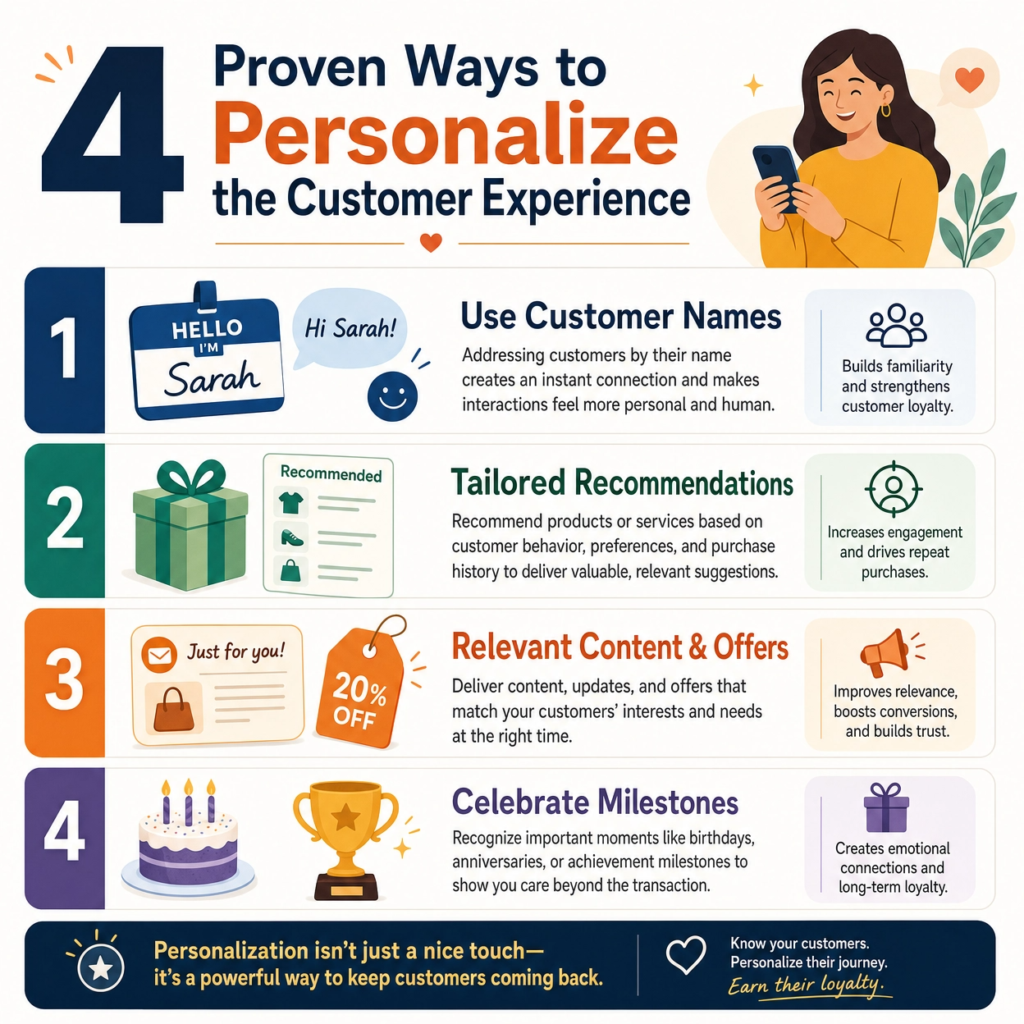
Address customers by name. It’s a simple but powerful gesture.
Whether it’s in an email, a customer service chat, or a personalized message on your website, using their name creates a more direct and friendly connection.
Avoid generic greetings like “Dear Valued Customer.”
Offer tailored recommendations. Based on their past behavior and stated preferences, suggest products or content that genuinely align with their interests.
This can be done through personalized email campaigns, product recommendations on your website, or even during customer service interactions.
The goal is to make their journey with your brand feel unique to them.
Remember their history with you. If a customer has had a previous support issue, acknowledge it if they contact you again.
If they’re a long-time customer, a small recognition of their loyalty can go a long way.
This shows that you value their ongoing relationship and aren’t just focused on their latest transaction.
Finally, segment your audience. Not all customers are the same. Group them based on demographics, behavior, or preferences.
This allows you to create more targeted marketing messages and offers that resonate with specific groups.
For instance, new customers might receive a welcome series, while loyal customers get exclusive access to new products or special discounts.
By making each customer feel seen and understood, you build stronger relationships and foster lasting loyalty.
3. Create a Loyalty Program
A loyalty program is a powerful tool to encourage repeat purchases and build long-term relationships with your customers.
It’s a structured way to reward customers for their continued business, making them feel appreciated and giving them a reason to choose you over competitors.
Think of it as a thank-you system that benefits both you and your customers.
There are many types of loyalty programs, but the most common involve points systems.
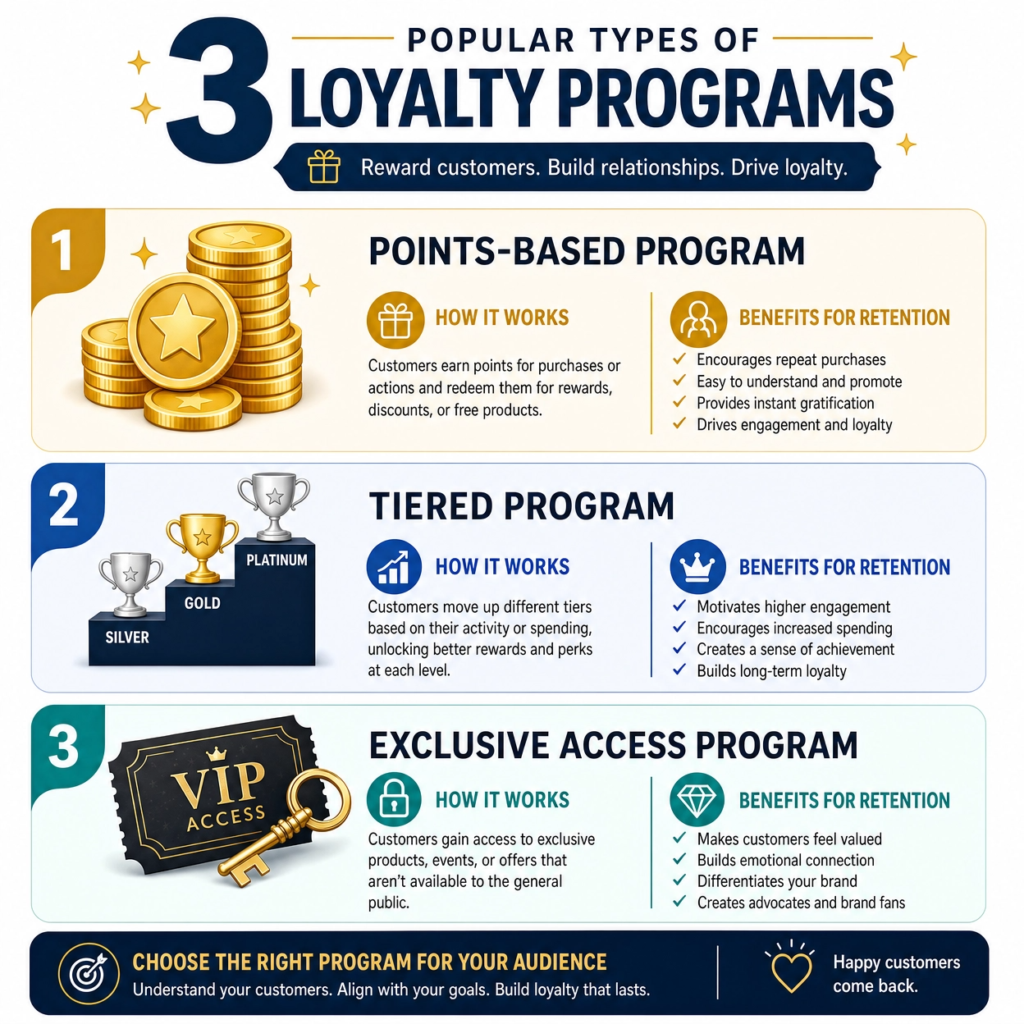
Customers earn points for every purchase, which they can then redeem for discounts, free products, or exclusive access. This creates a clear incentive for them to keep coming back.
The key is to make the points easy to understand and the rewards desirable.
Another popular option is a tiered program. Here, customers unlock different levels of benefits as they spend more or engage more with your brand.
For example, a “Silver” tier might get basic discounts, while a “Gold” tier gets early access to new products and free shipping.
This gamifies the experience and encourages customers to reach higher tiers for better perks.
Consider offering exclusive access or experiences. Beyond discounts, customers often value unique benefits.
This could be early access to new product launches, invitations to special events, or personalized consultations.
These non-monetary rewards can create a stronger emotional connection and a sense of belonging to your brand community.
Make your loyalty program easy to join and use. Complicated sign-up processes or confusing redemption methods will deter customers. Keep it simple and transparent.
Clearly communicate how points are earned, how rewards are redeemed, and what benefits each tier offers. A seamless experience encourages participation.
Finally, regularly promote and update your program. Don’t just set it and forget it. Remind customers about their points balance, upcoming rewards, and new benefits.
Gather feedback to see what rewards are most appealing and adjust your program as needed.
A dynamic and engaging loyalty program will keep customers invested and coming back for more, turning casual buyers into devoted advocates for your brand.
4. Create Valuable Content
Creating valuable content is a powerful, yet often overlooked, customer retention strategy.
It’s not just about selling your product; it’s about educating, entertaining, and empowering your customers.
When you consistently provide helpful information, tips, and insights, you position your brand as a trusted resource.
This builds a deeper connection with your audience, making them more likely to stay loyal.
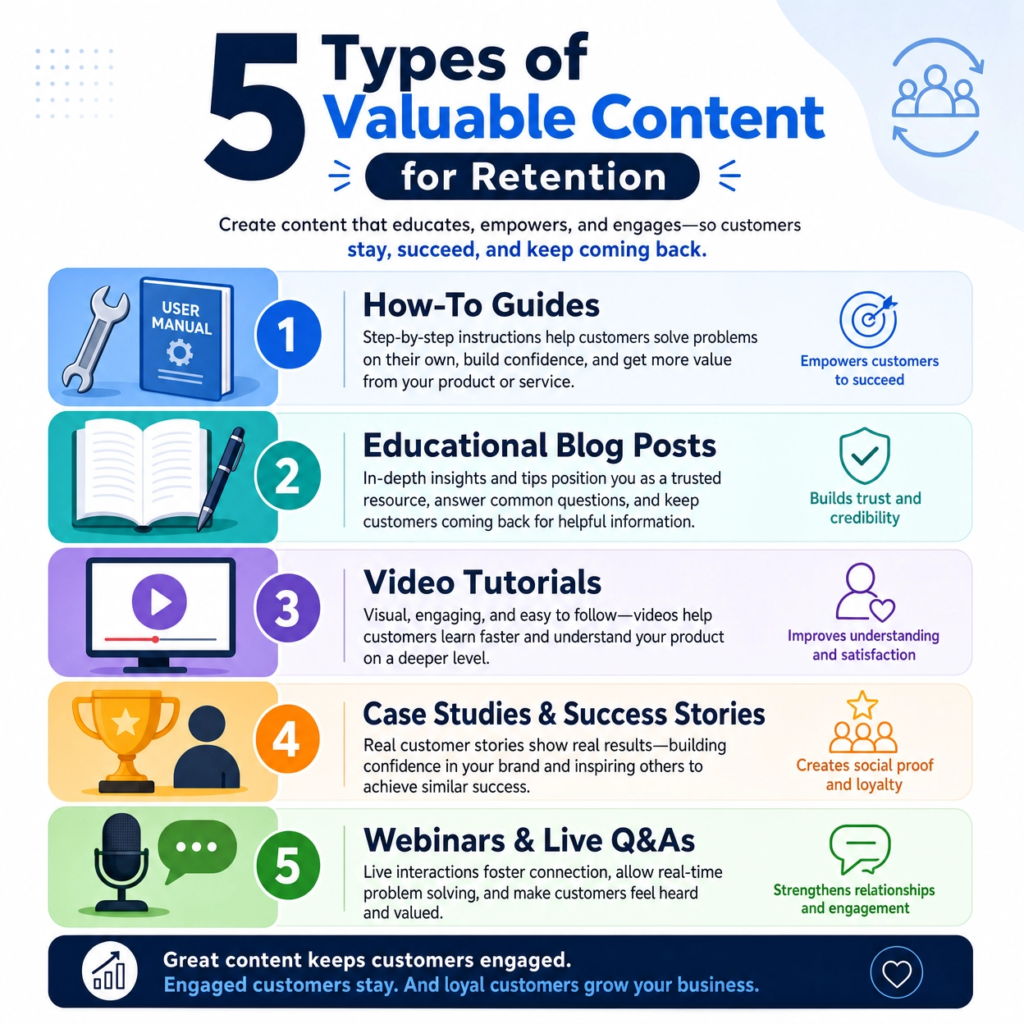
What kind of content is valuable? Think about the problems your customers face and how your product helps solve them.
Then, create content that addresses these pain points. This could include how-to guides that walk them through using your product effectively, tutorials that demonstrate advanced features, or blog posts that offer industry insights and best practices.
The goal is to help them succeed, even if it’s not directly related to a purchase.
Educational content is particularly effective.
For example, if you sell project management software, you could create articles on “5 Ways to Improve Team Collaboration” or “Mastering Agile Methodologies.”
This kind of content not only helps your current customers get more out of your product but also attracts new ones who are looking for solutions.
Consider different formats. Not everyone learns the same way. Videos can be great for visual learners, offering step-by-step demonstrations.
Webinars allow for interactive learning and Q&A sessions. Ebooks or whitepapers can provide in-depth knowledge on complex topics.
Diversifying your content formats ensures you reach a wider audience and cater to different preferences.
Share success stories and case studies. Showcasing how other customers have achieved great results with your product can be incredibly motivating.
It provides social proof and inspires your existing customers to explore new ways to utilize your offerings. These stories also reinforce the value proposition of your product.
Finally, make your content easy to find and consume. Organize it on a dedicated blog, resource center, or knowledge base on your website.
Ensure it’s mobile-friendly and easy to navigate.
By consistently delivering high-quality, relevant content, you keep your customers engaged, informed, and feeling supported, transforming them into long-term advocates for your brand.
5. Stay Connected Through Email Marketing
Email marketing remains one of the most effective and cost-efficient ways to stay connected with your customers and drive retention.
It allows you to communicate directly with your audience, delivering personalized messages, valuable content, and timely offers straight to their inbox.
Unlike social media, where algorithms control visibility, email gives you a direct line to your customers.
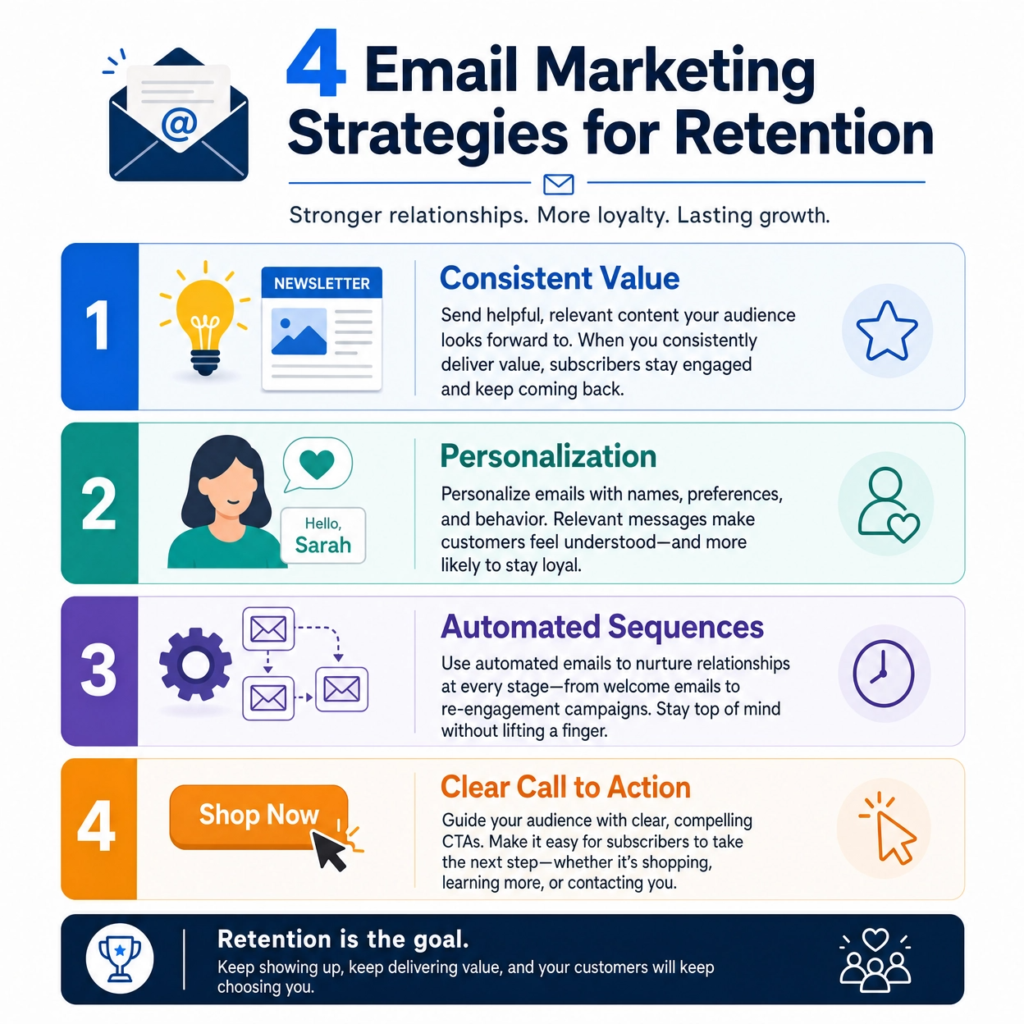
The key to successful email marketing for retention is to provide consistent value. Don’t just send promotional emails.
Mix in helpful tips, product updates, behind-the-scenes glimpses, and exclusive content. Think about what your customers would genuinely want to receive.
For example, if you sell fitness products, send workout routines, healthy recipes, or motivational stories. This keeps them engaged and looking forward to your emails.
Personalization is crucial in email marketing. Use the data you’ve collected to segment your audience and tailor your messages.
Address customers by name, recommend products based on their purchase history, or send special offers on their birthday.
A personalized email feels like a conversation, not a broadcast, making customers feel valued and understood.
Automated email sequences can be incredibly powerful for retention. Set up a welcome series for new customers, guiding them through your product and offering initial support.
Create re-engagement campaigns for inactive customers, reminding them of your value.
Send post-purchase follow-ups to gather feedback or suggest complementary products. These automated flows ensure consistent communication without constant manual effort.
Make your emails easy to read and visually appealing. Use clear headings, short paragraphs, and bullet points. Include high-quality images or GIFs.
Ensure your emails are mobile-friendly, as many customers will read them on their phones. A cluttered or hard-to-read email is likely to be deleted.
Finally, always include a clear call to action (CTA). Whether you want them to read a blog post, check out a new product, or leave a review, tell them exactly what to do.
By consistently delivering value, personalizing your messages, and making it easy for customers to engage, email marketing becomes a powerful engine for building lasting customer loyalty.
6. Deliver Consistent Quality
Delivering consistent quality is the bedrock of customer retention. It means that every time a customer interacts with your product or service, they receive the same high standard they expect.
Inconsistency erodes trust and can quickly lead to customer churn. Think of it as building a strong foundation for a lasting relationship.
Quality applies to every touchpoint. This includes the product itself, your customer service, the user experience, and even your marketing messages.
If your product is excellent but your support is poor, customers will notice. If your website is fast one day and slow the next, it creates frustration.
Consistency across all aspects of your business reinforces your brand’s reliability.
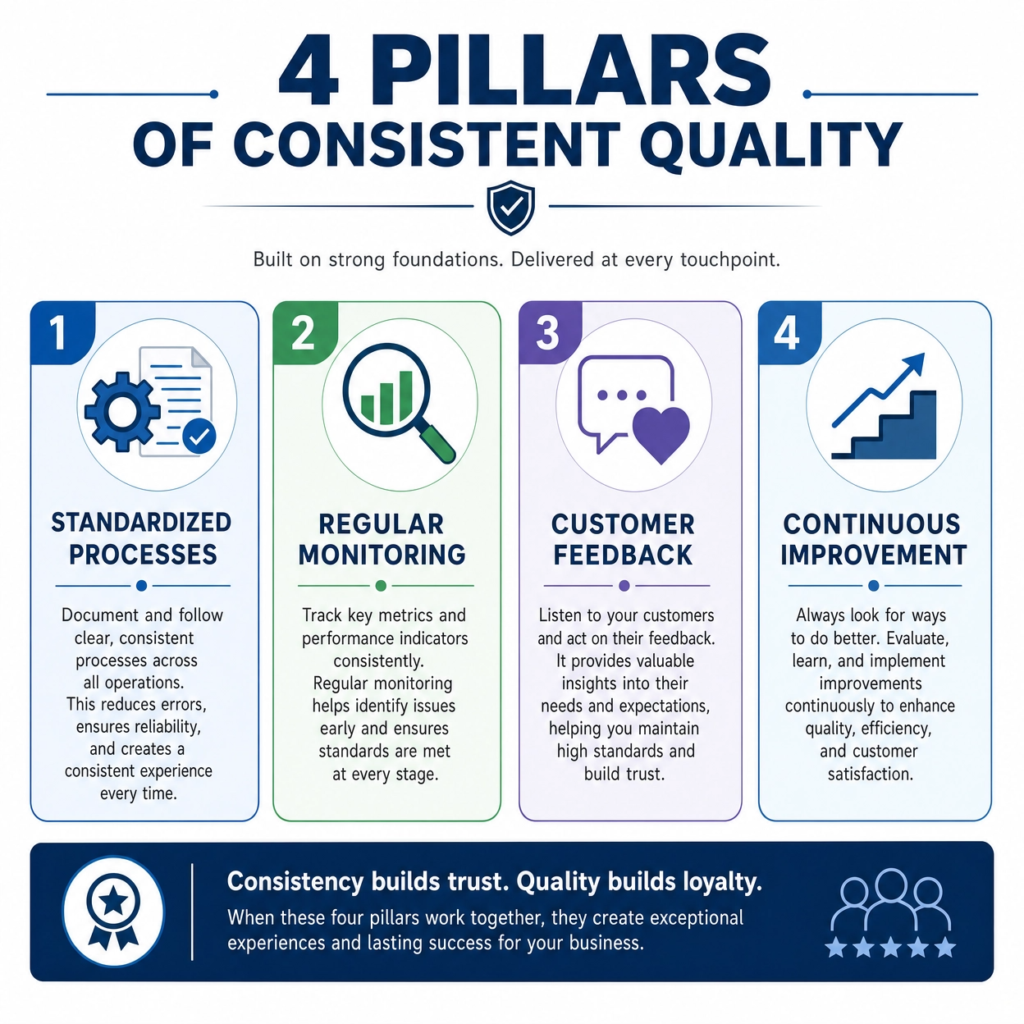
Standardize your processes. To ensure consistent quality, you need clear, repeatable processes.
Document how your product is made, how customer inquiries are handled, and how new features are rolled out.
Training your team thoroughly on these processes is essential. When everyone follows the same high standards, quality becomes predictable.
Regularly monitor and measure quality. Don’t assume everything is running smoothly.
Implement systems to track customer satisfaction, product performance, and service delivery. This could involve surveys, feedback forms, or internal audits.
Identify any dips in quality quickly and address them proactively. Continuous improvement is key to maintaining high standards.
Gather and act on feedback. Your customers are your best source of information about quality. Encourage them to share their experiences, both good and bad.
When you receive negative feedback, view it as an opportunity to improve. Show your customers that you listen and are committed to making things better. This builds loyalty even when mistakes happen.
Finally, invest in your team and technology. A well-trained, motivated team is more likely to deliver consistent quality. Provide them with the tools and resources they need to excel.
Investing in robust technology can also help automate quality checks and streamline processes.
By prioritizing consistent quality, you create a reliable experience that keeps customers coming back, time and time again.
7. Offer Exclusive Deals for Existing Customers
Offering exclusive deals for existing customers is a powerful way to show appreciation and encourage continued loyalty.
While many businesses focus heavily on attracting new customers with discounts, it’s equally, if not more, important to reward those who have already chosen your brand.
This strategy makes your current customers feel valued and special, reinforcing their decision to stick with you.
These exclusive deals can take many forms.
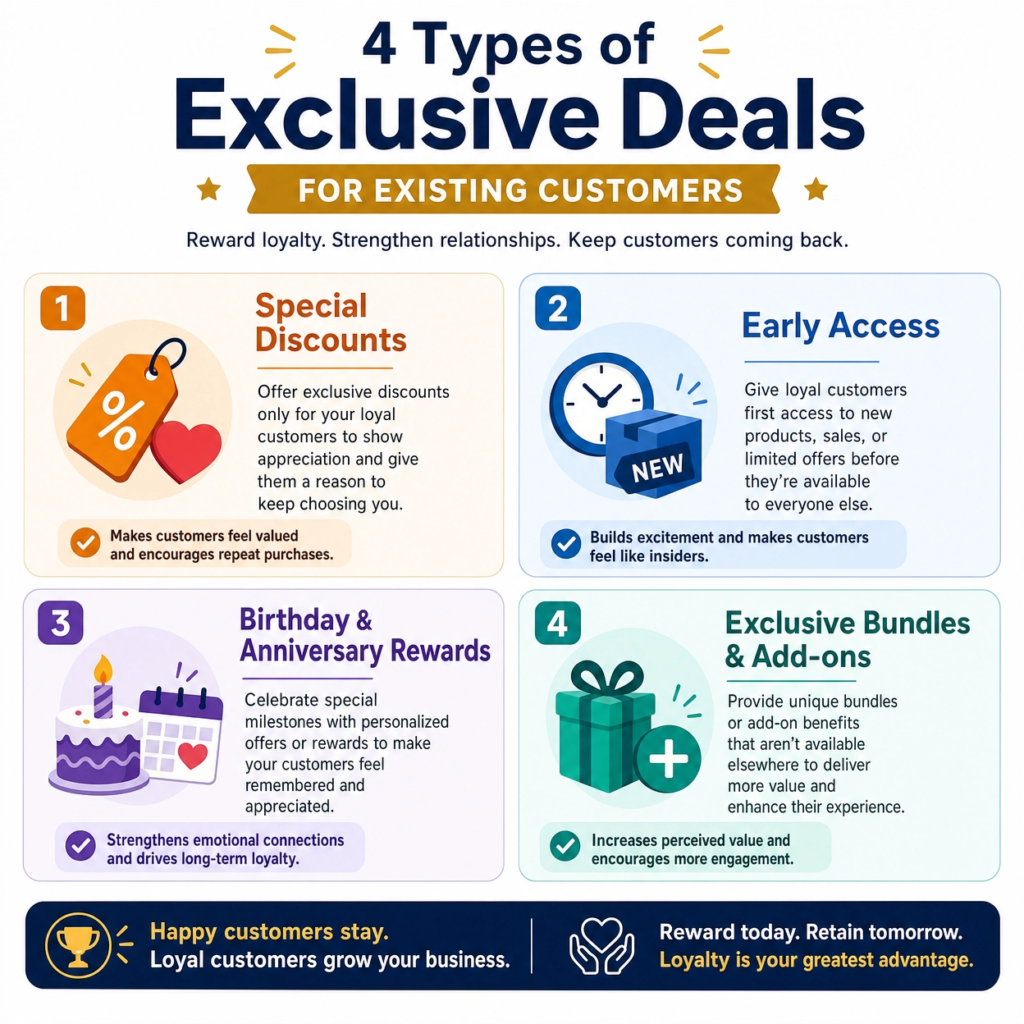
They could be special discounts on future purchases, early access to new products or services, or even complimentary upgrades.
The key is to make these offers genuinely exclusive, meaning they are not available to the general public or new customers.
This creates a sense of privilege and makes the customer feel like an insider.
Consider tiered discounts based on customer loyalty or purchase history.
For example, customers who have spent a certain amount or have been with your brand for a specific period could unlock higher discount percentages or more valuable perks.
This incentivizes them to continue their relationship with your brand to access better rewards.
Birthday or anniversary discounts are another effective way to offer exclusive deals.
A personalized email with a special offer on their birthday or the anniversary of their first purchase can create a delightful surprise and strengthen their emotional connection to your brand. It shows you remember and appreciate them as individuals.
Bundle offers or add-ons can also be exclusive.
Instead of just a discount, you could offer existing customers a unique product bundle at a reduced price or a free add-on service that enhances their current purchase.
This adds perceived value and encourages them to explore more of your offerings.
Communicate these exclusive deals clearly and effectively. Use personalized email campaigns, in-app notifications, or a dedicated section on your website for loyalty members.
Highlight the exclusivity of the offer and the benefits it provides.
By consistently rewarding your existing customer base, you not only retain them but also turn them into enthusiastic advocates who will spread positive word-of-mouth about your brand.
8. Build a Community Around Your Brand
Building a community around your brand is a powerful way to foster deep customer loyalty and retention.
It transforms your customers from individual buyers into connected members of a shared group.
When customers feel a sense of belonging and connection to your brand and to each other, they are far more likely to stay engaged and remain loyal.
It’s about creating a space where they can interact, share, and feel heard.
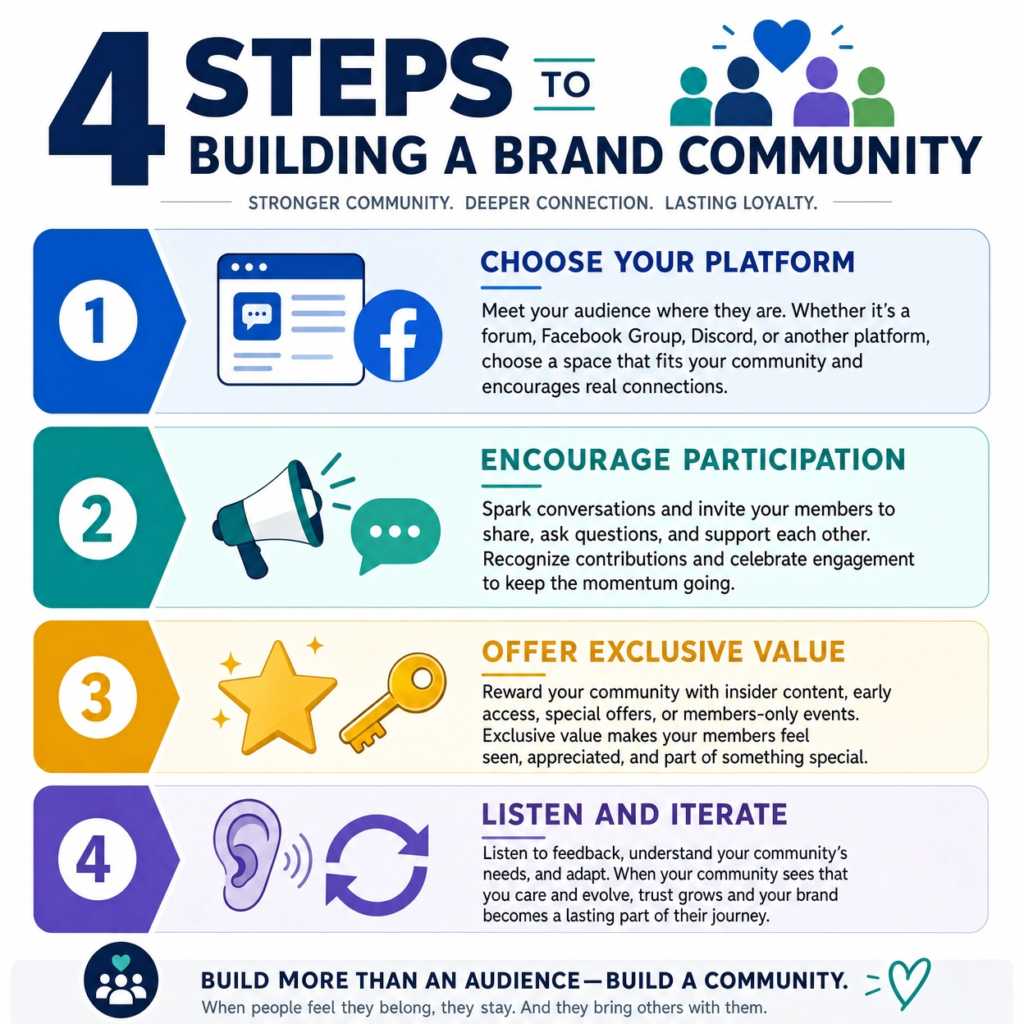
Start by identifying platforms where your audience naturally gathers. This could be a dedicated online forum on your website, a private Facebook group, a Discord server, or even a specific hashtag on social media.
The goal is to create a central hub where discussions can happen. Make sure the platform is easy to access and use for your target customers.
Encourage interaction and participation. Don’t just create a space; actively nurture it. Ask questions, start discussions, and respond to comments.
Highlight user-generated content, celebrate customer achievements, and feature their stories.
When customers see their contributions valued, they become more invested in the community and your brand.
Provide exclusive value to community members. This could be early access to new features, beta testing opportunities, exclusive content, or Q&A sessions with your team.
Make membership feel special. This reinforces the idea that being part of the community offers benefits not available elsewhere, driving both engagement and retention.
Foster a supportive and helpful environment. A strong community thrives on mutual support. Encourage members to help each other, share tips, and offer advice.
Your role as the brand is to facilitate these interactions and ensure the community remains a positive and welcoming space.
This can also reduce the burden on your customer support team, as members often help each other.
Finally, listen to your community. They are a direct source of feedback, ideas, and insights.
Pay attention to their conversations, concerns, and suggestions. Use this valuable input to improve your products and services.
When customers see their feedback leading to positive changes, it strengthens their loyalty and belief in your brand.
A thriving community becomes a self-sustaining engine for retention and growth.
9. Offer Subscription Options
Offering subscription options is a highly effective strategy for customer retention, especially for digital products and services.
A subscription model creates a recurring revenue stream and, more importantly, fosters an ongoing relationship with your customers.
Instead of a one-time purchase, customers commit to a continuous engagement, which significantly boosts their lifetime value and reduces churn.
There are various types of subscription models you can implement.
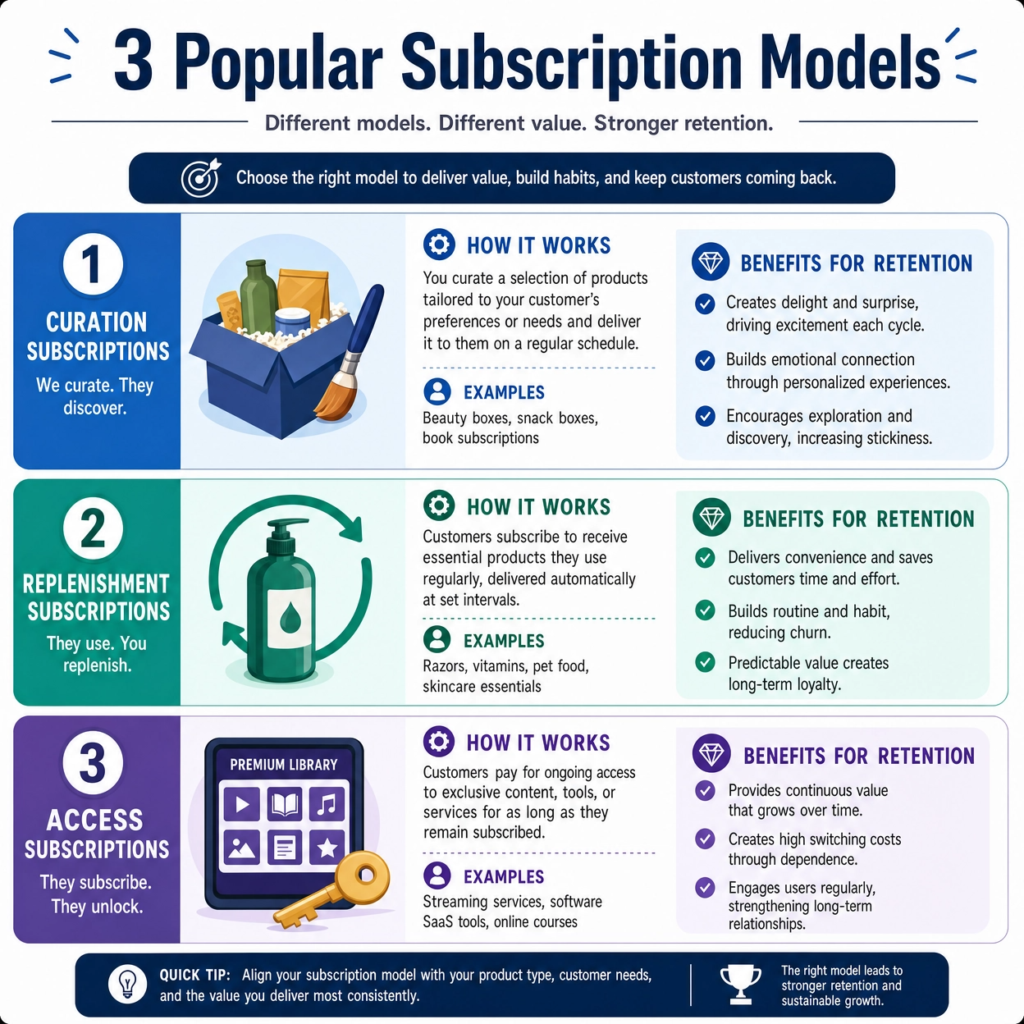
A curation subscription delivers a selection of products or content regularly, like a monthly software update or a curated content library.
A replenishment subscription automatically sends customers products they use regularly, such as digital tools or recurring access to premium features.
An access subscription grants members-only entry to exclusive content, communities, or premium features, like a SaaS platform or an online course library.
Highlight the benefits of subscribing to your customers. Emphasize convenience, cost savings, and exclusive access.
For example, subscribers might get a lower monthly rate compared to one-time purchases, automatic updates, or priority customer support.
Clearly communicate how a subscription simplifies their life or enhances their experience with your product.
Make it easy to manage subscriptions. Customers appreciate flexibility. Ensure they can easily pause, upgrade, downgrade, or cancel their subscription without hassle.
A transparent and user-friendly subscription management portal builds trust and reduces frustration, making them more likely to return even if they pause for a short period.
Provide ongoing value. A subscription model only works if you continuously deliver value. Regularly update your product, add new features, or provide fresh content.
Keep your subscribers engaged and excited about what’s coming next. This continuous value proposition justifies the recurring payment and prevents them from looking for alternatives.
Finally, use data to optimize your subscription offerings. Track which features are most used, what content resonates best, and why customers cancel.
Use these insights to refine your subscription tiers, pricing, and overall value proposition.
By understanding your subscribers, you can tailor your offerings to meet their evolving needs and ensure long-term retention.
10. Educate Your Customers
Educating your customers is a powerful, yet often overlooked, customer retention strategy.
When customers fully understand how to use your product or service, and can unlock its full potential, they become more engaged, satisfied, and less likely to churn.
It’s about empowering them to succeed with what you offer, turning them into expert users.
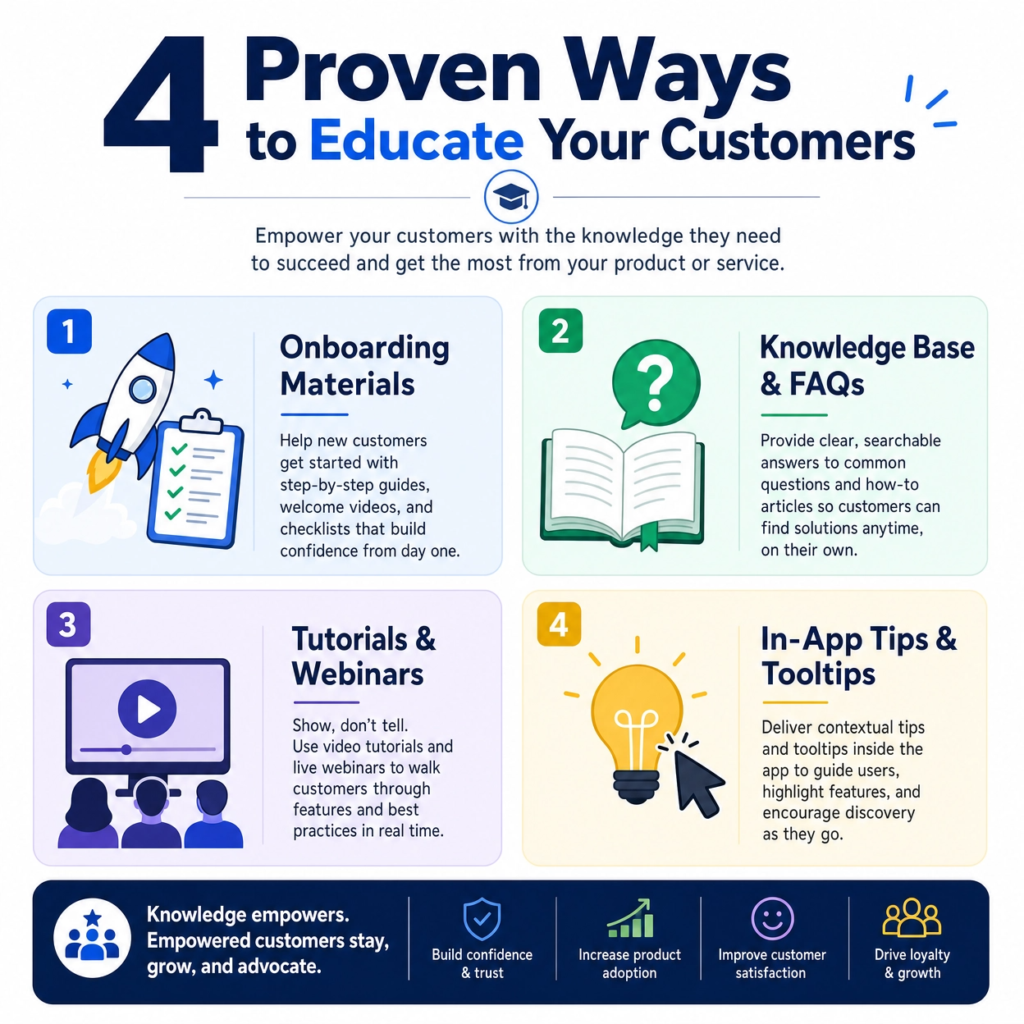
Start by providing clear and accessible onboarding materials. When a new customer signs up, guide them step-by-step through the initial setup and key features.
This could be through interactive tutorials, welcome email series, or a dedicated onboarding video. A smooth start significantly increases the chances of long-term retention.
Develop a comprehensive knowledge base or FAQ section. This allows customers to find answers to their questions quickly and independently, reducing their reliance on customer support and improving their overall experience.
Organize the information logically, use simple language, and include screenshots or short videos where helpful.
Create tutorials, guides, and webinars. For more complex features or advanced uses, offer in-depth resources.
Blog posts, video tutorials, and live webinars can demonstrate how to solve specific problems or achieve desired outcomes using your product.
These resources not only educate but also showcase the value and versatility of your offering.
Use in-app tips and tooltips. Contextual help within your product can guide users as they navigate different features.
Small pop-ups or guided tours can highlight new functionalities or explain how to use existing ones more effectively.
This proactive education prevents frustration and encourages deeper engagement.
Finally, listen to your customers’ questions and pain points. The questions they ask your support team or in community forums are valuable indicators of where your educational materials might be lacking. Use this feedback to continuously improve and expand your resources. By making your customers smarter and more capable, you build a stronger, more loyal customer base that truly understands and appreciates the value you provide.
11. Use Social Media to Stay Active
Social media is a powerful tool for customer retention. It allows you to stay connected with your audience in a casual, engaging way.
Being active on platforms where your customers spend their time helps keep your brand top-of-mind.
It also provides a direct channel for interaction and feedback, which is crucial for building loyalty.
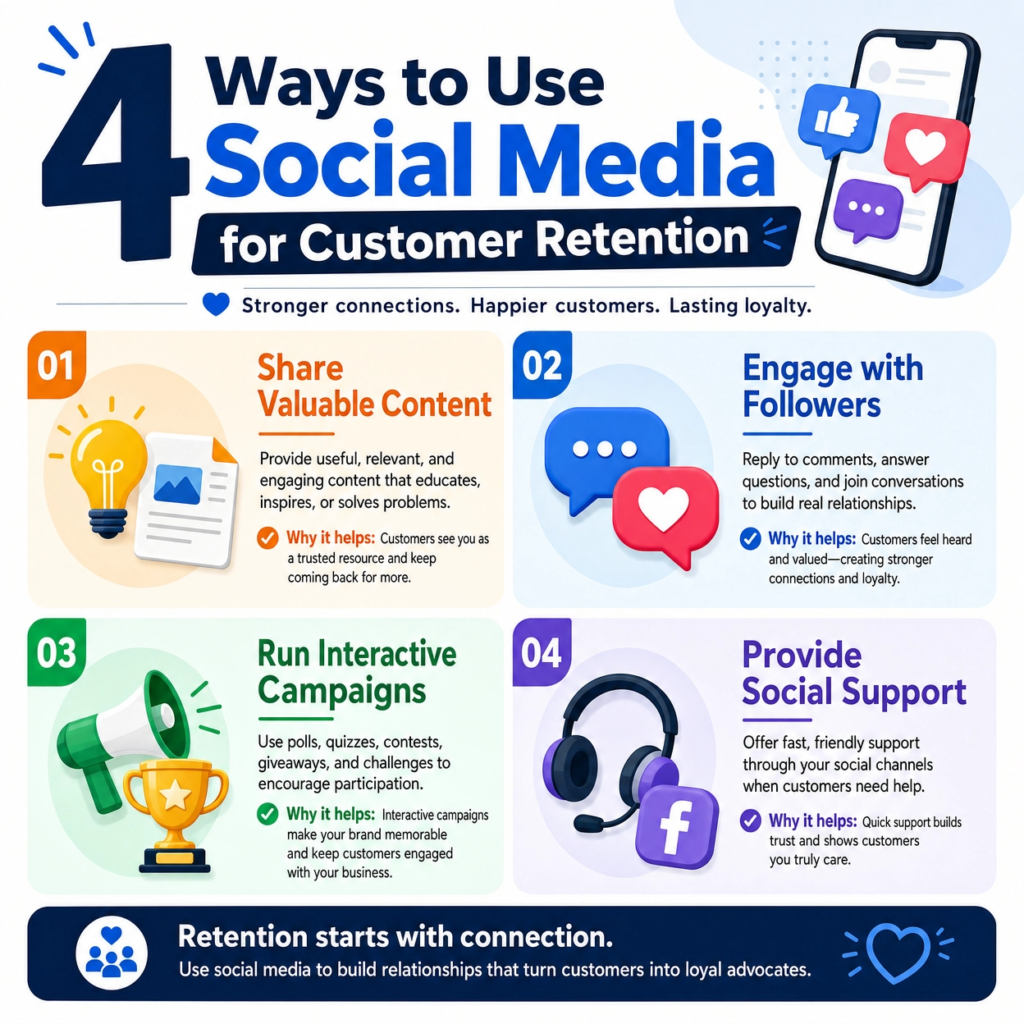
Share valuable content regularly. Don’t just promote your products. Post helpful tips, industry news, behind-the-scenes glimpses, and engaging questions.
This shows your audience that you care about more than just sales. It positions your brand as a resource and a community hub.
The goal is to provide value even when customers aren’t actively buying.
Engage with your followers. Social media is a two-way street. Respond to comments, answer questions, and acknowledge mentions.
Show genuine interest in what your customers are saying. This personal interaction makes customers feel heard and valued. It builds a stronger emotional connection to your brand.
Run interactive campaigns and contests. These activities create excitement and encourage participation. They can be a fun way to reward loyal customers and attract new ones.
Contests, polls, and user-generated content campaigns can boost engagement and make your customers feel like part of something special. This fosters a sense of community and belonging.
Provide customer support on social media. Many customers now expect quick responses on social platforms.
Be ready to address inquiries, resolve issues, and offer assistance.
A prompt and helpful response on social media can turn a potentially negative experience into a positive one. It demonstrates your commitment to excellent service.
Monitor social listening. Pay attention to what people are saying about your brand and industry.
Use social listening tools to track mentions, sentiment, and trends. This helps you understand customer needs and concerns.
It allows you to proactively address issues and adapt your strategies.
By staying informed, you can continuously improve your customer experience and retention efforts.
12. Make the Buying Process Simple
A smooth and simple buying process is crucial for customer retention. If customers face hurdles or confusion when trying to purchase your product or service, they are likely to abandon their cart and may not return.
A streamlined experience not only encourages initial sales but also builds trust and makes repeat purchases effortless, fostering long-term loyalty.
Simplify your checkout flow. Reduce the number of steps required to complete a purchase.
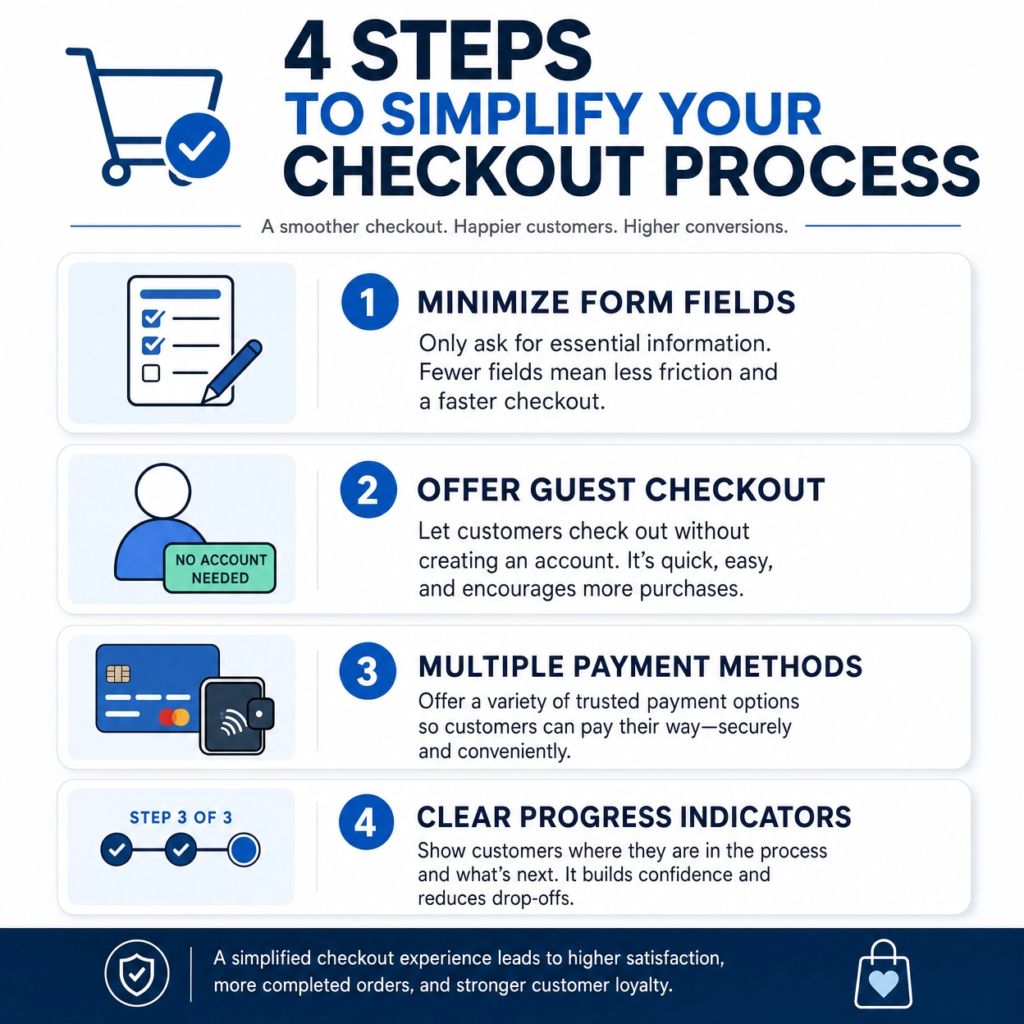
Ask only for essential information. Each extra field or page can increase friction and lead to drop-offs.
Consider offering guest checkout options, so customers aren’t forced to create an account immediately. This removes a common barrier for new and returning buyers.
Ensure your website or app is fast and responsive. Slow loading times or clunky interfaces frustrate users.
Optimize your platform for speed across all devices, especially mobile.
A seamless experience, whether on a desktop or smartphone, is expected by today’s consumers and directly impacts their willingness to complete a purchase.
Provide clear and transparent pricing. Hidden fees, unexpected shipping costs, or unclear pricing structures can lead to distrust and abandoned carts.
Display all costs upfront, including taxes and any additional charges. Transparency builds confidence and prevents unpleasant surprises at the final stage of the purchase.
Offer multiple payment options. Cater to your customers’ preferences by supporting various payment methods, such as credit cards, digital wallets (e.g., Apple Pay, Google Pay), and even installment plans if applicable.
The more convenient you make it for them to pay, the less likely they are to encounter a roadblock.
Implement clear calls to action and navigation.
Guide your customers through the buying journey with intuitive buttons and easy-to-understand instructions.
Avoid jargon and ensure that the path from browsing to purchasing is logical and straightforward.
A well-designed user interface reduces cognitive load and makes the entire process feel effortless.
By removing friction and making every transaction smooth, you create a positive experience that encourages customers to come back again and again.
13. Reward Referrals
Rewarding referrals is a powerful customer retention strategy that turns your existing customers into enthusiastic advocates.
When satisfied customers recommend your product or service to their friends, family, or network, it’s a strong vote of confidence.
This word-of-mouth marketing is highly effective because people trust recommendations from those they know.
By incentivizing these referrals, you not only acquire new customers but also strengthen the loyalty of your existing ones.
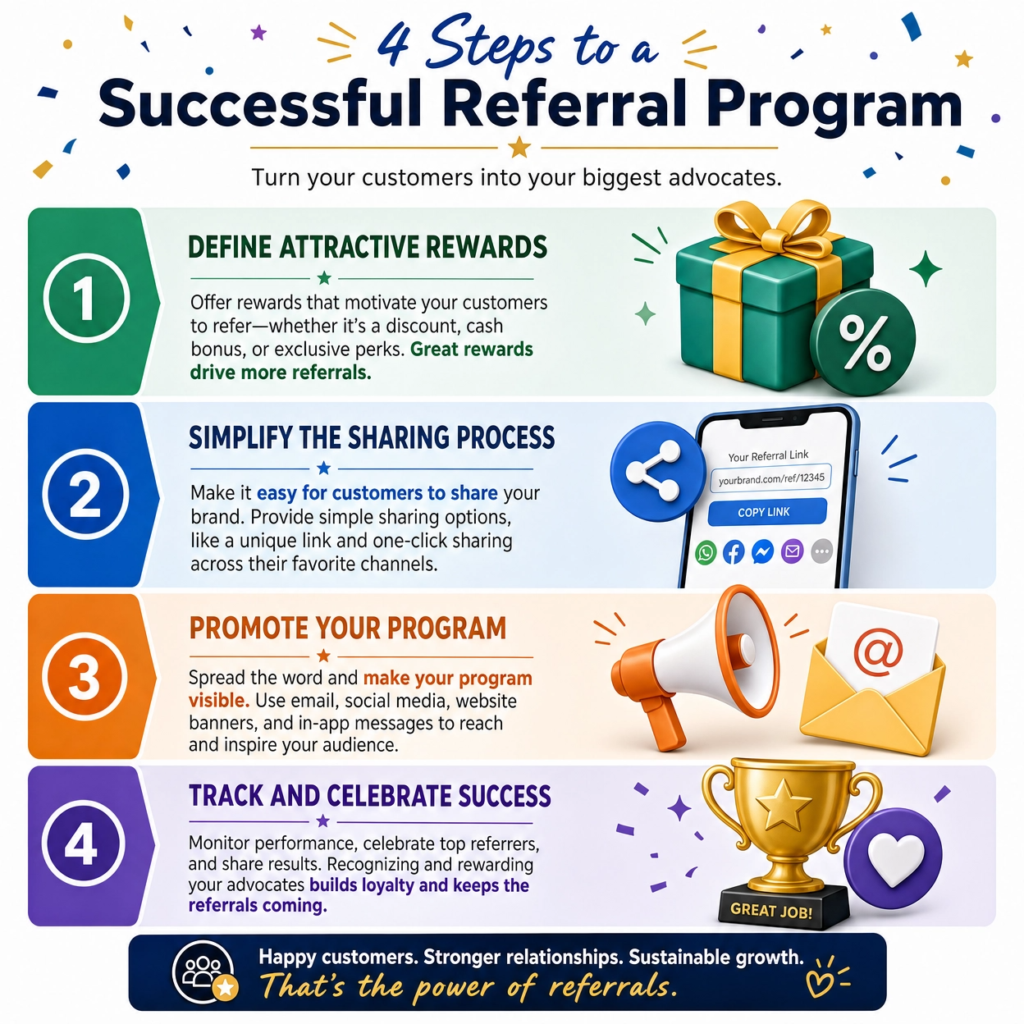
Design a clear and attractive referral program. Make it easy for your customers to understand how they can refer others and what rewards they will receive.
The incentive should be appealing to both the referrer and the referred.
Common rewards include discounts on future purchases, free months of service, gift cards, or exclusive access to new features.
A double-sided reward system, where both parties benefit, often works best.
Make it simple to share. Provide easy-to-use tools for sharing referral links or codes.
This could be through a dedicated section in their account, a shareable link in an email, or integration with social media platforms.
The less friction involved in the sharing process, the more likely customers are to participate. A seamless experience encourages more referrals.
Promote your referral program. Don’t assume customers will automatically find it.
Actively promote your program through various channels: email newsletters, social media posts, website banners, and even in-app notifications.
Highlight the benefits and make it clear how customers can start earning rewards. The more visible your program, the more successful it will be.
Track and celebrate successes. Implement a system to track referrals and ensure rewards are delivered promptly.
Acknowledge and thank your referring customers publicly (with their permission) or privately.
Celebrating their efforts reinforces their value to your brand and encourages continued participation.
This positive reinforcement builds a stronger sense of community and appreciation.
Continuously optimize your program. Analyze the performance of your referral program.
Which rewards are most effective? Which channels generate the most referrals? Use this data to refine your incentives, messaging, and promotion strategies.
By continuously improving your referral program, you can maximize its impact on both customer acquisition and retention, and more importantly, customer retention.
14. Track Customer Behavior
Understanding how your customers interact with your brand is key to keeping them. Tracking customer behavior means watching what they do.
This includes what they buy, what pages they visit, and how often they use your product.
This information helps you learn what they like and what they need. It allows you to make better decisions to keep them happy.
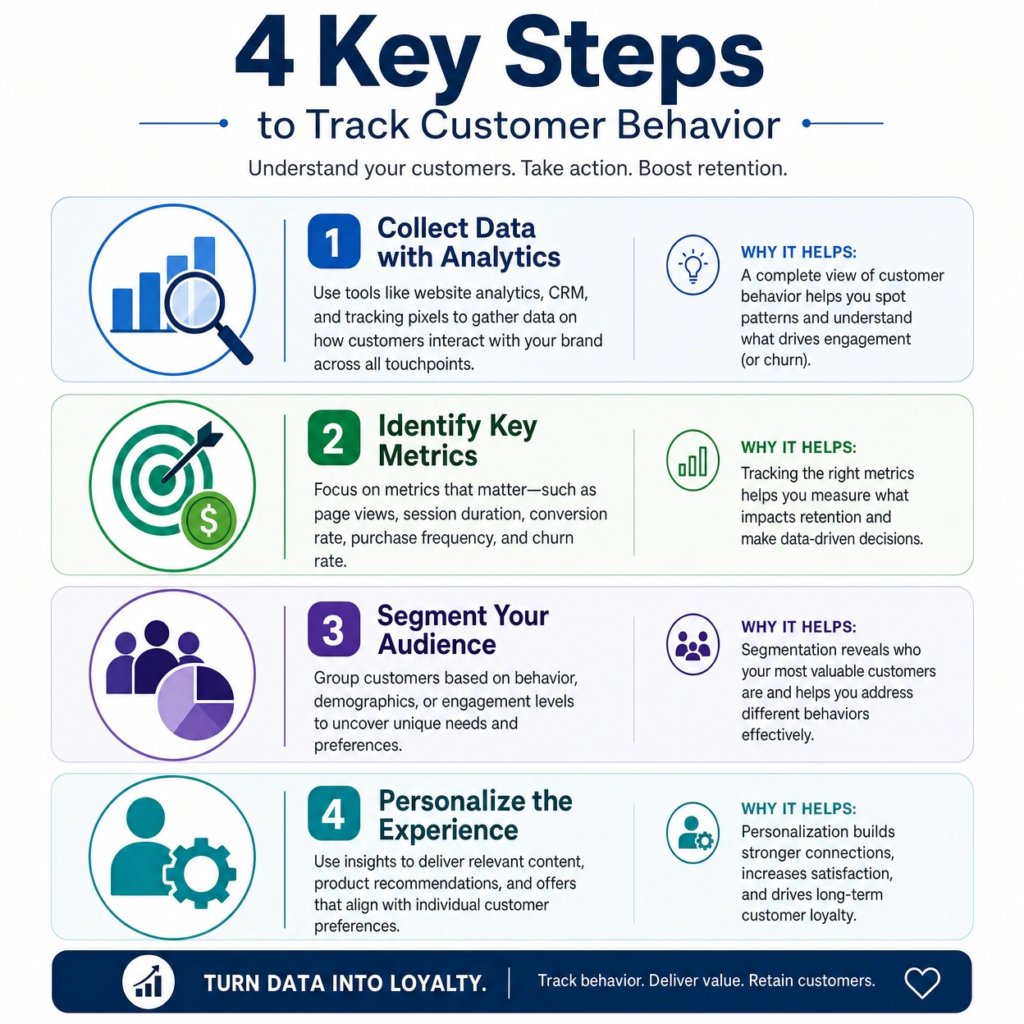
Use analytics tools to gather data. Tools like Google Analytics, CRM systems, and in-app analytics can collect a lot of information.
These tools show you patterns in customer actions. For example, you can see which features are most popular.
You can also find out where customers might get stuck or leave your website. This data is very valuable.
Look for key metrics. Pay attention to things like purchase frequency, average order value, and time spent on your site.
Also, track customer lifetime value (CLTV). This tells you how much a customer is worth to your business over time.
High CLTV means good retention. Low CLTV might signal a problem.
Identify customer segments. Not all customers are the same. Group them based on their behavior.
For example, you might have new customers, loyal customers, or customers who haven’t bought in a while.
Understanding these groups helps you tailor your retention strategies. You can send different messages or offers to each segment.
Personalize experiences based on data. Once you know what customers do, you can give them what they want.
If a customer often buys a certain type of product, show them more of those. If they abandon a cart, send a reminder.
This personalization makes customers feel understood and valued. It makes their experience better and encourages them to stay.
Predict future needs and prevent churn. By tracking behavior, you can often see signs that a customer might leave.
For example, a sudden drop in product usage could be a warning. You can then reach out with a special offer or support.
This proactive approach can save customers before they are lost. It turns data into action that boosts retention.
15. Stay Honest and Transparent
Honesty and transparency are the bedrock of lasting customer relationships. In today’s world, customers value authenticity more than ever.
They want to know who they are buying from and what they can expect. Being open and truthful builds trust, which is a critical factor in customer retention.
When customers trust you, they are more likely to stay loyal, forgive mistakes, and even advocate for your brand.
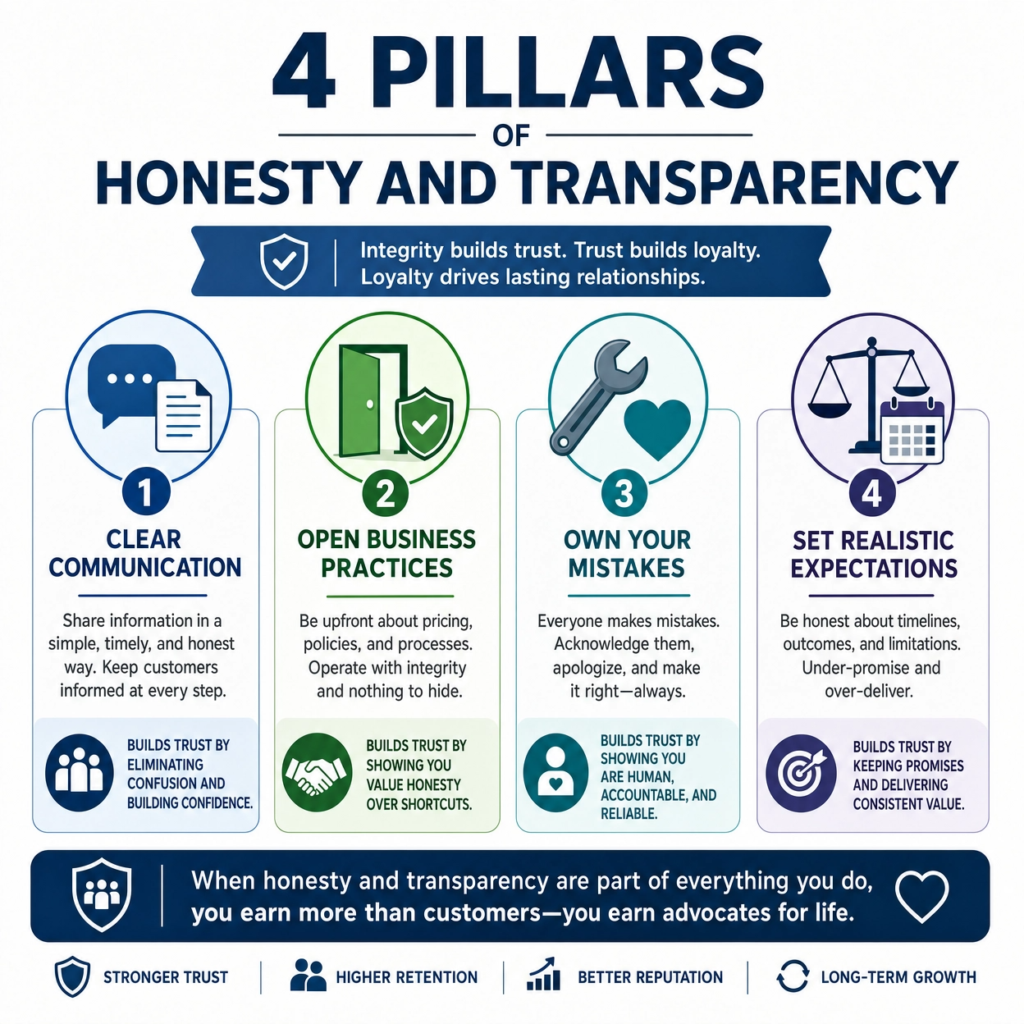
Communicate clearly and openly. Avoid jargon, fine print, or misleading claims.
Whether it’s about your product’s features, pricing, terms of service, or company values, ensure your communication is straightforward.
If there are changes or issues, address them head-on. Proactive communication, even about negative news, shows respect for your customers and strengthens their confidence in your brand.
Be transparent about your business practices. This includes how you handle customer data, your sourcing methods, and your commitment to ethical practices.
Many customers are increasingly concerned about privacy and social responsibility.
Sharing your policies and efforts in these areas can resonate deeply with your audience and differentiate you from competitors. It demonstrates that you operate with integrity.
Admit mistakes and take responsibility. No business is perfect. When errors occur, acknowledge them quickly and sincerely.
Explain what happened, apologize, and outline the steps you’re taking to fix it and prevent future occurrences.
A genuine apology and a clear plan of action can often turn a negative experience into an opportunity to deepen customer trust. It shows humility and a commitment to improvement.
Set realistic expectations. Over-promising and under-delivering is a quick way to lose customer trust.
Be realistic about what your product or service can do, its limitations, and the results customers can expect.
Manage expectations regarding delivery times, customer support response times, and product performance.
When you consistently meet or exceed realistic expectations, customers feel satisfied and valued.
Encourage honest feedback. Create channels where customers can freely share their opinions, both positive and negative. Show that you listen to their feedback and act on it.
This transparency in seeking and responding to input makes customers feel like partners in your brand’s journey.
It fosters a sense of community and ensures your product or service continues to meet their evolving needs.
Conclusion
Customer retention is not just a buzzword; it’s the lifeblood of sustainable business growth.
Throughout this blog post, we’ve explored 15 powerful strategies designed to transform your customers into loyal advocates.
From providing excellent customer service and personalizing experiences to building communities and staying transparent, each strategy plays a vital role in fostering long-term relationships.
Remember, acquiring new customers can be significantly more expensive than retaining existing ones.
By focusing on retention, you not only boost your bottom line but also create a thriving ecosystem of happy, engaged customers who will champion your brand.
The journey to exceptional customer retention is continuous. It requires dedication, a customer-first mindset, and a willingness to adapt.
Start by implementing one or two strategies that resonate most with your business and audience. Measure your progress, gather feedback, and iterate.
The goal is to consistently deliver value, build trust, and make every customer feel seen, heard, and appreciated.
Your customers are your greatest asset; nurture them, and they will help your business flourish.
Ready to transform your customer relationships and unlock sustainable growth? Don’t wait! Start implementing these customer retention strategies today.
Choose one strategy from this guide and commit to putting it into action this week.
Whether it’s sending a personalized thank-you email, asking for feedback, or optimizing a part of your buying process, every small step counts.
Share your progress and successes with us!
What Next?
Ready to Build a Brand That Gets Results?
Don’t let opportunities pass you by because people don’t know who you are or what you offer.
Learn how to define your unique value, grow your online presence, and build credibility that attracts customers and clients.
Start building your personal brand today—download your copy now!