Book marketing strategies are important because many authors write great books but struggle to get readers and sales, which can feel frustrating after all the hard work.
Studies show that thousands of new books are published every day, making competition very high, especially on platforms like Amazon. This is why using the right Book Marketing Strategies is so important.
In this blog post, you will learn simple and effective ways to promote your book, reach more readers, and increase your sales.
You will also discover practical tips you can use step by step to grow your audience and build long-term success.
Build a Strong Author Platform
Building a strong author platform is the most important thing you can do to sell more books.
Think of your author platform as your home base, your fan club, and your megaphone all rolled into one.
It’s how readers find you, connect with you, and decide to buy your books. I always tell aspiring authors that a great book is only half the battle.
The other half is having a way to tell people about it. Without a platform, even the best book can get lost in the crowd.
It’s your way of showing the world you are a real author, not just someone who wrote a book.
Your author platform is made up of a few key things.
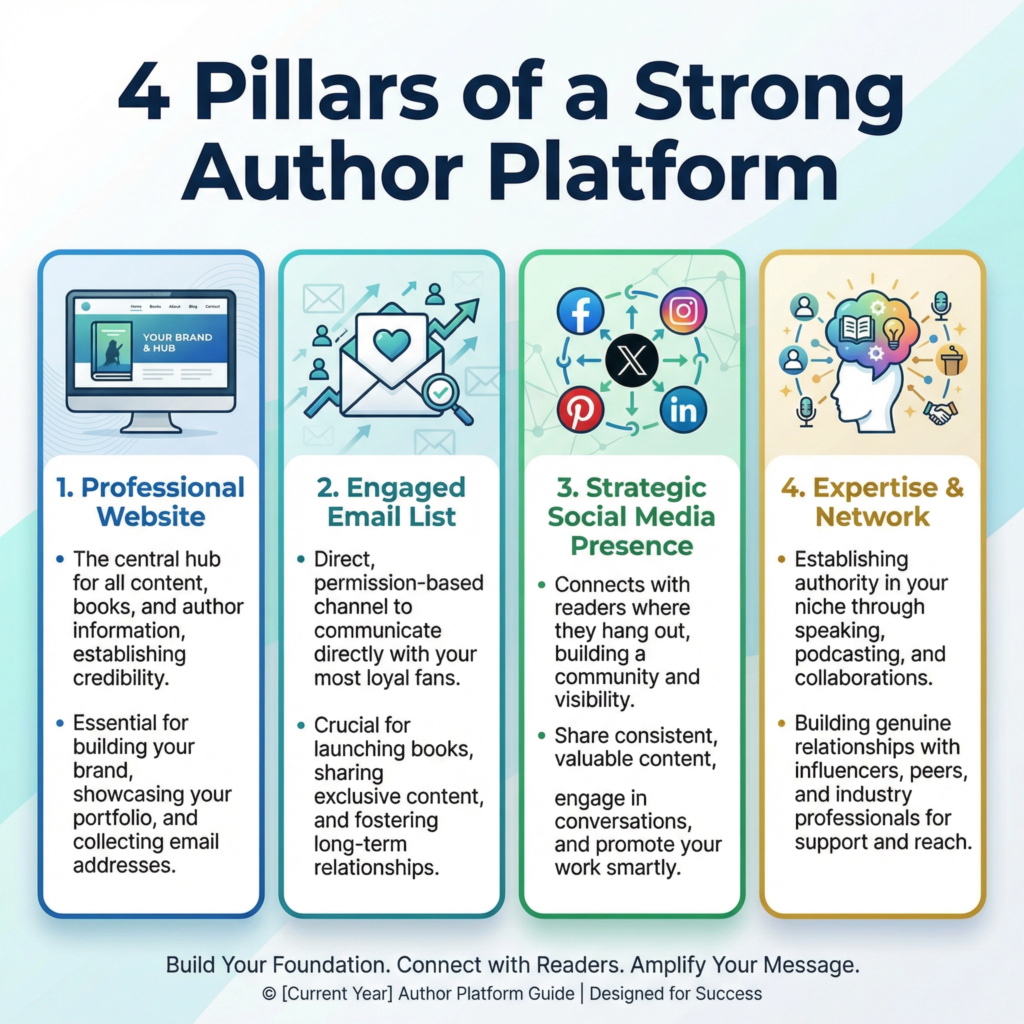
First, you need a professional website. This is your online home where readers can learn about you, your books, and what you stand for. It should be easy to navigate and clearly show your personality.
Second, you need an email list. This is your most valuable asset! Social media platforms can change their rules, but your email list is yours forever.
It’s how you can directly talk to your most loyal fans and tell them about new books or special offers.
I always encourage authors to start building their list even before their book is finished.
Third, you need to be active on social media, but wisely. You don’t need to be on every platform.
Pick one or two where your ideal readers spend their time. If you write fantasy, maybe it’s TikTok or Instagram. If you write business books, maybe it’s LinkedIn.
Share interesting content related to your book’s topic, engage with other readers, and show your authentic self.
This helps people get to know you as a person, not just a writer. It builds a community around your work, which is incredibly powerful for word-of-mouth marketing.
Finally, your platform includes your expertise and your network.
Are you seen as an expert in your book’s topic? Do you connect with other authors, bloggers, and influencers?
These relationships can open doors to interviews, guest posts, and collaborations that help you reach even more readers.
Building a strong author platform takes time and effort, but it’s an investment that pays off for every book you write.
It’s not just about selling one book; it’s about building a long-lasting career as an author.
Use Social Media to Reach More Readers
Using social media to reach more readers is a must for authors today. It’s where your potential fans spend a lot of their time.
Social media is not just about selling; it’s about connecting, sharing, and building a community around your books.
I always tell authors that social media is your chance to show your personality, share your writing journey, and talk directly with people who love books.
It’s how you turn strangers into fans and fans into super-fans.
Without a presence online, you are missing out on a huge opportunity to find people who will adore your stories.
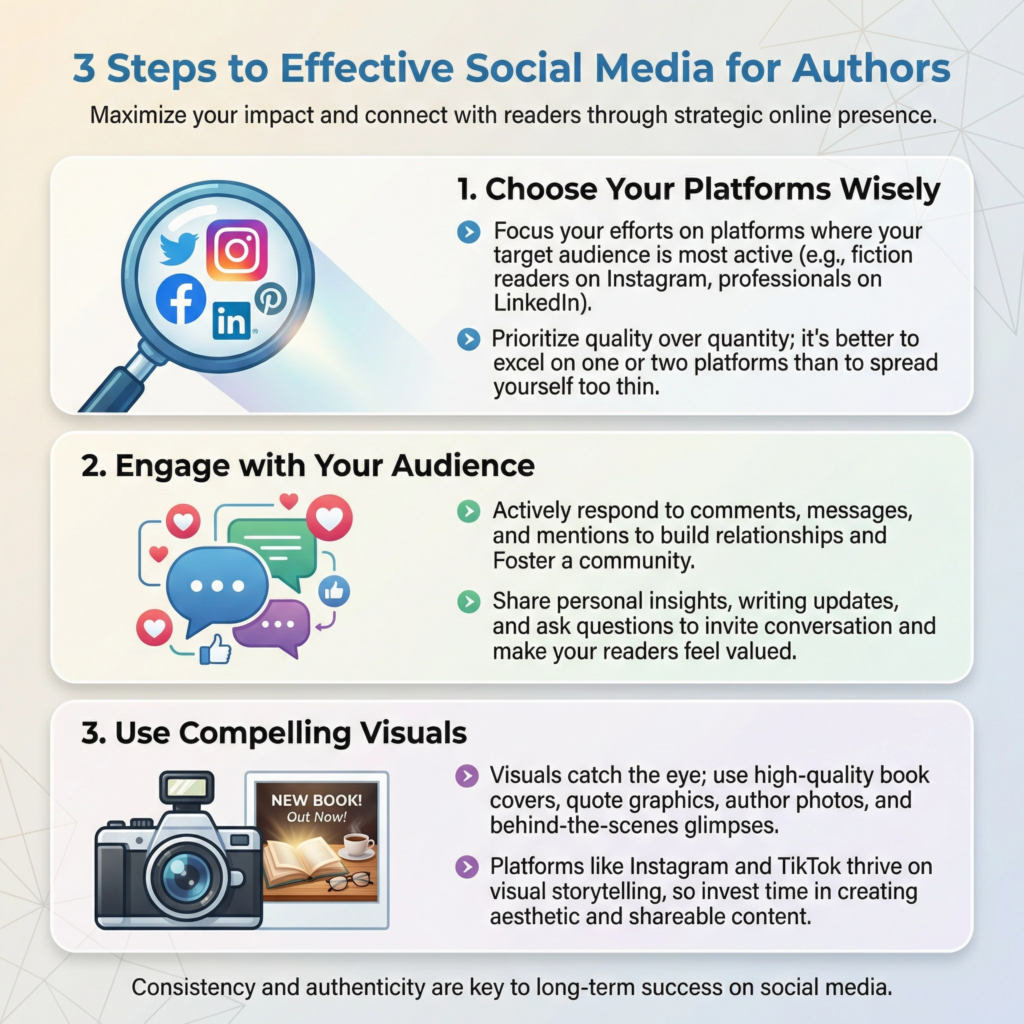
I start by choosing the right platforms. You don’t need to be everywhere. Think about where your ideal readers hang out.
If you write young adult fantasy, TikTok and Instagram might be perfect.
If you write non-fiction for professionals, LinkedIn could be your best bet.
Once you pick your platforms, focus on being consistent. Post regularly, but don’t just talk about your book all the time.
Share interesting facts related to your book’s topic, ask questions, share behind-the-scenes glimpses of your writing process, or even recommend other books you enjoy.
This makes your feed valuable and engaging, not just a sales pitch.
Engaging with your audience is key. When someone comments on your post, reply to them!
Ask them questions back. Join groups or communities related to your book’s genre and participate in conversations.
This shows people that you are a real person who cares about their readers. It builds trust and loyalty.
I’ve seen authors create incredible buzz for their books just by being genuinely friendly and helpful online.
People are more likely to buy from someone they feel connected to. Don’t forget to use visuals!
Social media is very visual. Share eye-catching images of your book cover, short video clips of you talking about your story, or graphics with quotes from your book.
These types of posts get more attention and are more likely to be shared.
Always include a clear call to action, like “Link in bio to learn more about my book!” or “What’s your favorite part of [Book Genre]?
Let me know in the comments!” Social media is a powerful tool for authors, but it works best when you use it to build relationships first, and sell second.
Create a Lead Magnet to Grow Your Email List
Creating a lead magnet to grow your email list is one of the smartest book marketing strategies you can use.
A lead magnet is a free gift you offer to potential readers in exchange for their email address. Think of it as a special preview or a helpful tool that relates to your book.
I always tell authors that your email list is your most powerful marketing asset.
Social media platforms can change their rules, but your email list gives you a direct way to talk to your fans anytime you want.
It’s how you build a loyal community that will buy your books again and again.
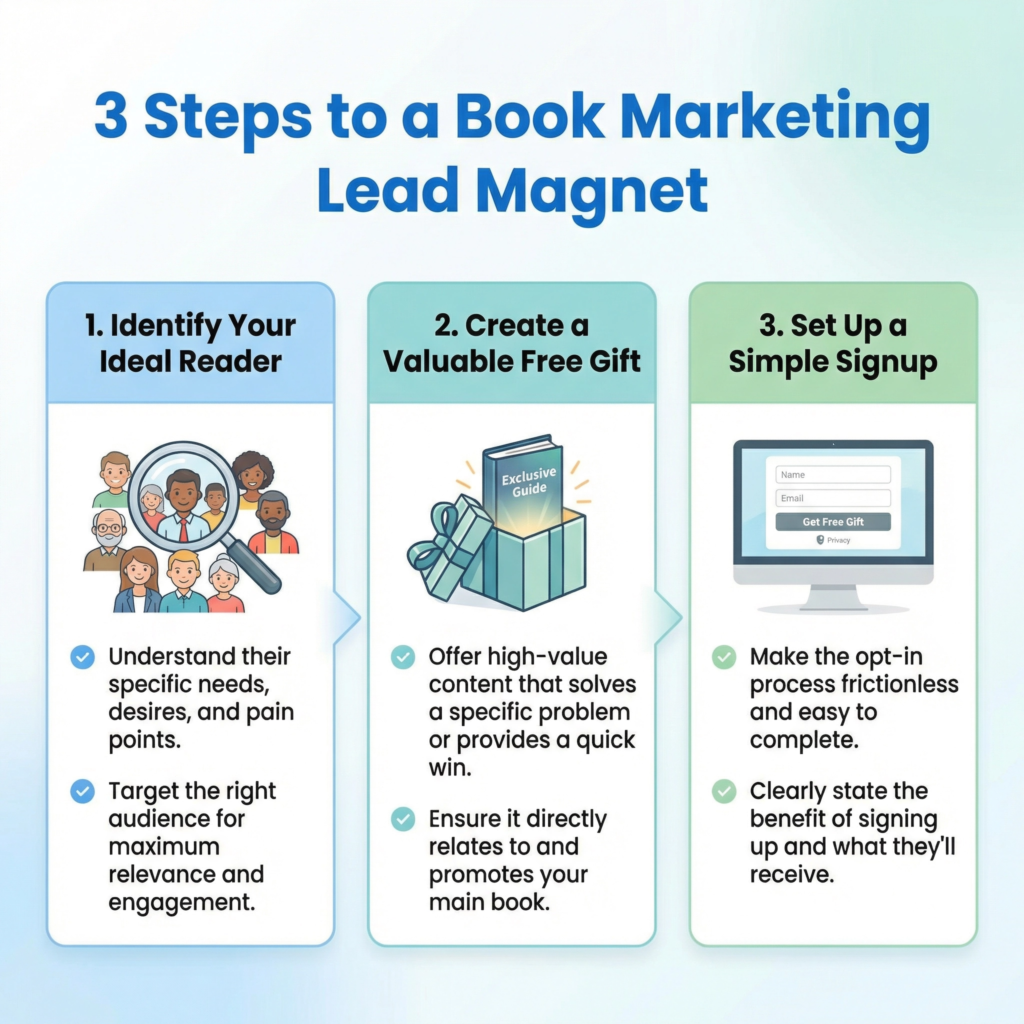
I start by thinking about what kind of free gift would be most helpful to my ideal reader.
If you write a cookbook, maybe it’s a “5-Recipe Quick Start Guide.” If you write a mystery novel, it could be a “First Chapter Sneak Peek” or a “Character Profile Guide.”
The key is that the lead magnet should be valuable and related to your book or genre.
It should give readers a taste of your writing style or your expertise. This helps them decide if they want to read more of your work.
People are much more likely to give you their email if they are getting something truly useful in return.
You don’t need to create something huge. A short PDF, a checklist, a printable, or even a short audio clip can work perfectly.
I like to make my lead magnets easy to consume and highly actionable.
For example, if your book helps people organize their homes, your lead magnet could be a “Declutter Your Kitchen in 30 Minutes Checklist.”
This provides an immediate win for the reader and shows them that you can help them solve their problems. It builds trust and makes them curious about what else you have to offer.
Once your lead magnet is ready, you need a simple way for people to get it. This usually means creating a “landing page” on your website where they can enter their email address.
You can then promote this landing page on your social media, in your blog posts, and even in the back of your books.
Every new email subscriber is a potential reader who is now part of your author family.
They are the first people you will tell about new book releases, special promotions, and exclusive content.
Building your email list with a great lead magnet is how you create a sustainable and successful author career.
Optimize Your Book Listing
Optimizing your book listing is like making sure your storefront looks amazing in a busy marketplace.
When readers search for books online, your book listing is often the first thing they see. It needs to grab their attention and make them want to click “buy.”
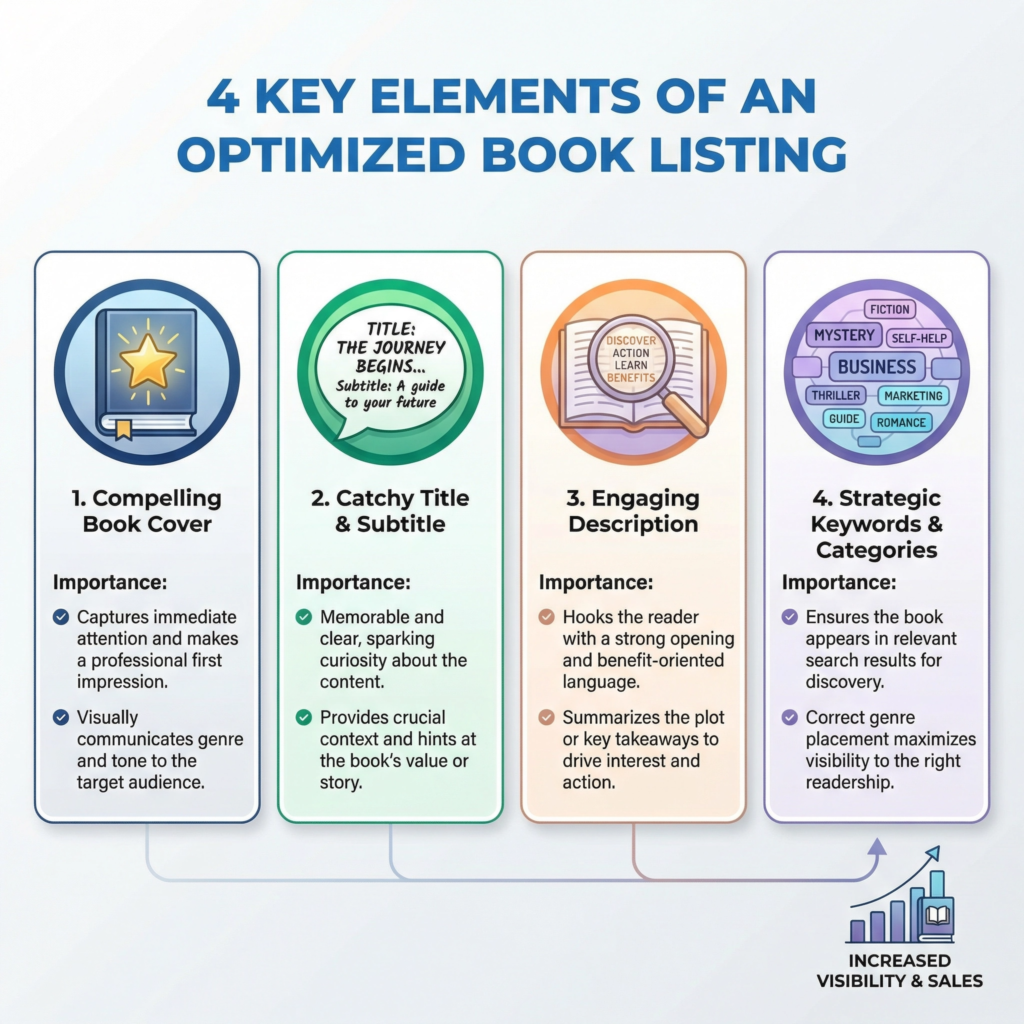
I always tell authors that a great book cover and a compelling description are your silent salespeople.
They work 24/7 to convince readers that your book is exactly what they are looking for. Without a strong listing, even the best book can get lost among millions of others.
I start with the book cover. It needs to be professional, eye-catching, and clearly show what your book is about. Don’t try to save money here; a bad cover can kill your sales.
Next, the book title and subtitle are super important. Your title should be memorable, and your subtitle should tell readers the main benefit or topic of your book.
For example, instead of just “Gardening,” a better subtitle might be “Gardening: A Beginner’s Guide to Growing Your Own Food.” This helps readers know exactly what they are getting.
Then comes the book description. This is your chance to hook readers! Start with a strong opening that grabs their attention.
Talk about the problem your book solves or the exciting journey your characters will take.
Use keywords that readers might search for. Break up long paragraphs with bullet points to make it easy to read.
I always end with a clear call to action, like “Scroll up and click ‘Buy Now’ to start your adventure!”
Remember, this description is a sales pitch, so make it exciting and benefit-driven.
Don’t forget about categories and keywords. These are how online stores like Amazon help readers find your book.
Choose categories that are very specific to your book’s genre. Use keywords that readers would type into the search bar.
Think like a reader! What words would they use to find a book like yours?
Finally, encourage readers to leave reviews. Positive reviews are like gold!
They build trust and convince new readers to take a chance on your book.
Optimizing your book listing is an ongoing process, but it’s one of the most effective ways to boost your book sales.
Use Reviews and Social Proof
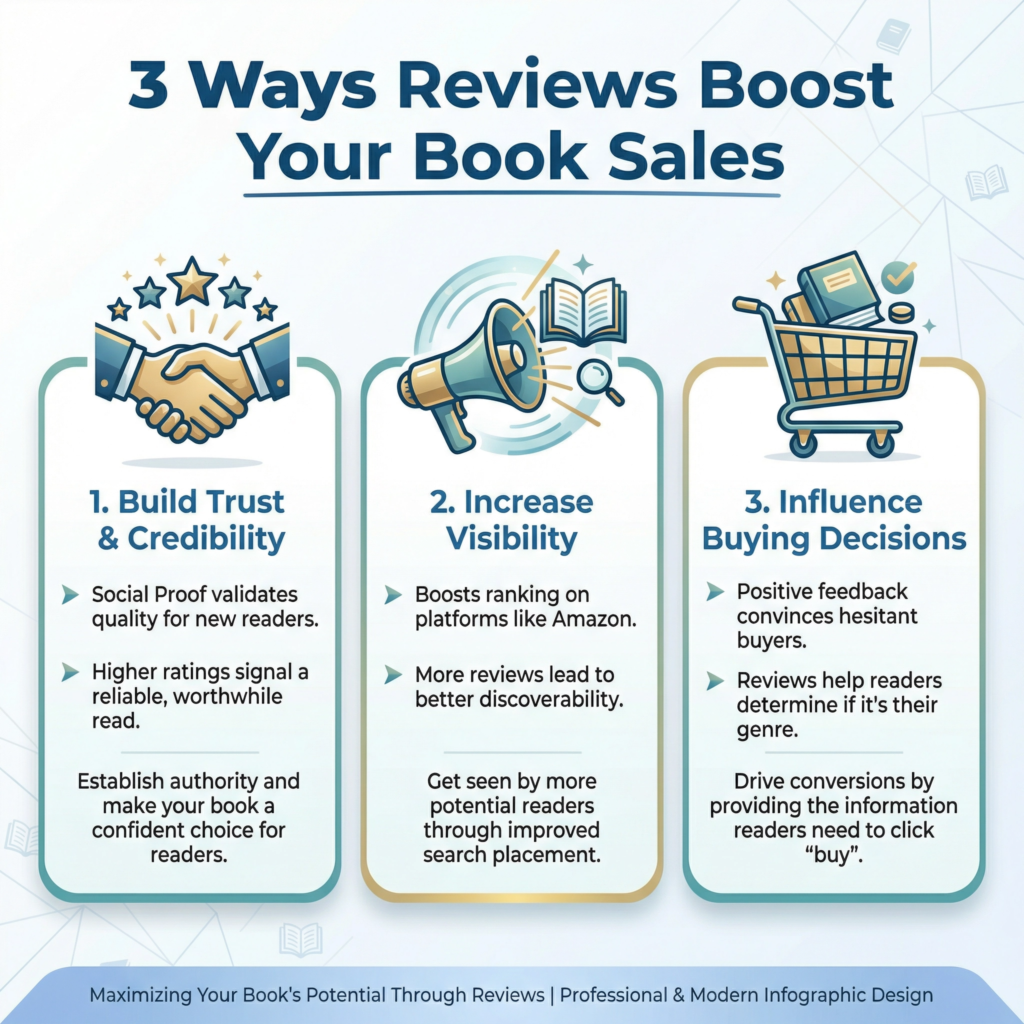
Using reviews and social proof is one of the most powerful ways to sell more books.
People trust what other readers say much more than what an author says about their own book.
Think about it: when you buy something online, do you read the reviews first? Most people do! Positive reviews are like gold for authors.
They show new readers that your book is worth their time and money.
I always tell authors that reviews are your best marketing tool because they are honest and come from real people. They build trust and make your book stand out.
I start by actively asking for reviews. Don’t be shy! You can ask readers at the end of your book, in your email newsletter, or on social media.
Make it easy for them by providing a direct link to where they can leave a review.
You can even offer a small incentive, like a chance to win a free book, for those who leave an honest review.
Remember, you are not asking for only positive reviews, but honest ones. Even a few honest reviews are better than none.
The more reviews you have, the more credible your book appears to new readers.
Social proof isn’t just about star ratings. It also includes testimonials, endorsements from other authors, or mentions in popular blogs or podcasts.
If a well-known author says they loved your book, that’s huge!
If your book is featured on a popular website, share that everywhere.
These are all forms of social proof that tell potential readers, “Hey, this book is good! Other people like it, and you probably will too.”
I like to collect these mentions and share them on my website, social media, and even in my email signature.
Don’t be afraid to highlight your best reviews. You can create graphics with short, powerful quotes from your reviews and share them on Instagram or Facebook. You can put glowing testimonials on your book’s sales page.
These snippets of praise act like mini-advertisements for your book. They catch the eye and give people a quick reason to learn more.
Using reviews and social proof is not about bragging; it’s about leveraging the power of your happy readers to attract even more happy readers.
It’s a marketing strategy that works because it’s built on trust.
Collaborate with Influencers and Bloggers
Collaborating with influencers and bloggers is a smart way to get your book in front of many new readers.
These are people who already have a large audience that trusts their opinions. When they talk about your book, their followers listen.
I always tell authors that this is like getting a personal recommendation from a friend, but on a much bigger scale.
It’s a powerful way to spread the word about your book beyond your own network and tap into communities that are already interested in your genre.
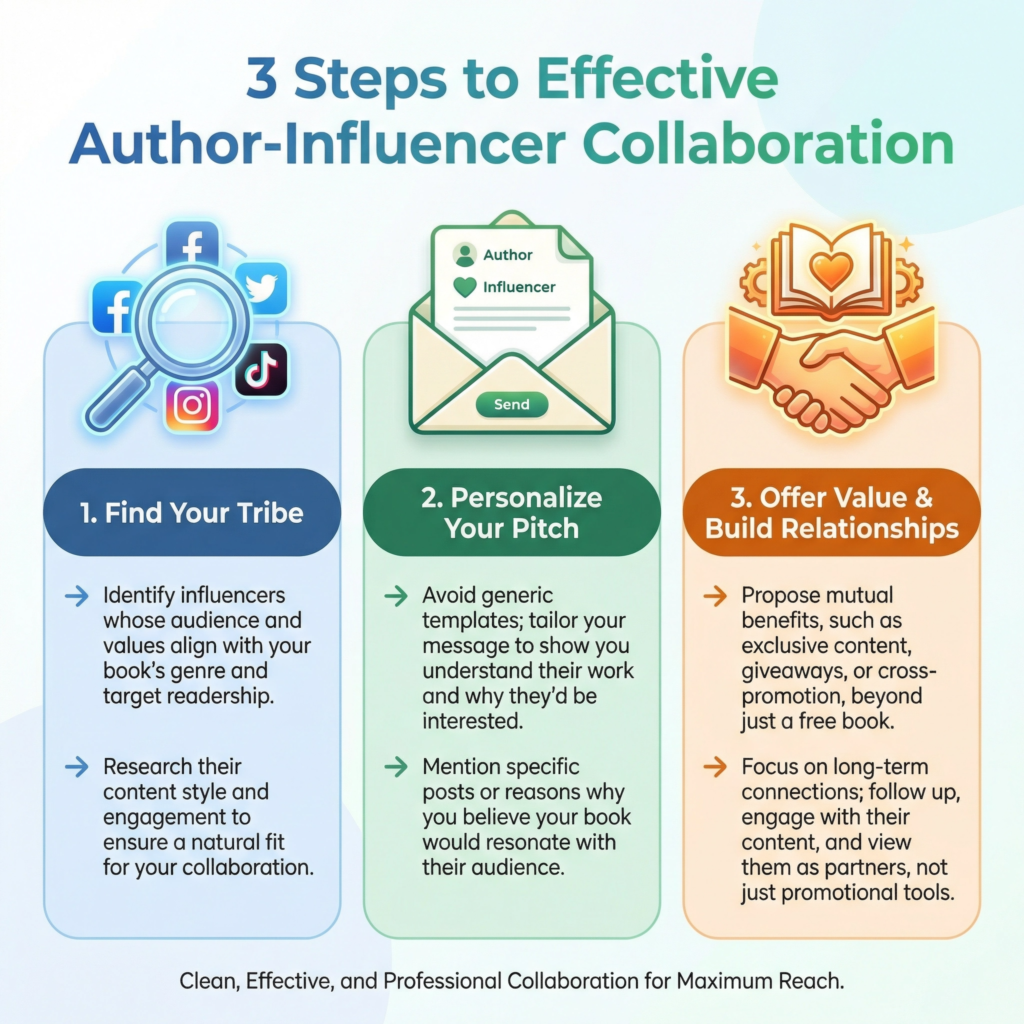
I start by finding influencers and bloggers who write about topics related to my book.
If you write a cozy mystery, look for book bloggers who review mysteries.
If you write a self-help book, find influencers who share tips on personal growth.
Don’t just look for the biggest names. Sometimes, smaller influencers with a very engaged audience can be even more effective.
They often have a closer relationship with their followers, and their recommendations feel more genuine. Make a list of about 10-20 people you think would be a good fit.
When you reach out, make it personal. Don’t send a generic email. Mention something specific you like about their blog or content.
Explain why you think your book would be a good fit for their audience.
Offer to send them a free copy of your book. You can also suggest different ways to collaborate.
Maybe they can write a review, interview you, host a giveaway, or feature your book in a roundup post.
Be open to their ideas too! The goal is to build a relationship, not just to get a one-time mention.
Remember that not all collaborations need to be paid. Many bloggers and influencers are happy to share good content with their audience.
However, be prepared to offer something of value in return, whether it’s a free book, an exclusive interview, or a chance to run a contest.
Always be professional and respectful of their time. Follow up politely if you don’t hear back right away.
Collaborating with influencers and bloggers takes effort, but it can lead to a huge boost in visibility and sales for your book.
It’s about building bridges to new communities of readers who are eager to discover their next favorite book.
Run Promotions and Discounts
Running promotions and offering discounts is a classic way to get more eyes on your book and boost sales.
Everyone loves a good deal!
While you don’t want to always sell your book at a reduced price, strategic promotions can create excitement and encourage new readers to take a chance on your work.
I always tell authors that a discount isn’t just about making less money; it’s about gaining new readers who might become lifelong fans.
It’s a powerful tool to get your book into more hands, especially when you’re just starting out or launching a new title.
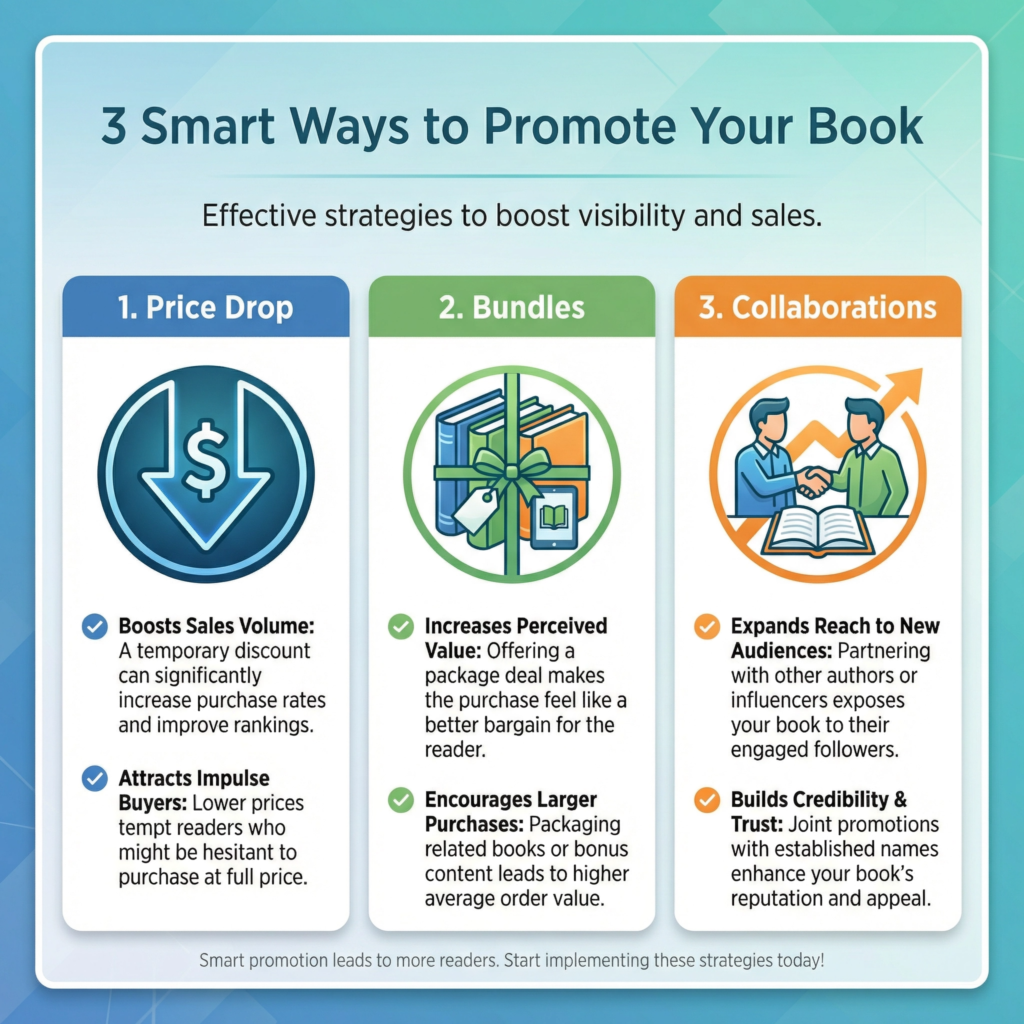
I start by thinking about different types of promotions. A common one is a temporary price drop, where you sell your ebook for 99 cents or even free for a few days.
This can lead to a huge surge in downloads, which helps your book climb the bestseller lists on platforms like Amazon.
Higher rankings mean more visibility, and more visibility means more sales even after the promotion ends.
Another idea is a “countdown deal,” where the price slowly goes up over a few days. This creates a sense of urgency and encourages people to buy now.
Bundling your book with other related products or services can also be very effective.
For example, if you have a non-fiction book, you could offer a bundle that includes the ebook, a workbook, and a short video lesson.
This adds more value and makes the offer more attractive. You can also team up with other authors in your genre to do a joint promotion.
This allows you to tap into each other’s audiences and reach a wider group of readers.
Collaboration is a powerful marketing strategy that often leads to great results.
When you run a promotion, make sure to tell everyone about it!
Share it on all your social media channels, send an email to your list, and post it in relevant reader groups.
There are also many websites that specialize in promoting discounted ebooks.
Submitting your book to these sites can give your promotion a big boost.
Remember to track your results. See which promotions work best for your book and your audience.
Running promotions and discounts is not a sign of weakness; it’s a smart business strategy that can significantly increase your book’s reach and revenue.
Create Content Around Your Book
Creating content around your book is a fantastic way to keep readers engaged and attract new ones, even after your book is published.
Your book is not just a single product; it’s a source of endless ideas, characters, and themes.
I always tell authors that your book is a well of inspiration. You can draw from it again and again to create fresh content that keeps your story and your message alive.
This strategy helps you stay visible and relevant in the minds of your audience, long after they’ve turned the last page.
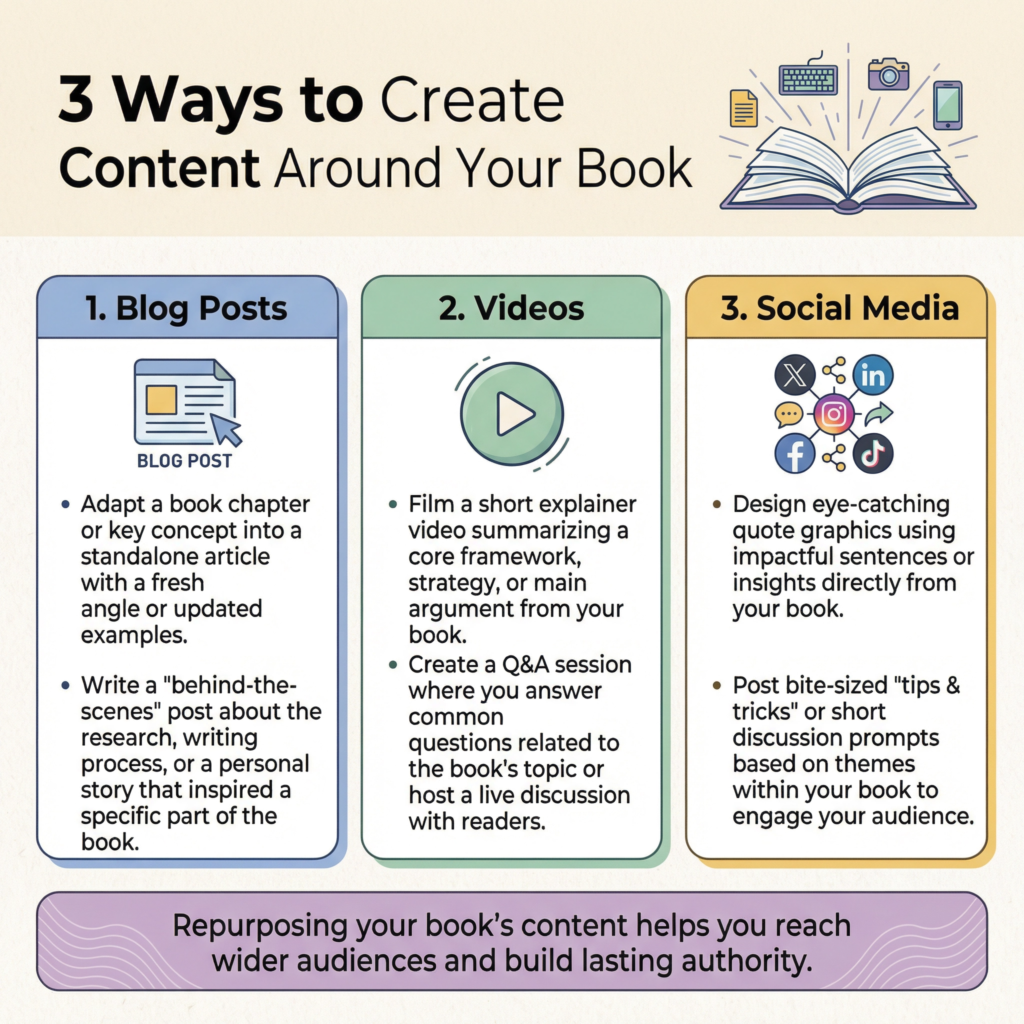
I start by looking at the main themes or lessons in my book.
For example, if your book is a historical fiction novel, you could write blog posts about the real historical events that inspired your story.
If it’s a self-help book, you could create short videos explaining one tip from each chapter.
You can also write about your characters, their backstories, or even what happens to them after the book ends.
This gives your readers more of what they love and encourages them to dive deeper into your world.
It’s like offering them bonus scenes or behind-the-scenes footage. Think about different formats for this content.
You could write short stories, create quizzes about your characters, share excerpts from your book, or even make a playlist of songs that inspired you while writing.
You can also host Q&A sessions on social media where readers can ask you questions about your book or your writing process.
This kind of interactive content builds a strong community and makes readers feel more connected to you and your work.
People love to feel like they are part of the journey. Don’t forget to link all this new content back to your book.
Every blog post, video, or social media update should have a clear call to action that encourages people to buy your book or leave a review.
This creates a powerful marketing loop. New content attracts new readers, who then discover your book, and then they become fans who consume even more of your content.
Creating content around your book is not just about marketing; it’s about extending the life of your story and building a lasting relationship with your audience.
It’s how you turn a single book into a thriving author brand.
Use Paid Advertising
Paid advertising is like putting up a billboard for your book in a very busy place. It helps your book get seen by lots of people who might not find it otherwise.
I know it sounds a bit scary to spend money, but when done right, it can bring in many new readers.
Think of it as an investment in your book’s future. It’s a way to speed up the process of getting your book into the hands of those who will love it.
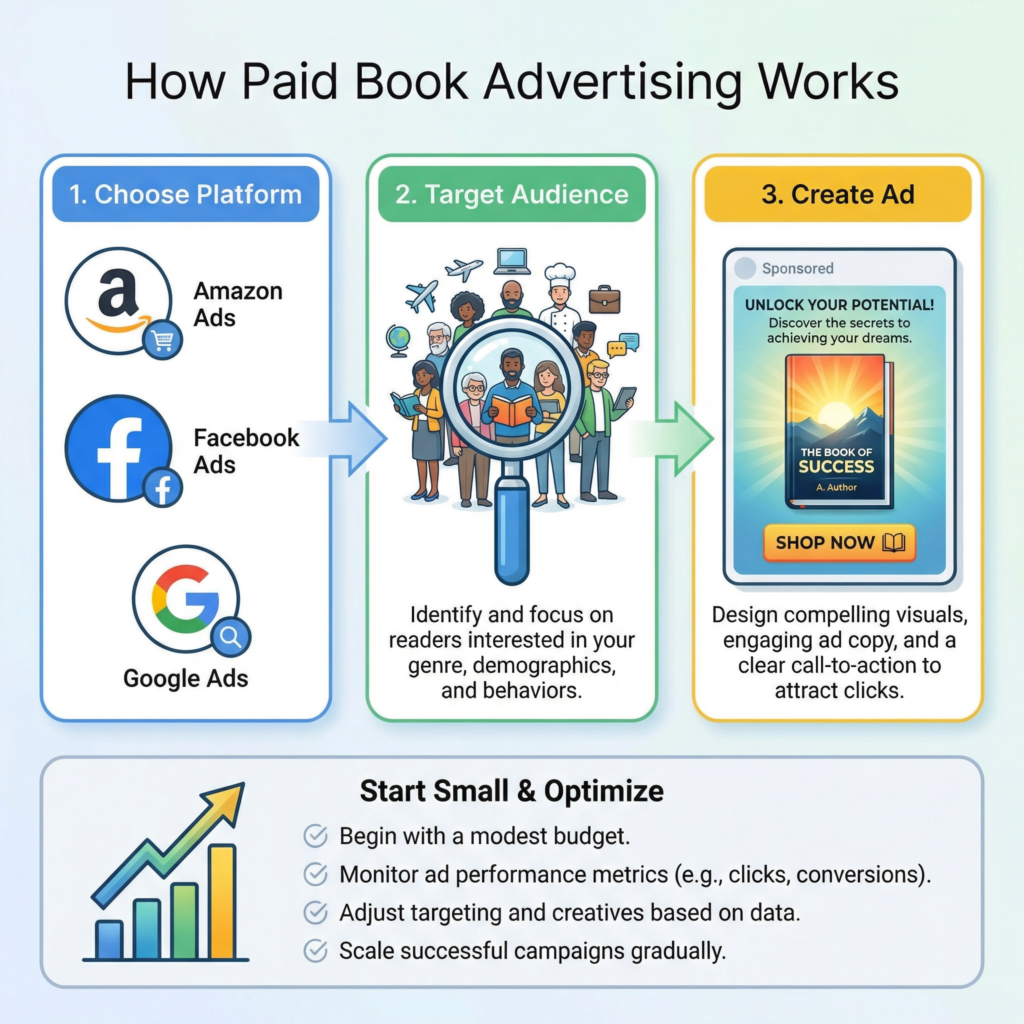
There are many places you can advertise your book. Amazon Ads are very popular for authors.
You can show your book to people who are already looking for books like yours on Amazon. Facebook and Instagram Ads are also great.
You can target readers based on their interests, like if they read fantasy novels or self-help books.
Google Ads can help your book show up when people search for topics related to your book.
Each platform has its own way of working, but the main idea is the same: show your book to the right people.
When you create an ad, I always focus on a few key things.
First, your ad copy (the words you use) needs to be catchy. It should make people curious about your book. Highlight what makes your book special.
Second, your ad image or video needs to stand out. Use your book cover or a cool graphic.
Third, you need to choose your audience carefully. Don’t show your ad to everyone.
Show it to people who are most likely to buy your book. This saves you money and gets better results.
Start small with your budget. You don’t need to spend a lot of money at first.
I recommend starting with a small daily budget, like $5 or $10. Watch your ads closely.
See which ones are working and which ones are not. If an ad is doing well, you can slowly increase your budget.
If an ad isn’t working, change it or stop it. This is called testing and optimizing.
It helps you learn what your audience responds to and makes your advertising more effective over time. It’s a learning process, but a very rewarding one.
Engage With Your Audience
Engaging with your audience is super important for authors. It’s not just about selling books; it’s about building relationships.
When readers feel connected to you, they become your biggest fans and advocates. I always think of it like making friends.
You wouldn’t just talk at your friends; you’d listen to them too. This two-way conversation is what makes engagement so powerful.
It helps you understand what your readers love and what they want more of. One great way to engage is through social media.
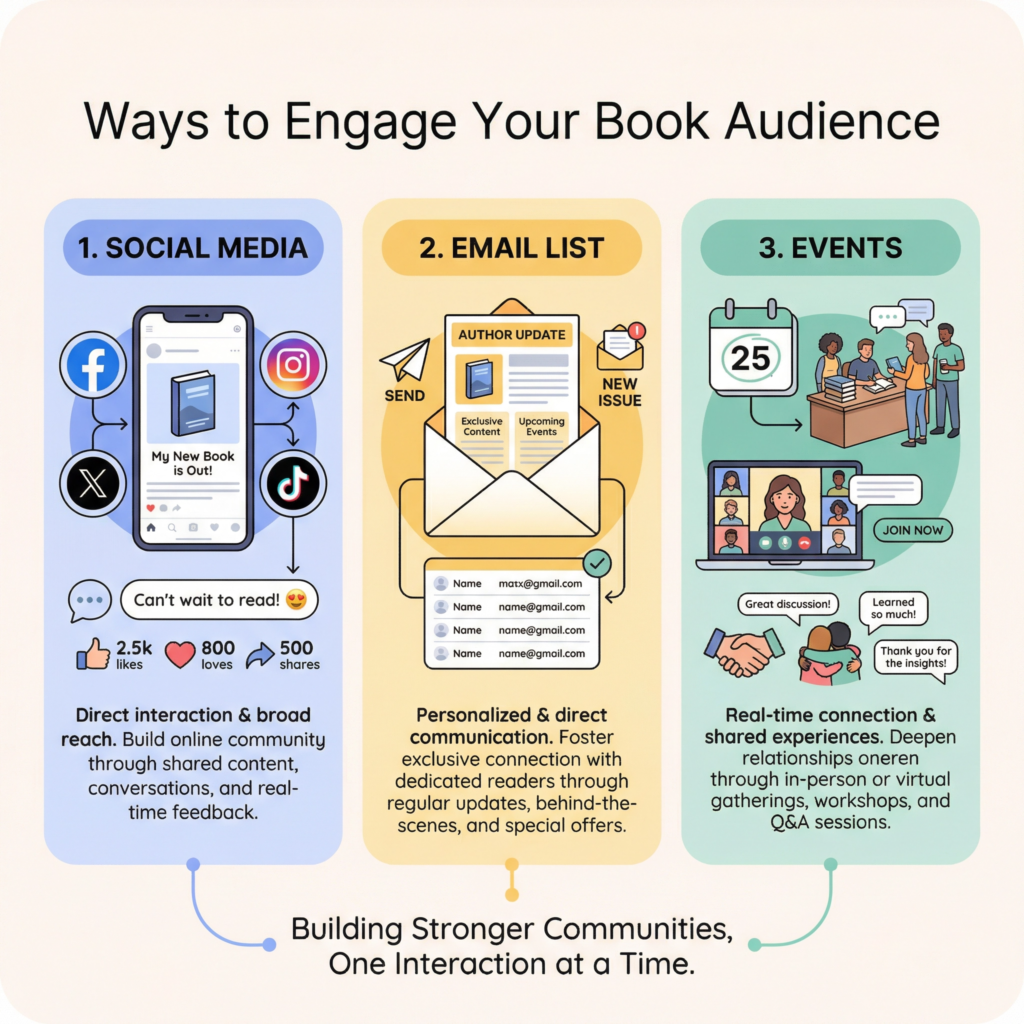
Platforms like Facebook, Instagram, and X (formerly Twitter) are perfect for this. You can share updates about your writing, ask questions related to your book’s themes, or even run polls.
For example, if you write fantasy, you could ask readers about their favorite magical creatures. If you write romance, you could ask about their ideal date.
These small interactions make readers feel seen and heard. They also give you valuable insights into your audience’s preferences.
Another powerful method is email. Building an email list allows you to communicate directly with your most interested readers.
I use my email list to share exclusive content, behind-the-scenes stories, or early access to new chapters. You can also ask for their feedback on ideas for your next book.
This direct line of communication creates a loyal community. It’s like having a VIP club for your readers. They get special access, and you get their undivided attention.
Don’t forget about in-person or virtual events. Book signings, online Q&A sessions, or virtual book club visits are fantastic for engagement.
These events allow readers to meet you and ask questions directly. It makes the author-reader connection much stronger.
I’ve found that these personal touches turn casual readers into lifelong fans.
They get to see the person behind the words, and that makes all the difference.
Remember, every interaction is a chance to deepen your connection.
Track Your Results and Improve
Marketing your book isn’t a one-time thing. It’s an ongoing journey. To get the best results, you need to know what’s working and what’s not.
This is where tracking your results comes in. It’s like being a detective for your book sales.
You look for clues to see which marketing efforts are bringing in readers. I always say, if you don’t measure it, you can’t improve it.
This step helps you make smart choices with your time and money.
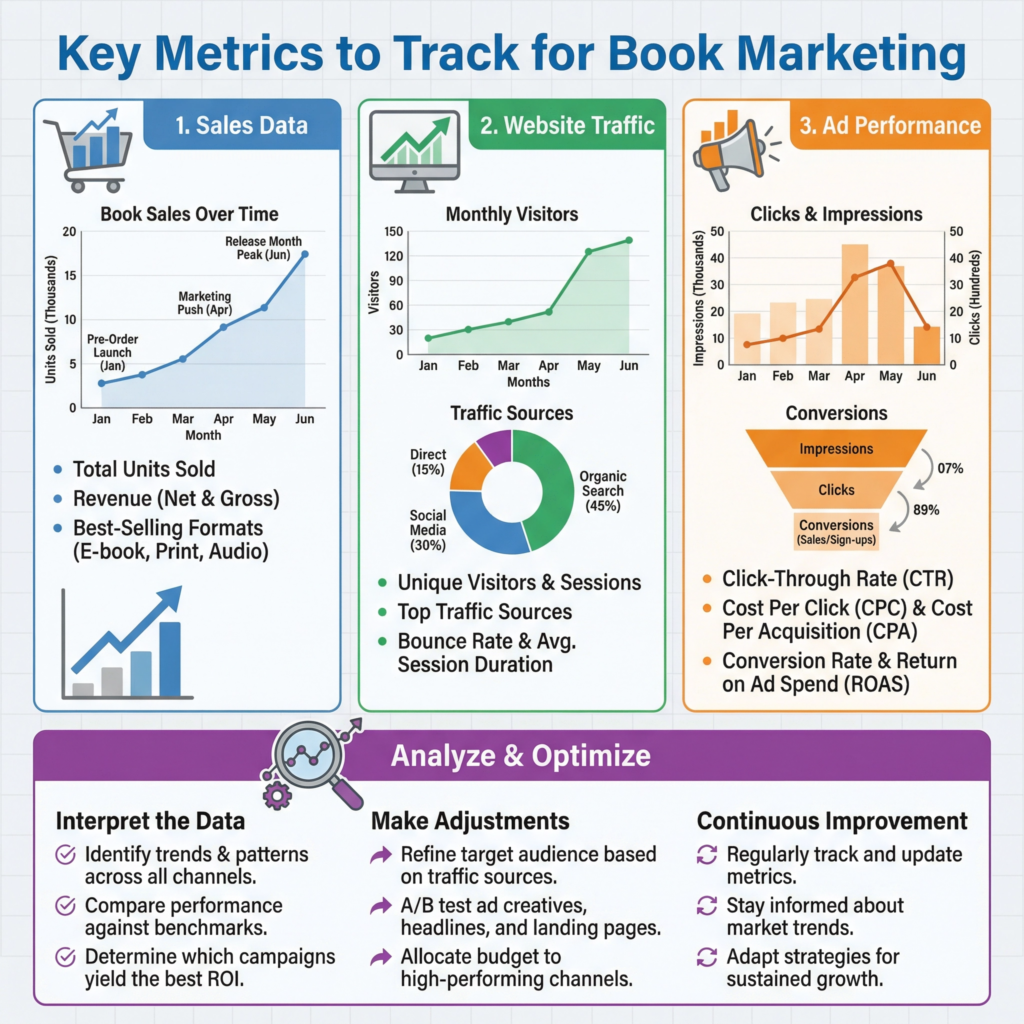
So, what should you track? Start with your book sales. Look at how many copies you sell each day, week, or month.
Most online stores, like Amazon, give you reports. Also, keep an eye on your website traffic.
How many people visit your author website? Where do they come from? Tools like Google Analytics can show you this.
If you’re running ads, track clicks, impressions, and conversions.
These numbers tell you if your ads are reaching the right people and if those people are buying your book.
It’s all about understanding the journey your readers take.
Once you have this data, it’s time to look for patterns.
Did a social media post lead to a spike in sales?
Did a certain ad campaign get a lot of clicks but no sales?
This information is gold. It tells you what strategies are effective for your book and your audience.
For example, I once noticed that my book sales went up every time I shared a personal story about writing.
So, I started sharing more personal stories. It’s about finding your unique recipe for success.
Don’t be afraid to change things up. If something isn’t working, try something new.
Maybe your ad copy needs to be different, or you need to post on social media at a different time.
This is called optimizing. It means making small changes to get better results. It’s okay if a strategy doesn’t work perfectly the first time.
The goal is to learn from each attempt and keep getting better.
Every author’s journey is different, and tracking helps you find your best path.
Conclusion
Using the right Book Marketing Strategies can make a big difference between a book that gets ignored and a book that reaches many readers, because success is not only about writing a good book, but also about making sure the right people see it, understand its value, and feel excited to read it.
When you combine simple actions like building your author platform, using social media, collecting reviews, and staying connected with your audience, you create a strong system that helps your book grow over time.
Remember, you do not need to do everything at once, because starting small and staying consistent is the best way to see real results, and even simple steps done daily can lead to big success in the long run.
What Next?
Ready to Build a Brand That Gets Results?
Don’t let opportunities pass you by because people don’t know who you are or what you offer.
Learn how to define your unique value, grow your online presence, and build credibility that attracts customers and clients.
Start building your personal brand today—download your copy now!